


Tunnel Dewatering: Methods, Pumps & Solutions for Tunnels and Shafts
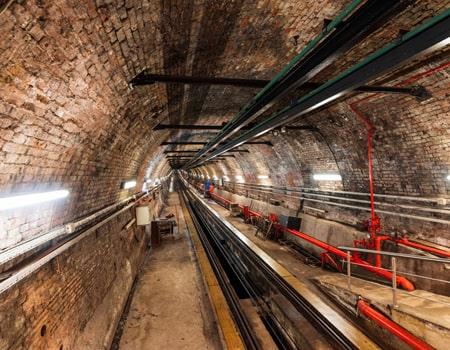
Water is the most persistent opponent in underground construction. Rain, groundwater, nearby rivers, and cracked rock all send water toward the lowest point on a site, and in a tunnel or shaft, that point is where crews are working. Effective tunnel dewatering keeps excavations dry, protects workers, and prevents delays that can cost thousands of dollars per day.
Why Water Control Matters Underground
Uncontrolled water does more than muddy conditions. It reduces soil strength, which raises the risk of face collapse and ground settlement. It can wash fine particles out of the surrounding soil, creating voids that threaten structures above. It can also damage equipment, slow concrete placement, and create slip and electrical hazards for crews.
Good tunnel dewatering starts with understanding where the water comes from. Geotechnical borings, groundwater monitoring wells, and seasonal records help engineers estimate inflow rates before the first cut. A tunnel driven through dense clay behaves very differently from one passing through fractured limestone or sandy alluvium, so the plan should match the ground.
Common Dewatering Methods
No single approach fits every project. Most tunnels combine several techniques, adjusting as conditions change.
-
Sump Pumping
The simplest method collects seepage in low points, called sumps, and pumps it out. Sump pumping works well for modest inflows and stable ground, and it often forms the backbone of day-to-day water handling, even on complex jobs.
-
Wellpoints and Deep Wells
Rings of small wells installed ahead of or beside the excavation lower the water table before crews arrive. Wellpoints suit shallow, granular soils, while deep wells handle larger drawdowns and greater depths. Pre-draining the ground this way keeps the working face stable.
-
Grouting and Ground Freezing
When pumping alone would draw down too much groundwater, engineers can seal the ground instead. Cement or chemical grout fills voids and reduces permeability, while artificial ground freezing creates a temporary wall of ice around the excavation. Both reduce the volume of water that must be pumped.
-
Cutoff Walls and Shaft Linings
Secant piles, diaphragm walls, and sheet piles form barriers around access shafts. These structures limit inflow from the sides, so pumps only need to manage water entering from below or through small gaps.
Special Challenges in Shafts
Shafts bring their own difficulties. As depth increases, the pumping head rises, and every additional foot of lift demands more energy from the pump. Space is also tight, which limits how much equipment can be installed. Water often flows in from several levels at once, so crews may need staged sumps and relay pumping, where one pump moves water to an intermediate tank, and another lifts it onward.
Shafts also fill quickly during storms. A reliable standby system, including backup power and spare pumps, is not a luxury. It is a basic safety requirement.
Choosing the Right Pumps
Pump selection can make or break a dewatering plan. Engineers weigh flow rate, total dynamic head, solids content, and water chemistry. Tunnel water often carries sand, silt, rock fines, and sometimes grout or cement residue, all of which wear down internal parts.
A drainage submersible pump is a favorite for these conditions. Because the motor and pump sit together below the waterline, there is no suction lift problem and no priming delay. You can lower these units directly into a sump or shaft bottom and start them immediately. Many models handle moderately abrasive water, and robust designs with hardened impellers extend service life when solids are present.
Several features deserve attention when specifying a drainage submersible pump for underground work:
-
Hardened or hard-iron wetted parts for abrasion resistance
-
Motor cooling that works even when partially exposed
-
Float switches or level sensors for automatic operation
-
Cable and seal designs rated for continuous duty
For high-head shaft applications, multistage units or pumps arranged in series can deliver the pressure needed, while larger axial or mixed-flow designs suit high-volume, low-head situations.
Monitoring, Maintenance, and Discharge
Even the best equipment needs oversight. Flow meters, level sensors, and remote alarms help crews spot rising inflows early. Routine inspection of impellers, wear plates, and discharge hoses prevents small problems from becoming shutdowns. Keeping spare pumps on site shortens recovery time when a unit fails.
Discharge deserves equal attention. Water pumped from a tunnel often carries sediment and may be alkaline from grout or concrete work. Settling tanks, filtration, and pH adjustment help meet environmental permits before water returns to a storm drain or waterway.
Planning for Success
Successful tunnel dewatering blends prediction, redundancy, and adaptability. Study the ground early, choose methods that match the hydrogeology, and size pumping capacity with a healthy safety margin. Build in backup systems, track inflows daily, and revisit the plan whenever conditions shift.
When teams treat water control as a core part of the design rather than an afterthought, tunnels and shafts stay safer, schedules stay on track, and budgets stay intact. With the right strategy and a dependable fleet of submersible drainage pumps, even wet and challenging ground becomes manageable.

 Arabic
 French
 Spanish
 Portuguese
 Deutsch
 Turkish
 Dutch
 Italiano
 Russian
 Romaian
 Portuguese (Brazil)
 Greek