


Complete Guide to High-Value Cargo Shipping in San Francisco
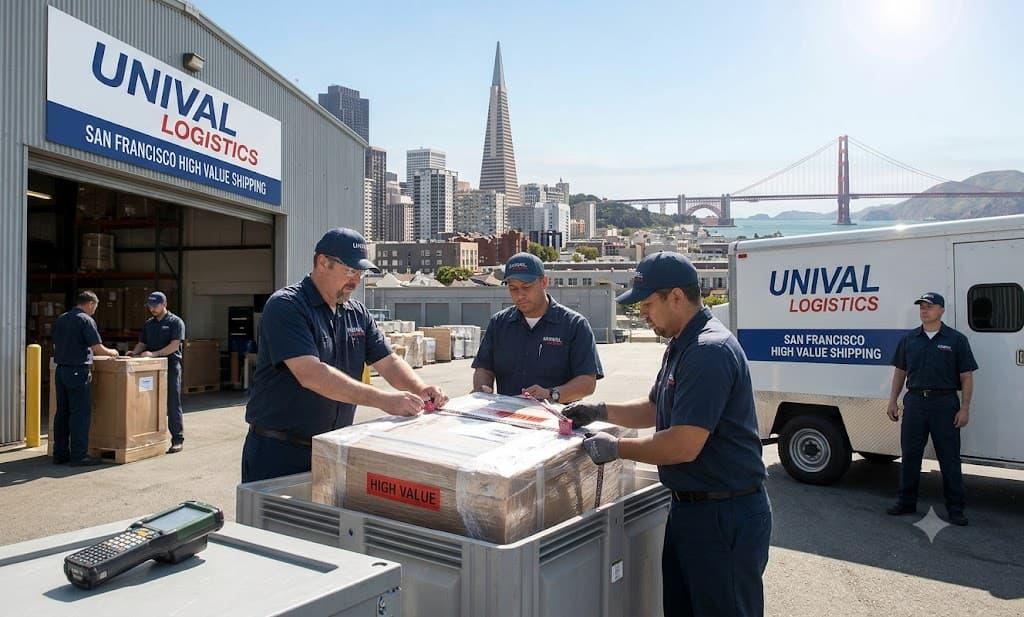
Summary: Secure Cargo Transportation and Insurance in San Francisco
Protecting valuable cargo requires a coordinated approach to packaging, carrier selection, documentation, tracking, and insurance. Understanding carrier restrictions, declared-value provisions, coverage exclusions, and logistics costs helps shippers make informed decisions. This guide explains the practical steps businesses and individuals can take to prepare high-value shipments originating in or traveling to San Francisco.
Overview
San Francisco is an important commercial center for technology businesses, professional services, retailers, and companies handling specialized equipment and premium merchandise. These activities create shipping requirements that can differ considerably from ordinary parcel or freight transportation.
High-value cargo may be financially significant, fragile, difficult to replace, or essential to business operations. A suitable logistics arrangement should account for these characteristics rather than relying solely on delivery speed or the lowest available rate.
UNIVAL Logistics helps customers evaluate their shipping requirements and understand the considerations involved in transportation planning, protective handling, and shipment protection.
Quick Answer: High-value cargo shipping in San Francisco involves selecting a suitable carrier, using protective packaging, documenting cargo value, monitoring transportation, and confirming appropriate insurance or carrier liability arrangements. Before dispatch, verify that the provider accepts your goods and declared value, review coverage limitations, and obtain a shipment-specific quotation.
Understanding High-Value Cargo Shipping in San Francisco
High-value cargo shipping involves transporting goods that require additional attention because of their financial value, fragility, sensitivity, or commercial importance. Depending on the shipment, the service may involve specialized packaging, additional tracking, restricted access, signature confirmation, or dedicated transportation.
The goal is to reduce avoidable risks and maintain clear documentation throughout the shipping process.
Which Goods May Require High-Value Cargo Services?
Different cargo categories have different transportation and protection requirements.
-
Electronics and technology equipment: Computers, servers, professional cameras, networking equipment, and other expensive devices.
-
Jewelry and luxury goods: Precious metal products, gemstones, watches, and premium merchandise that may have carrier restrictions.
-
Commercial and industrial equipment: Precision instruments, specialized machinery components, and costly replacement parts.
-
Fine art and collectibles: Paintings, sculptures, rare collectibles, and fragile items requiring careful handling.
-
High-value retail inventory: Designer products, limited-edition merchandise, and expensive customer orders.
Before booking, confirm that the carrier accepts the particular goods and their declared value. Some items may be excluded from standard transportation or insurance services.
Why Secure Cargo Transportation Matters
A damaged, delayed, or missing shipment can create financial losses beyond the item's purchase price. Businesses may experience interrupted operations, missed delivery commitments, replacement expenses, and customer disputes.
A reliable shipping process considers risks during packing, collection, transportation, transfers between facilities, and final delivery. The appropriate safeguards depend on the cargo type, route, and delivery requirements.
Essential Security Measures
Protective packaging: Use packaging suited to the cargo's weight, dimensions, fragility, and environmental sensitivity. Reinforced cartons, internal cushioning, protective cases, and palletized handling may be appropriate for certain shipments.
Shipment tracking: Select a service with tracking capabilities appropriate to the cargo's value. Retain shipment references, collection receipts, and delivery confirmation.
Controlled delivery: Where available, consider signature confirmation, delivery to an authorized recipient, or delivery to a location with established receiving procedures.
Documented handling: Keep photographs, invoices, inventory records, serial numbers where applicable, and evidence of the cargo's condition before dispatch.
Transportation planning: Assess transit times, transfers, route requirements, and the provider's ability to accommodate special handling. A faster service is not necessarily the safest option for every type of cargo.
UNIVAL Logistics can help customers identify relevant shipping considerations and understand the information needed to evaluate suitable transportation arrangements.
Shipping Insurance for High-Value Cargo
Cargo insurance can help protect against eligible financial losses caused by covered incidents during transportation. However, the actual protection depends on the policy wording, insured party, shipment description, route, declared value, and applicable exclusions.
It is important to distinguish cargo insurance from a carrier's declared-value provision. Declared value may affect the carrier's liability under its service terms, but it does not automatically provide comprehensive insurance.
What to Check Before Arranging Insurance
When evaluating high value shipping san Francisco requirements, review the following points before dispatch.
-
Coverage limits: Confirm the maximum insured amount and whether it reflects the cargo's documented value.
-
Eligible goods: Verify that the specific cargo category is covered, particularly for jewelry, precious metals, fine art, and specialized equipment.
-
Covered risks: Determine whether the policy covers eligible loss, theft, accidental damage, or other relevant events.
-
Exclusions and deductibles: Review restrictions, deductible amounts, and any conditions involving packaging or delivery.
-
Claims documentation: Establish which invoices, appraisals, photographs, tracking records, and other documents may be required.
-
Reporting deadlines: Confirm how quickly loss or damage must be reported and when supporting documents must be submitted.
How to Document Cargo Value
Accurate valuation helps establish the potential financial exposure and supports insurance arrangements. Depending on the cargo, acceptable evidence may include purchase invoices, commercial invoices, inventory records, appraisals, or replacement-cost documentation.
For business shipments, keep records that identify the items, quantities, and values. For unique collectibles or specialized equipment, additional valuation evidence may be necessary.
Always declare the cargo accurately and obtain confirmation that the carrier and insurer accept the items and proposed value. An inaccurate declaration can affect coverage or claims eligibility.
How to Prepare High-Value Cargo for Transportation
Preparation is essential for reducing avoidable damage and delivery complications. Even a reputable carrier cannot eliminate every risk, particularly when packaging is unsuitable or shipment details are incomplete.
Step 1: Assess the Cargo
Record the shipment's description, dimensions, weight, condition, and documented value. Identify whether the goods are fragile, temperature-sensitive, moisture-sensitive, unusually shaped, or difficult to replace.
This assessment helps determine whether standard parcel delivery, freight transportation, or a specialized service is more appropriate.
Step 2: Select Appropriate Packaging
Choose packaging designed to protect the cargo under expected handling and transportation conditions. Fragile or expensive equipment may require custom cushioning, protective cases, or specialist packing.
For palletized shipments, ensure that the load is stable and secured appropriately. Follow the carrier's packaging instructions and any requirements associated with the selected insurance policy.
Step 3: Verify Carrier Eligibility
Confirm the provider accepts the cargo category, shipment value, dimensions, and destination. Ask about restricted items, special handling requirements, tracking, and insurance eligibility.
Do not assume that every carrier offers the same protection or accepts the same goods.
Step 4: Complete Shipment Documentation
Prepare accurate shipping documents and retain photographs of the cargo and packaging before collection. Keep invoices, valuation records, packing information, and the shipment receipt.
For commercial shipments, ensure that item descriptions and declared values are consistent across the required documentation.
Step 5: Confirm Delivery Arrangements
Verify the recipient's address, contact information, receiving hours, and any signature requirements. If the cargo is intended for a business facility, coordinate with the receiving team to avoid unnecessary storage or unattended delivery.
After delivery, inspect the shipment promptly and report any damage or discrepancies within the applicable reporting period.
Choosing a High-Value Shipping Provider in San Francisco
Selecting a shipping provider requires evaluating more than delivery speed and advertised prices. The provider must be capable of handling the shipment according to its value, destination, and specific requirements.
Experience With Similar Cargo
Ask whether the provider regularly handles cargo similar to yours. Technology equipment, jewelry, fine art, and industrial machinery may require different packaging, handling, and insurance arrangements.
A suitable provider should be able to explain relevant service restrictions and identify the information needed to arrange transportation.
Transparent Pricing and Service Terms
Request a quotation that identifies transportation charges, packaging expenses, insurance premiums, and any applicable surcharges or special handling fees.
Review cancellation terms and clarify what happens if the cargo is delayed, rejected, or requires additional services. Confirm which charges are fixed and which may change according to shipment details.
Tracking and Customer Support
Clear communication is particularly important when cargo has a high replacement cost or is essential to business operations. Ask how tracking updates are provided, how shipment exceptions are handled, and whom to contact if the cargo appears delayed.
UNIVAL Logistics can help customers identify the questions to ask when comparing logistics arrangements and reviewing shipment protection requirements.
High-Value Cargo Shipping Costs in San Francisco
The cost of high value shipping san Francisco services depends on the cargo's dimensions, weight, origin, destination, declared value, transportation mode, delivery deadline, and handling requirements. Insurance eligibility and packaging needs can also affect the total.
There is no single price that accurately represents every high-value cargo shipment. The following cost categories can help you understand what to include in a quotation request.
-
Base transportation charges — Quote required: Depend on actual or dimensional weight, distance, freight mode, service level, and shipment size.
-
Cargo insurance or shipment protection — Quote required: May depend on cargo value, item category, coverage terms, route, and applicable minimum premiums.
-
Protective packaging — Quote required: Custom crates, cushioning, protective cases, palletization, and professional packing may add to the total.
-
Special handling and security — Quote required: Dedicated transportation, specialized loading, controlled delivery, or additional handling services may incur extra charges where available.
-
Additional logistics fees — Quote required: Fuel surcharges, residential or remote-area delivery, storage, liftgate services, and other applicable fees may affect the final price.
To receive an accurate estimate, provide the origin and destination ZIP codes, cargo description, dimensions, weight, declared value, packaging requirements, and delivery timeframe. For freight shipments, also specify pallet quantities and total shipment dimensions where applicable.
Important Disclaimer
The prices for high-value cargo shipping are baseline estimates for planning purposes only; actual prices are subject to market fluctuations, supplier changes, and variable logistics fees. The cost categories above are not fixed price quotations, and final charges depend on the shipment, provider, route, insurance eligibility, packaging, and service requirements. Contact UNIVAL Logistics for the latest and most accurate prices and a quotation tailored to your cargo. Confirm service availability and coverage terms before dispatch.
Common Risks and How to Reduce Them
Even carefully planned cargo shipments can encounter unexpected problems. Understanding common risks allows shippers to take practical steps to minimize avoidable losses.
Loss or Theft
Choose a carrier that accepts the cargo category and offers appropriate tracking and delivery controls. Keep dispatch records and verify whether the selected insurance covers the relevant type of loss.
For particularly valuable goods, ask about available access controls, custody procedures, and delivery arrangements before booking.
Damage During Transit
Use packaging suited to the item's fragility and weight. Photograph the cargo before dispatch and retain evidence of how it was packed.
If damage occurs, preserve the packaging, record the condition, and follow the carrier's reporting and claims procedures. Prompt documentation can help establish what happened.
Insurance Disputes
Claims may be affected by exclusions, inaccurate value declarations, incomplete documentation, or failure to follow policy conditions. Read the policy before dispatch and retain all required supporting records.
Delays and Missed Deliveries
Incorrect addresses, incomplete documentation, weather, operational disruptions, and customs requirements for international shipments can affect delivery times.
Verify shipment details, allow sufficient time for important deliveries, and monitor tracking updates. For time-sensitive cargo, confirm the carrier's estimated transit time and the conditions that may affect delivery.
High-Value Cargo Shipping for Businesses
Businesses shipping expensive products or equipment need repeatable processes that support both cargo protection and operational efficiency.
Technology companies may need to transport computers, servers, networking equipment, or specialized devices. These shipments can require anti-static materials, impact protection, and careful handling.
Retailers and e-commerce businesses may need secure transportation for premium products, valuable inventory, and customer orders. Consistent packing and dispatch procedures can help reduce avoidable losses and delivery disputes.
Manufacturers and industrial operators may need to move precision instruments, machinery components, or expensive replacement parts. The shipment's dimensions, weight, handling requirements, and operational importance may determine the most suitable transport arrangement.
Art dealers and collectors may require specialized packaging, condition documentation, and transportation arrangements suited to fragile or irreplaceable pieces.
In each case, assess the shipment's actual requirements instead of assuming that a standard courier service provides adequate protection.
Domestic and International High-Value Cargo Shipments
Domestic cargo transportation and international shipping can involve different documentation and compliance requirements.
For domestic shipments, verify the carrier's service restrictions, shipment value limits, packaging rules, and delivery requirements. Ensure that the selected protection applies to the actual route and transportation service.
International shipments may require additional customs documentation, accurate commodity descriptions, country-of-origin information, and applicable import or export declarations. Duties, taxes, permits, and restrictions may also apply depending on the goods and destination.
Some products, including precious metals, certain electronics, and specialized equipment, may be subject to additional regulatory or carrier requirements. Confirm eligibility and documentation needs before dispatch rather than assuming a domestic service can be used unchanged for an international shipment.
Why Consider UNIVAL Logistics for High-Value Cargo Shipping?
Selecting a logistics partner involves assessing communication, transportation suitability, shipment requirements, and the clarity of the proposed arrangements.
UNIVAL Logistics helps customers understand the practical considerations involved in moving valuable cargo, including transportation planning, packaging requirements, and questions about insurance or carrier liability.
When requesting assistance, prepare the cargo description, dimensions, weight, declared value, origin, destination, and delivery timeframe. Explain any special handling needs and identify whether the shipment contains restricted or fragile goods.
Before confirming a booking, verify the available services, carrier acceptance rules, protection terms, and total charges. This helps establish a clearer understanding of the shipment's requirements and reduces the risk of relying on assumptions about coverage or availability.
Best Practices for Businesses Shipping Valuable Cargo
Businesses can reduce uncertainty by establishing a written shipping policy for high-value goods. The policy should specify which shipments require additional approval, how cargo value is documented, which carriers may be used, and how insurance requirements are checked.
Employees should understand how to pack goods, record their condition, verify recipient details, and retain dispatch documentation. For recurring shipments, reviewing delivery performance and claims outcomes can help identify areas for improvement.
It is also important to distinguish the cost of transportation from the value of the cargo. A relatively inexpensive shipment may contain goods worth thousands of dollars, making appropriate protection and documentation essential.
Finally, review shipping arrangements regularly. Carrier restrictions, insurance terms, delivery options, and logistics costs can change, so existing procedures should not be assumed to remain suitable indefinitely.
Key Takeaways
-
Verify that the carrier accepts your cargo category, declared value, and destination.
-
Use packaging appropriate to the cargo's dimensions, fragility, and weight.
-
Retain invoices, photographs, valuation records, and shipping documentation.
-
Confirm whether the selected service offers insurance or limited carrier liability.
-
Review coverage limits, exclusions, deductibles, and claims deadlines before dispatch.
-
Request a detailed quotation covering transportation, packaging, insurance, and additional logistics fees.
-
Work with UNIVAL Logistics to evaluate your shipping requirements and prepare for a suitable quotation.
Frequently Asked Questions
1. What Is High-Value Cargo Shipping?
High-value cargo shipping involves transporting goods that require additional planning because of their financial value, fragility, rarity, or commercial importance. Depending on the shipment, it may involve specialized packaging, tracking, controlled delivery, and appropriate insurance.
2. How Can I Arrange High-Value Cargo Shipping in San Francisco?
Identify the cargo's value, dimensions, weight, destination, and handling requirements. Confirm carrier acceptance, compare suitable transportation services, and review the available insurance or liability terms. UNIVAL Logistics can help you assess the information needed to plan your shipment.
3. Does Cargo Insurance Cover the Full Value of My Shipment?
Not automatically. Coverage depends on the policy limits, eligible goods, exclusions, deductibles, declared value, and compliance with the provider's conditions. Confirm the maximum covered amount and required documentation before dispatch.
4. Is Declared Value the Same as Cargo Insurance?
No. Declared value generally relates to the amount stated for a shipment under the carrier's terms and may affect its liability limit or service charges. Cargo insurance is a separate arrangement with its own coverage conditions and exclusions.
5. How Much Does High-Value Cargo Shipping in San Francisco Cost?
Costs depend on cargo dimensions, weight, origin, destination, delivery speed, declared value, packaging, and insurance eligibility. Specialized handling and additional logistics charges may also apply. Request a shipment-specific quotation from UNIVAL Logistics.
6. Which Goods May Require Specialized Cargo Transportation?
Jewelry, precious metals, fine art, rare collectibles, expensive electronics, precision instruments, and specialized commercial equipment may require additional precautions. Confirm the carrier's acceptance, packaging requirements, and protection terms before booking.
7. How Can I Reduce the Risk of Cargo Damage or Loss?
Use suitable packaging, document the cargo's condition and value, select an eligible carrier, and review tracking and delivery controls. Retain invoices and shipping records, and ensure that all insurance requirements are satisfied before dispatch.
8. What Documents Should I Keep for a High-Value Shipment?
Keep invoices or other acceptable proof of value, cargo photographs, packing records, shipment receipts, tracking details, and delivery confirmation. Depending on the shipment, additional appraisals, commercial records, or customs documents may be necessary.
9. Can Businesses Use High-Value Cargo Shipping for Regular Orders?
Yes, provided the carrier accepts the goods and the selected service meets the business's needs. Businesses should establish consistent packaging, documentation, tracking, insurance, and delivery procedures for qualifying shipments.
10. How Do I Choose the Right High-Value Cargo Shipping Provider?
Evaluate the provider's experience with your cargo type, carrier restrictions, transportation options, tracking capabilities, insurance terms, customer support, and total cost. Choose a service according to the shipment's requirements rather than price alone.
Final Thoughts
High-value cargo transportation requires coordinated planning, accurate documentation, suitable packaging, and a clear understanding of carrier liability and insurance. Businesses and individuals should verify carrier acceptance, confirm protection before dispatch, and select transportation arrangements that reflect the value and sensitivity of the goods.
When arranging high value shipping san Francisco services, a careful assessment of the cargo and available transport options can help reduce avoidable risks and improve delivery planning. UNIVAL Logistics can help you evaluate your logistics requirements, understand important protection considerations, and prepare for a suitable quotation.

 English
 Arabic
 French
 Spanish
 Portuguese
 Deutsch
 Turkish
 Dutch
 Italiano
 Russian
 Romaian
 Portuguese (Brazil)