


How Concrete Quality Requirements Differ Between Structural and Non-Structural Elements
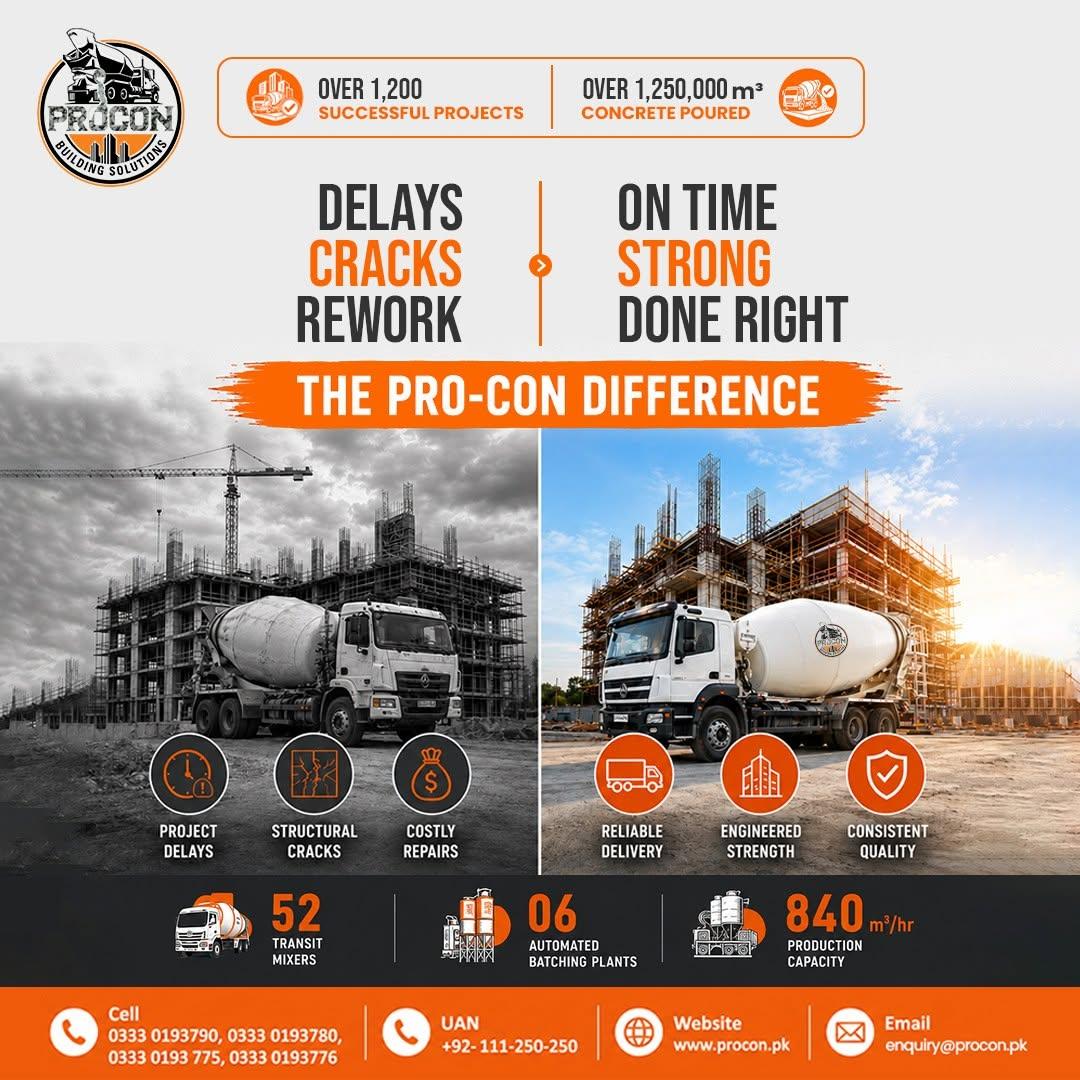
In the multifaceted discipline of civil engineering and commercial construction, concrete is the universal medium used to construct everything from massive load-bearing foundation mats to lightweight interior partitions. However, treating all concrete applications with the exact same quality standards is a critical engineering mistake. Construction projects are broadly divided into two distinct categories: structural elements, which bear primary gravity and lateral loads, and non-structural elements, which serve architectural, environmental, or space-dividing functions. While structural elements demand stringent compressive strength, continuous quality audits, and precise steel reinforcement integration, non-structural elements prioritize dimensional stability, finish quality, and cost efficiency. Understanding how quality requirements differ between these two applications ensures that project teams allocate resources effectively without compromising safety or over-engineering secondary components. For major commercial enterprises seeking absolute material reliability and tailored mix engineering across all project phases, partnering with established providers such as ready made concrete Karachi ensures that every pour—whether load-bearing or architectural—is backed by precise batching and expert technical oversight.
Defining Structural Elements and Their Rigorous Quality Demands
Structural elements are the critical load-carrying skeleton of a building or infrastructure asset. This category includes columns, beams, shear walls, foundation slabs, and bridge girders. The primary engineering mandate for structural concrete is predictable, high-level compressive strength and long-term durability under extreme environmental stress.
To achieve this, structural concrete requires:
-
High Compressive Strength Specifications: Ranging typically from moderate to ultra-high strengths, designed specifically to withstand calculated dead loads, live loads, seismic forces, and wind loads.
-
Rigid Quality Assurance and Testing: Mandatory cylinder break tests at 7 and 28 days, strict batch-to-batch homogeneity control, and continuous monitoring of the water-cement ratio to prevent internal micro-fissuring.
-
Controlled Curing and Thermal Management: In thick structural sections, managing cement hydration heat to prevent thermal cracking and ensuring long-term resistance against rebar corrosion.
Non-Structural Elements: Prioritizing Utility and Form
In contrast, non-structural elements do not carry primary building loads. This group encompasses interior partition walls, sidewalks, architectural veneers, curbs, and non-load-bearing floor toppings. While these components must still be durable enough to withstand environmental wear, their quality specifications focus on different physical properties.
Non-structural concrete typically features:
-
Lower Compressive Strength Requirements: Often designed with lower cement contents and higher aggregate proportions, as extreme load-bearing capacity is unnecessary.
-
Focus on Workability and Finish: Emphasizing smooth surface finishes, minimal drying shrinkage, and crack control to ensure architectural appeal and prevent surface dusting or scaling.
-
Economic Optimization: Utilizing cost-effective mix designs that reduce material expenses without sacrificing the functional utility of secondary elements. Sourcing high-grade commercial supplies from professional providers specializing in ready made concrete Karachi ensures that both structural and non-structural batches are delivered with exact specifications tailored to their specific site roles.
Avoiding Over-Engineering and Cross-Application Risks
A common pitfall on busy construction sites is the temptation to use leftover structural concrete for non-structural pours or vice versa. Misapplying a high-strength, densely reinforced structural mix to a non-structural sidewalk can lead to excessive finishing difficulties and high shrinkage cracking due to high cement paste content. Conversely, using a low-specification non-structural mix for a load-bearing column is a catastrophic safety violation. Project managers must enforce strict logistical separation to ensure that batches match their designated engineering blueprints.
Conclusion
Understanding how concrete quality requirements differ between structural and non-structural elements is essential for balancing building safety, structural integrity, and project economics. By tailoring compressive strength, curing protocols, and mix designs to match the exact functional role of each element, construction teams can eliminate inefficiencies and prevent structural failures. Prioritizing targeted material selection alongside trusted supply partnerships ensures that every phase of a construction project achieves optimal performance, durability, and safety.
Survey No. 423, Ibrahim Hydri, behind Bol head quarter, Korangi creek road, Karachi-74900
+92 21 111 250 250

 English
 French
 Spanish
 Portuguese
 Deutsch
 Turkish
 Dutch
 Italiano
 Russian
 Romaian
 Portuguese (Brazil)
 Greek