


Are Lumify Redness Reliever Eye Drops Safe for Daily Use?
Red or bloodshot eyes can be frustrating, especially when they appear during work, social events or everyday activities. Long hours in front of screens, environmental irritants and dry conditions can all contribute to temporary eye redness.
Many people turn to redness-relieving eye drops for a clearer appearance. However, if redness occurs frequently, an important question arises: Is it safe to use these drops every day?
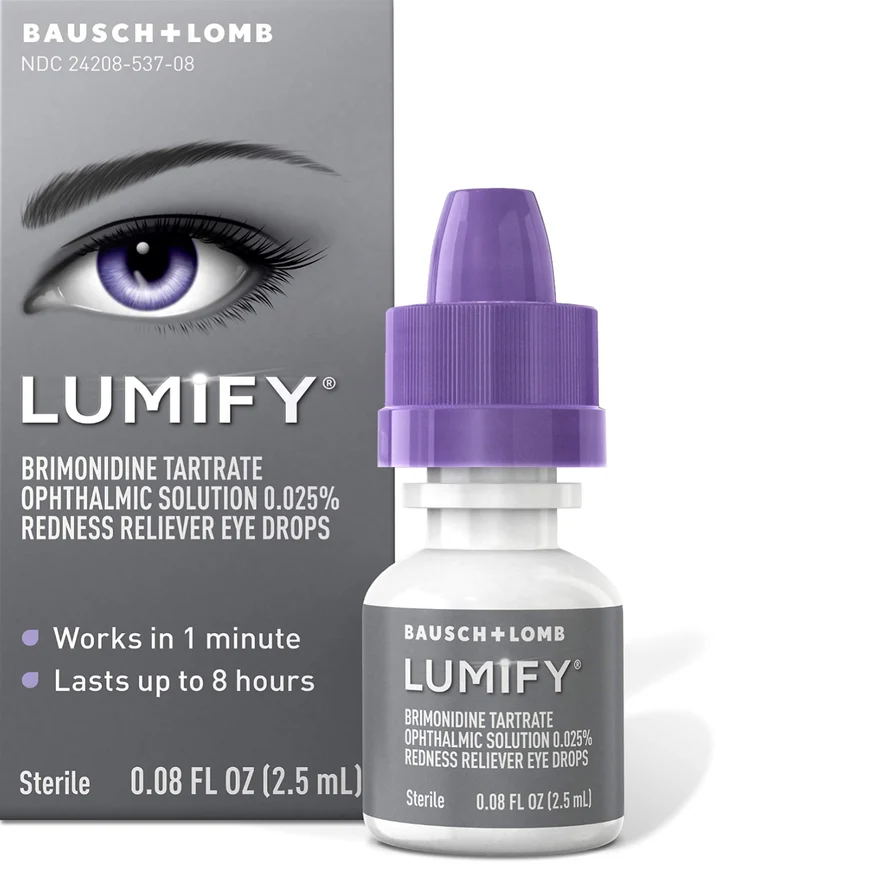
The lumify redness reliever eye drop contains brimonidine tartrate 0.025%, an ingredient designed to temporarily reduce redness associated with minor eye irritation.
Lumify may be used on consecutive days according to its labelled directions, but persistent redness lasting more than three days requires medical assessment.
Understanding the difference between occasional use and repeatedly treating unexplained redness is essential for maintaining eye health.
Can You Use Lumify Eye Drops Every Day?
Lumify is formulated to provide temporary redness relief when used according to the manufacturer's directions.
The Australian product instructions allow one drop in the affected eye or eyes every six to eight hours, up to four applications daily.
However, this dosing limit should not be interpreted as encouragement to use the product continuously.
Someone who occasionally develops red eyes from minor irritation may have different needs from someone experiencing redness every morning.
If symptoms continue, worsen or repeatedly return, an optometrist or ophthalmologist can help identify the underlying cause.
Eye redness may sometimes indicate a condition requiring treatment rather than temporary cosmetic improvement.
What Makes Lumify Different From Other Redness Relievers?
Lumify contains low-dose brimonidine tartrate, which acts primarily on alpha-2 adrenergic receptors.
These receptors help regulate blood vessel activity.
When brimonidine activates them, selected superficial blood vessels narrow, reducing their visible appearance.
Traditional redness-relieving drops containing ingredients such as tetrahydrozoline may have different receptor activity.
Clinical studies suggest low-dose brimonidine has a relatively low incidence of rebound redness when used as directed.
Rebound redness occurs when redness becomes more noticeable after a medication's effects wear off.
Nevertheless, a lower reported risk does not mean Lumify is suitable for unlimited or unsupervised use.
What Are Lumify Eye Drops Active Ingredients?
Consumers researching lumify eye drops active ingredients should understand both the medicinal ingredient and the supporting formulation.
Active ingredient: Brimonidine tartrate 0.025%.
This ingredient temporarily reduces redness associated with minor eye irritation.
The standard preserved formulation also contains inactive ingredients, including:
-
Benzalkonium chloride
-
Boric acid
-
Calcium chloride dihydrate
-
Glycerin
-
Potassium chloride
-
Sodium borate decahydrate
-
Sodium chloride
-
Water for injection
Hydrochloric acid or sodium hydroxide may be included for pH adjustment.
Benzalkonium chloride is a preservative that may cause irritation in some people with sensitive eyes.
Always review the ingredient list on the specific product packaging before use.
Can Daily Lumify Use Cause Side Effects?
Like other ophthalmic medicines, Lumify may cause unwanted reactions.
Although the manufacturer reports that it was generally well tolerated in clinical trials when used as directed, individual experiences can vary.
1. Temporary Eye Irritation
Some users may experience mild stinging, itching or discomfort after application.
Persistent irritation should be assessed rather than ignored.
2. Increased Tearing
Temporary watery eyes or a foreign-body sensation may occur in some individuals.
3. Rebound Redness
Lumify has demonstrated a relatively low incidence of rebound redness in clinical studies.
However, redness that continues or worsens should prompt medical advice.
4. Sensitivity to Preservatives
People with sensitive ocular surfaces may react to preservatives used in multidose eye drop formulations.
5. Masking an Underlying Condition
Repeatedly reducing redness without identifying its cause may delay appropriate diagnosis.
Eye infections, injuries and inflammatory conditions cannot be reliably distinguished by appearance alone.
How Often Should Lumify Be Applied?
For adults aged 18 years and older, the Australian manufacturer's directions specify:
-
Wash your hands before application.
-
Instil one drop into the affected eye or eyes.
-
Allow six to eight hours between applications.
-
Do not exceed four applications per day.
-
Remove contact lenses before use.
-
Wait at least 15 minutes before reinserting contact lenses.
-
Separate other ophthalmic products by at least five minutes.
-
Avoid touching the bottle tip to the eye or surrounding surfaces.
Lumify is not recommended for children younger than 18 under the Australian product directions.
Always follow the instructions supplied with your particular product.
When Should You Stop Using Lumify?
Eye redness should not automatically be considered harmless.
Stop using the drops and consult a healthcare professional if:
-
Redness or irritation worsens.
-
Symptoms persist beyond three days.
-
Eye pain develops.
-
Vision changes occur.
-
The product causes persistent discomfort.
Sudden vision loss, severe eye pain or significant eye injury requires urgent medical assessment.
People with existing eye conditions or those using other ophthalmic medicines should obtain professional advice before using additional eye drops.
Pregnant or breastfeeding individuals should also consult a healthcare professional.
Can Lumify Be Used With Contact Lenses?
Contact lens wearers may use Lumify when appropriate, but correct application is essential.
According to the Australian instructions, contact lenses must be removed before instilling the drops.
Users should wait at least 15 minutes before reinserting them.
Contact lenses can sometimes contribute to redness through dryness, poor fit or irritation.
If redness regularly occurs during contact lens wear, an optometrist should assess the cause.
Never use redness-relieving drops to conceal painful or persistent contact lens-related symptoms.
What Should Australian Consumers Know About Lumify?
People searching for lumify australia should pay attention to local medicine information.
Lumify brimonidine tartrate 0.025% eye drops are registered with Australia's Therapeutic Goods Administration under ARTG number 521957.
Shopy Catch lists Lumify Redness Reliever Eye Drops in a 2.5 mL bottle.
Because products sourced from different markets may carry different directions, consumers should confirm the supplied formulation, expiry date and applicable instructions.
The Australian manufacturer's FAQ recommends discarding opened multidose bottles after four weeks to reduce contamination risks.
Product authenticity and hygiene are especially important when medicines are applied directly to the eyes.
How Can You Reduce Frequent Eye Redness Naturally?
Improving everyday eye-care habits may help address some common causes of irritation.
Take regular screen breaks. The 20-20-20 approach encourages looking at something approximately six metres away for 20 seconds every 20 minutes.
Blink more frequently. Conscious blinking may help reduce screen-related dryness.
Avoid rubbing your eyes. Rubbing can increase irritation and discomfort.
Maintain contact lens hygiene. Follow appropriate cleaning, replacement and wearing schedules.
Manage environmental exposure. Reducing exposure to smoke, dust and excessively dry air may improve comfort.
Persistent symptoms may require professional assessment and treatment directed at their underlying cause.
Frequently Asked Questions
Is It Safe to Use Lumify Every Morning?
Lumify can be used according to its directions, but redness occurring every morning deserves investigation. Persistent symptoms should not be repeatedly concealed without medical advice.
Does Lumify Cause Rebound Redness?
Clinical studies suggest a relatively low incidence of rebound redness when used as directed, although adverse effects remain possible.
How Long Do Lumify Eye Drops Work?
The manufacturer reports that redness relief can begin within approximately one minute and last up to eight hours.
Can Lumify Treat Dry-Eye Disease?
No. Lumify temporarily reduces visible redness associated with minor irritation but is not a treatment for dry-eye disease.
Can Lumify Be Used More Than Four Times Daily?
No. The Australian product directions specify a maximum of four applications daily.
Final Thoughts
Lumify Redness Reliever Eye Drops contain brimonidine tartrate 0.025%, which temporarily reduces visible redness by acting on selected blood vessels.
When used as directed, Lumify may provide effective relief from occasional redness associated with minor irritation.
However, recurring redness should not be ignored simply because eye drops improve its appearance.
Understanding the product's application limits, possible side effects and warning signs can help consumers make informed decisions while protecting their long-term eye health.
Medical Disclaimer: This article is for general educational purposes only and does not replace professional medical advice, diagnosis or treatment. Always follow the applicable product label and consult a qualified eye-care professional regarding persistent redness, existing eye conditions or medication use.

 English
 French
 Spanish
 Portuguese
 Deutsch
 Turkish
 Dutch
 Italiano
 Russian
 Romaian
 Portuguese (Brazil)
 Greek