


When Is a Linear Potentiometer Position Sensor the Best Fit?
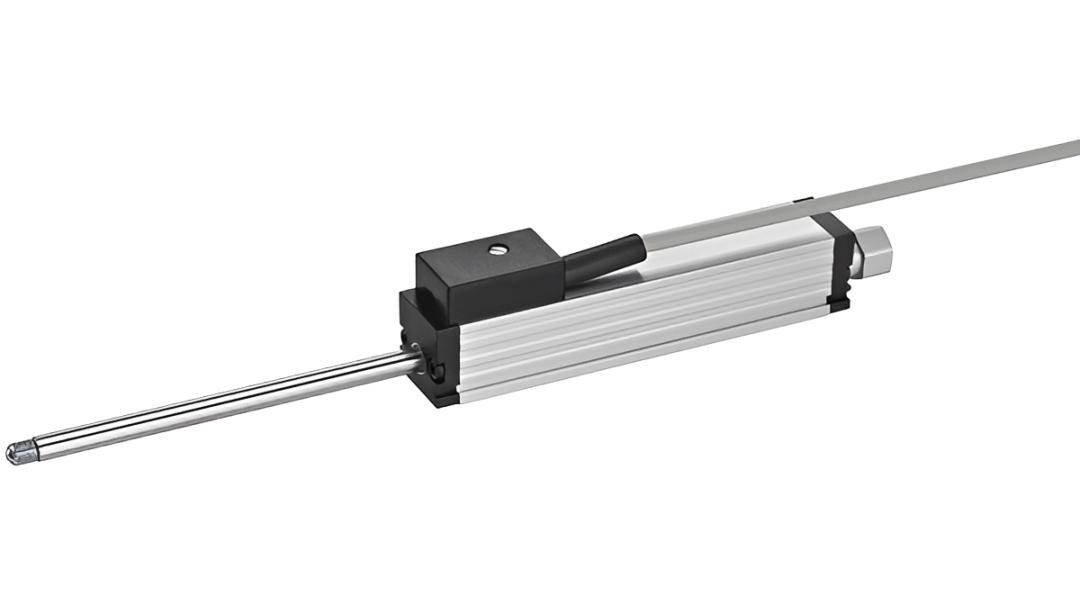
A Linear Potentiometer Position Sensor becomes useful when the question is not simply whether a machine moved, but exactly where its moving part stopped. By translating displacement into a changing analogue voltage, it gives designers a practical way to monitor short movements, compare repeated cycles and identify unexpected changes before they disrupt a process.
The Linear Potentiometer Position Sensor represented by Novotechnik's TR-0010 offers a useful example. Its spring-return measuring rod follows physical movement, while a conductive-plastic track produces a voltage-divider signal. The model has a 10 mm defined electrical measuring range, making it suited to carefully controlled short-stroke measurements rather than unlimited travel.
When Is Potentiometric Measurement the Right Choice?
Potentiometric measurement makes sense when a project needs a continuous signal without a complicated interface. An engineer can observe movement directly from the voltage and calibrate it against known positions. This straightforward relationship can simplify prototype development and maintenance.
However, the sensor touches the mechanism it measures. Contact can be an advantage when a probe needs to follow a surface, but it can be a limitation where friction, contamination or extreme operating speeds make physical contact undesirable.
Another benefit is interpretability. A maintenance engineer can compare a present reading with a recorded reference without decoding a complex communications protocol. That simplicity is valuable in a retrofit, particularly when the control cabinet already has spare analogue measurement capability.
Contact Sensors Versus Contactless Alternatives
A non-contact device can avoid wear at the sensing interface and may be better for inaccessible or heavily contaminated locations. A potentiometric probe, by comparison, can provide an uncomplicated signal and a clear mechanical reference point.
The appropriate choice depends on the installation rather than a blanket claim that one technology is more accurate. Consider mounting space, operating cycles, electrical noise, environment and the distance that genuinely needs measuring.
How Can You Turn Voltage Into Meaningful Movement?
With a stable reference voltage applied across the resistive element, the wiper output changes as the rod moves. Software or a measurement instrument can relate the voltage to a physical position using calibration points.
For instance, two known positions may establish the beginning and end of a usable measurement scale. Extra checkpoints can reveal whether alignment, wiring or mechanical loading introduces unexpected differences across the stroke.
What Can Cause Unstable Readings?
Several issues can make an otherwise suitable sensor appear unreliable:
- A changing excitation voltage affects the measured output.
- Low input impedance draws unwanted current from the wiper.
- Poor grounding or nearby switching equipment introduces interference.
- Loose mechanical mounting changes the point of contact.
- A moving part exceeds the sensor's specified electrical range.
When investigating these symptoms, technicians often use Multimeters to check excitation and wiper voltages at known positions. A meter helps with initial diagnosis, although rapidly changing signals may require a faster measurement method.
What Does the TR-0010 Datasheet Actually Tell You?
The distinction between usable measurement and overall movement deserves attention. Novotechnik specifies a defined electrical range of 10 mm, an electrical stroke of 12 mm and a mechanical stroke of 15 mm for the TR-0010. These values describe different physical and electrical limits.
Its nominal resistance is 1 kΩ, while the maximum permissible applied voltage is 24 V. The manufacturer also specifies ±0.25% independent linearity and a recommended operating wiper current below 1 µA. These are conditions for proper design, not figures to apply indiscriminately to every installation.
Why Environmental Ratings Matter
The device has an IP40 protection classification and a stated operating temperature range of -30°C to +100°C. IP40 does not mean it is protected against water, so washdown equipment or exposed outdoor machinery requires a different environmental strategy.
Furthermore, temperature capability does not remove the need to consider cable routing, mounting stability or exposure to chemicals. A sensor can satisfy a temperature limit yet still fail to suit the surrounding machine.
Where Does Feedback Improve Machine Decisions?
Imagine a fixture that presses a small component into place. A basic switch might confirm that a mechanism reached a particular point, whereas continuous feedback can show how far it travelled during each cycle. Trends in those readings may reveal gradual changes in the process.
Similarly, when Linear Actuators move a slide or adjustment mechanism, separate position feedback can help compare intended movement with actual travel. The sensor range and physical mounting still need to match the motion being monitored.
Practical Selection Questions
Before specifying a sensor, confirm:
- Is the important movement shorter than the defined electrical range?
- Can a spring-return probe contact the surface consistently?
- Does the electronics input have sufficiently high impedance?
- Will the equipment operate within its environmental limits?
- Can mounting and calibration be checked during maintenance?
These questions focus the selection process on application fit instead of treating an attractive accuracy figure as the only buying criterion.
How Do You Keep Position Feedback Dependable?
Plan the measuring point before routing the wiring. Mount the probe so that it follows the desired axis, protect it from accidental overtravel and record reference readings after installation. Recheck those readings if the fixture or mechanical linkage changes.
For long-running equipment, keep a baseline from commissioning: wiper voltage at a known mechanical position, the reference supply and an inspection note. Comparing subsequent readings under similar conditions helps separate sensor faults from changes in the mechanism.
A stable electrical connection is equally important because the useful output is a proportional voltage, not an automatically error-proof digital message. Where wiring must pass through a busy machine, suitable Sensor & Actuator Cables can support organised routing and noise-conscious installation when matched to the sensor's supplied lead and the receiving equipment.

 English
 Arabic
 Spanish
 Portuguese
 Deutsch
 Turkish
 Dutch
 Italiano
 Russian
 Romaian
 Portuguese (Brazil)
 Greek