


Why Do TRIACs Matter in Modern AC Control Circuits?
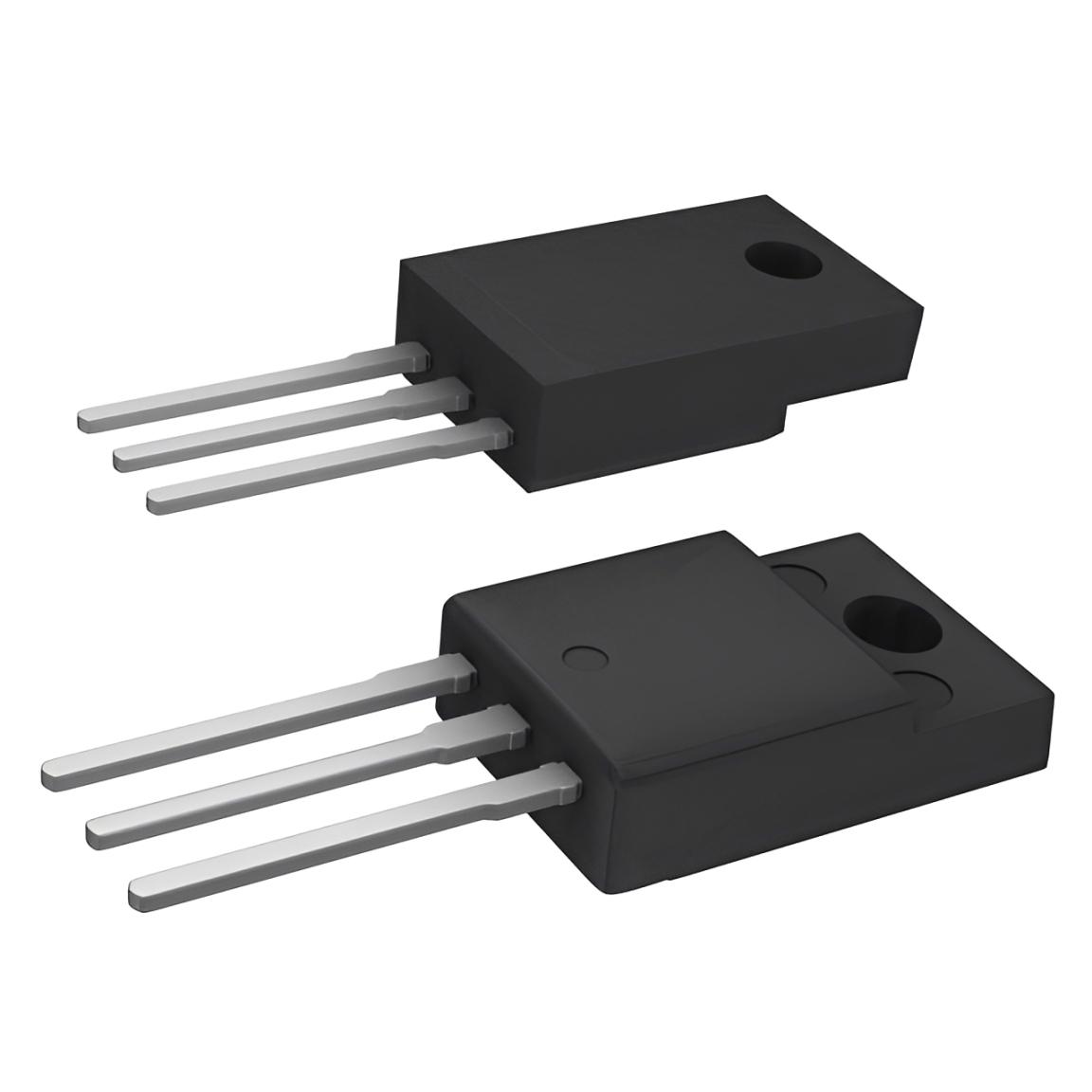
Controlling alternating current accurately is essential in many electrical systems, from household appliances to industrial automation. Engineers often need a component that can switch AC loads quickly, handle current flowing in both directions, and work efficiently with electronic control circuits. TRIACs are widely used to meet these requirements.
TRIACs are semiconductor switching devices designed specifically for alternating-current applications. Their ability to conduct in both directions makes them particularly valuable in systems where power needs to be switched, adjusted, or regulated electronically.
They are commonly found in lighting controllers, heater circuits, motor speed controls, power tools, household appliances, and automation systems. Their compact size, rapid switching capability, and compatibility with modern electronics have made them an important part of many AC power-control designs.
What Is a TRIAC and What Does It Do?
A TRIAC is a three-terminal semiconductor device used to control AC current.
Its three terminals are:
- Main Terminal 1
- Main Terminal 2
- Gate
The two main terminals carry load current, while the gate receives the signal that causes the TRIAC to switch on.
The most important feature of a TRIAC is that it can conduct current in both directions. This is different from many semiconductor devices that primarily allow current to pass in only one direction.
Because AC voltage alternates between positive and negative polarity, bidirectional conduction makes TRIACs especially suitable for controlling mains-powered equipment.
How Does a TRIAC Start Conducting?
A TRIAC normally remains in a blocking state until its gate receives a suitable trigger signal.
Once triggered, the device moves into a conducting state and current flows between its main terminals.
Unlike some transistor-based switches, the gate does not normally need to remain continuously active to maintain conduction. The TRIAC stays on as long as the current through it remains above a certain minimum value.
When the AC current falls below this level, the device switches off naturally.
This repeated switching behaviour occurs every cycle in many practical circuits.
Why Are TRIACs Suitable for AC Waveforms?
Alternating current constantly changes direction. This means a switching device must work effectively during both the positive and negative portions of the waveform.
TRIACs are designed for this exact situation.
Instead of requiring two separate unidirectional switching devices, a single TRIAC can control both halves of the AC cycle.
This simplifies circuit design and can reduce:
- Component count
- Circuit size
- Wiring complexity
- Mechanical switching requirements
- Overall design cost
For many low- and medium-power AC applications, this makes TRIACs an efficient solution.
How Do TRIACs Regulate Power Instead of Simply Switching It?
One of the most useful applications of TRIACs is power regulation.
Rather than turning a load on for the entire AC cycle, the TRIAC can be triggered after a controlled delay.
This means only part of the waveform reaches the load.
If the TRIAC is activated early in each half-cycle, more power is delivered.
If triggering is delayed, less power is supplied.
This technique is known as phase-angle control.
It is commonly used in applications such as:
- Lighting dimmers
- Fan speed controllers
- Heating regulators
- Power tools
- Small motor controls
- Variable AC loads
The ability to control the conduction angle makes TRIACs highly flexible.
Where Are TRIACs Used in Everyday Equipment?
TRIACs appear in many devices that people use regularly.
Household Appliances
Electronic appliances often need compact AC switching components.
TRIACs may be used to control:
- Heating elements
- Pumps
- Motors
- Lamps
- Solenoids
- Internal power circuits
Examples can include washing machines, food processors, vacuum cleaners, and kitchen equipment.
Lighting Systems
TRIACs are often used in compatible dimming circuits.
By changing the point at which the device conducts during each AC half-cycle, the circuit can regulate the power delivered to the lamp.
This allows the brightness level to be adjusted electronically.
Electric Heating
Heating applications are particularly suitable because many heaters behave primarily as resistive loads.
TRIACs can regulate power to heating elements in equipment such as:
- Ovens
- Laboratory heaters
- Heating panels
- Temperature controllers
- Industrial heating systems
This allows more precise temperature management.
How Do TRIACs Work with Motor Loads?
TRIACs can also control certain AC motors, especially universal motors.
By altering the power delivered during each AC cycle, the circuit can change motor speed.
This approach is found in products such as:
- Electric drills
- Vacuum cleaners
- Mixers
- Fans
- Hand-held tools
Motor loads can be more difficult to control than resistive loads because they may create electrical noise and voltage transients.
For this reason, TRIAC motor-control circuits often require additional protection.
What Is Holding Current in a TRIAC?
Holding current is an important parameter in TRIAC operation.
It is the minimum current that must continue flowing through the device to keep it switched on.
If the current drops below this level, the TRIAC returns to its off state.
In AC circuits, this often happens naturally when the current passes through zero.
Designers must understand holding current because it can affect performance with light loads or unusual operating conditions.
What Is Latching Current?
Latching current is another important parameter.
It represents the minimum current required immediately after the TRIAC has been triggered so that it remains conducting after the gate signal is removed.
Latching current is generally relevant during the moment when the device first turns on.
Both holding current and latching current must be considered when designing reliable switching circuits.
Why Is Gate Sensitivity Important?
Different TRIACs require different levels of gate current to trigger.
A highly sensitive TRIAC may switch on with a relatively small gate signal, while another device may require a stronger trigger.
Gate sensitivity is particularly important when a TRIAC is controlled by:
- Microcontrollers
- Logic circuits
- Optocouplers
- Timing circuits
- Sensor-based controllers
If the gate signal is too weak, the device may fail to switch reliably.
How Do Optocouplers Improve TRIAC Control?
Optocouplers are commonly used between low-voltage control circuits and TRIAC power stages.
Their main purpose is electrical isolation.
A microcontroller may operate at only a few volts, while the TRIAC could be switching mains-level AC voltage.
An optocoupler helps separate these two sections electrically.
This can provide benefits such as:
- Improved safety
- Reduced interference
- Better protection for control electronics
- Simplified signal isolation
Optotriac drivers are especially common in modern control systems.
Why Are Snubber Networks Added to TRIAC Circuits?
TRIACs can sometimes be affected by rapid voltage changes.
Inductive loads are particularly likely to generate switching transients.
A snubber network is commonly used to reduce these effects.
A typical snubber circuit includes:
- Resistor
- Capacitor
Together, these components can help reduce sudden voltage changes across the TRIAC.
Other protection components may also be used, including:
- Varistors
- Fuses
- Surge suppressors
- Current-limiting components
Proper protection increases circuit reliability.
What Ratings Matter When Selecting a TRIAC?
Choosing a TRIAC requires careful attention to its electrical limits.
Important specifications include:
- Maximum repetitive off-state voltage
- RMS on-state current
- Surge current capability
- Gate trigger current
- Holding current
- Latching current
- On-state voltage drop
- Maximum junction temperature
- Thermal resistance
A TRIAC should not be selected only according to normal operating current.
Startup surges, abnormal conditions, temperature, and load type must also be considered.
Why Is Thermal Management Necessary?
TRIACs generate heat while conducting current.
The amount of heat depends on several factors, including:
- Load current
- On-state voltage
- Conduction period
- Ambient temperature
- Package type
Higher-power applications may require a heat sink or other thermal management measures.
Without adequate cooling, junction temperature can rise too far and reduce component life.
Good thermal design therefore improves both performance and reliability.
How Does Zero-Cross Switching Help?
Zero-cross switching activates the TRIAC close to the point where the AC voltage passes through zero.
This approach can reduce sudden electrical transitions.
It is often used in applications such as:
- Heating systems
- Solid-state relays
- Industrial switching
- Resistive loads
- Temperature controllers
Zero-cross switching is different from phase-angle control because the objective is usually clean on-off switching rather than variable waveform control.
What Are the Main Benefits of TRIACs?
TRIACs remain popular because they offer a useful combination of electrical and mechanical advantages.
Their benefits include:
- Bidirectional AC switching
- Compact construction
- Fast response
- Silent operation
- No moving contacts
- Easy integration with electronics
- Suitable power regulation
- Long service life when properly designed
These characteristics make them practical for many automated systems.
How Are TRIACs Used in Smart Power Control?
Modern electronics increasingly combine semiconductor switches with processors and sensors.
A microcontroller can monitor temperature, speed, user input, or operating conditions and then control a TRIAC accordingly.
This allows systems to support:
- Automatic dimming
- Smart heating
- Programmable motor control
- Energy management
- Sensor-based switching
- Remote operation
TRIACs therefore act as an important bridge between digital control signals and higher-power AC loads.
Conclusion
TRIACs are valuable semiconductor devices for controlling alternating current in both directions. Their ability to respond to gate signals and regulate portions of an AC waveform makes them suitable for lighting, heating, motors, appliances, automation, and power-control applications.
Reliable TRIAC operation depends on correct electrical ratings, gate drive, thermal design, and protection against surges and transients.
When these factors are carefully considered, TRIACs provide an effective and compact way to manage AC power in both simple and advanced electronic systems.

 English
 Arabic
 French
 Spanish
 Deutsch
 Turkish
 Dutch
 Italiano
 Russian
 Romaian
 Portuguese (Brazil)
 Greek