


What to Do When a Fully Loaded Semi-Truck Breaks Down in Atlanta Traffic
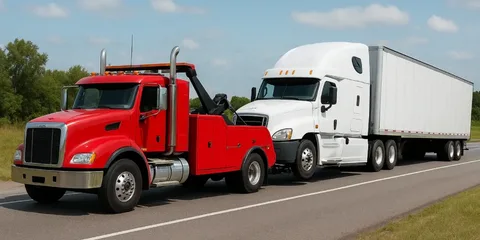
A fully loaded semi-truck breaking down in Atlanta traffic can create a challenging situation for the driver, nearby motorists, and the trucking company responsible for the shipment. A commercial vehicle carrying heavy cargo needs more space to maneuver, takes longer to stop, and may be difficult to move once a mechanical problem occurs. When a breakdown happens on a busy highway or congested city road, the situation can quickly become a traffic obstruction and a safety concern.
Atlanta's major transportation routes, including I-285, I-75, I-85, and I-20, carry substantial commercial traffic. A disabled tractor-trailer on one of these routes can affect surrounding vehicles and delay deliveries. Knowing what to do immediately after a breakdown can help drivers protect themselves, communicate effectively with dispatchers, and arrange the appropriate heavy-duty towing or recovery service.
Recognize When the Truck Can No Longer Continue Safely
A fully loaded semi-truck may experience several problems that make continued driving unsafe. Engine overheating, transmission failure, air brake issues, tire blowouts, electrical faults, and damaged driveline components can all leave a commercial vehicle unable to continue its journey.
Drivers should pay attention to warning lights, unusual vibrations, changes in steering, loss of engine power, and abnormal sounds. A truck that begins losing power while climbing a grade or moving through stop-and-go traffic may also have an underlying mechanical problem.
If a critical system fails, the driver should not attempt to continue simply to reach the next delivery point. A loaded truck places additional demands on its tires, brakes, suspension, and drivetrain. Continuing to operate a vehicle with a serious fault can increase damage and make recovery more complicated.
Move Out of Traffic When It Is Safe to Do So
The truck's location is one of the most important factors during a breakdown. If the vehicle remains controllable, the driver should carefully move toward a suitable shoulder, designated stopping area, or other safe location away from active traffic.
However, drivers should not make sudden lane changes or attempt risky maneuvers to escape congestion. A fully loaded tractor-trailer requires considerable space to change direction, and abrupt movements can put nearby vehicles at risk.
If the truck stops in a travel lane and cannot be moved, the driver should activate the hazard lights and follow emergency procedures. On busy Atlanta roads, especially during rush hour, approaching drivers may have limited room to avoid a stationary commercial vehicle.
If the breakdown creates an immediate danger or blocks a dangerous section of roadway, contact 911 or the appropriate highway emergency service. Drivers should not attempt to push or pull the disabled truck with another vehicle unless a qualified professional has determined that a specific recovery procedure is safe.
Secure the Scene and Protect the Driver
Once the truck has stopped, the driver should focus on personal safety rather than immediately inspecting the mechanical problem. Hazard lights should be activated, and warning triangles should be placed as required by applicable commercial vehicle regulations, provided they can be deployed safely.
The driver should avoid standing behind the trailer, between the truck and passing traffic, or beside the vehicle in a location where another motorist could strike them. Getting out of the cab is not automatically the safest choice; the appropriate action depends on traffic conditions, the vehicle's position, and the immediate hazards.
If there is smoke, fire, a fuel leak, or another serious hazard, the driver should move away from danger when safe and contact emergency services. A truck carrying hazardous materials may require additional emergency procedures based on its cargo and shipping documentation.
Understand How Cargo Weight Affects Heavy-Duty Recovery
A loaded semi-truck presents different recovery requirements from an empty tractor-trailer. The combined weight of the tractor, trailer, and cargo influences the equipment needed, the recovery method, and the time required to complete the operation.
Cargo distribution also matters. Unevenly distributed weight can affect vehicle stability, while a shifted load may make lifting or moving the truck more complicated. If the trailer is damaged or leaning, recovery operators must assess its condition before deciding how to proceed.
In some situations, the truck may be towable with the trailer attached. In others, the tractor and trailer may need to be handled separately, or the cargo may need to be transferred before the recovery can be completed. These decisions depend on the vehicle configuration, load, mechanical damage, and recovery location.
Drivers should provide the towing dispatcher with the best available information about the cargo and estimated vehicle weight. They should never guess at a safe towing capacity or assume that any heavy-duty tow truck can handle every loaded combination.
Provide Accurate Information When Requesting Heavy-Duty Towing
When a fully loaded semi-truck becomes disabled in Atlanta traffic, the information provided to the towing company can influence how quickly the correct equipment is dispatched.
The driver or fleet dispatcher should explain the exact location, direction of travel, nearest exit, and any available mile-marker information. They should also describe the truck and trailer configuration, the suspected mechanical problem, and whether the vehicle is blocking traffic.
Other useful details include the estimated gross vehicle weight, cargo type, trailer condition, damaged wheels or axles, and whether the truck can roll or steer. If the vehicle has a locked wheel or damaged drivetrain, mentioning that issue can help the operator prepare for a more complex recovery.
Clear communication reduces unnecessary back-and-forth and helps the towing provider assess the situation before arriving. If the cargo is hazardous or requires special handling, that information should be communicated immediately.
Why the Right Recovery Equipment Matters
Heavy-duty towing requires equipment suited to the weight and condition of the disabled vehicle. A standard light-duty tow truck is generally not appropriate for recovering a fully loaded tractor-trailer.
Depending on the circumstances, recovery may involve a heavy-duty wrecker, specialized lifting equipment, winching systems, or additional support vehicles. The operator must assess the truck's position, load, drivetrain, wheels, and structural condition before choosing the recovery method.
For example, a tractor with a transmission problem may require a different towing setup from a trailer that has overturned or a truck that has slid into a ditch. Damaged axles and locked wheels can also affect how the vehicle must be lifted or moved.
The goal is to recover the truck without causing further damage, compromising cargo stability, or exposing other motorists to unnecessary risks. Drivers and fleet managers should provide accurate information and follow the instructions of qualified recovery professionals.
Prepare for Traffic Delays and Coordinate With Dispatch
A breakdown involving a loaded semi-truck can affect more than the driver. Dispatchers may need to update delivery schedules, notify customers, arrange a replacement tractor, or coordinate cargo transfers. When the vehicle is obstructing a busy road, traffic management and safe recovery access can also influence the timeline.
Drivers should communicate with dispatch as soon as practical and provide updates about the vehicle's condition and location. Dispatchers should avoid sending additional vehicles into a congested recovery area unless the towing operator or relevant authorities have coordinated the arrangement.
Delivery deadlines should not take priority over safety. Rushing a recovery or attempting to move a truck before it has been assessed can create further mechanical damage and additional delays.
Prevent Breakdowns Through Routine Commercial Truck Maintenance
Although not every breakdown can be prevented, regular maintenance helps reduce the risk of becoming stranded in Atlanta traffic with a full load.
Before a trip, drivers should inspect tires, check visible fluid leaks, verify that lights and electrical systems function properly, and pay attention to warning indicators. Brake systems, cooling systems, suspension components, batteries, and driveline parts should be maintained according to the manufacturer's recommendations and applicable inspection requirements.
Fleet managers can also review recurring breakdown reports to identify patterns across vehicles. Repeated overheating, tire damage, low air pressure, or electrical faults may indicate problems that require attention before the next long-distance haul.
Preventive maintenance cannot eliminate every emergency, but it can reduce avoidable failures and help keep commercial vehicles operating safely.
Get Heavy-Duty Towing Assistance in Atlanta, GA
When a fully loaded semi-truck breaks down in Atlanta traffic, the priority is to protect the driver, warn approaching motorists when safe, and arrange the right assistance for the vehicle's condition. The truck's weight, cargo, mechanical damage, and location all influence the recovery method.
If you need a company that provides heavy-duty towing or commercial truck recovery in Atlanta, Georgia, connect with DR Wrecker to discuss your breakdown and recovery needs. Share the truck's location, vehicle configuration, estimated load, and known mechanical issues so the appropriate service can be determined.

 English
 Arabic
 French
 Spanish
 Portuguese
 Deutsch
 Dutch
 Italiano
 Russian
 Romaian
 Portuguese (Brazil)
 Greek