


The Engineering Behind Heavy-Duty Scooter Guards: Safety Meets Precision Design
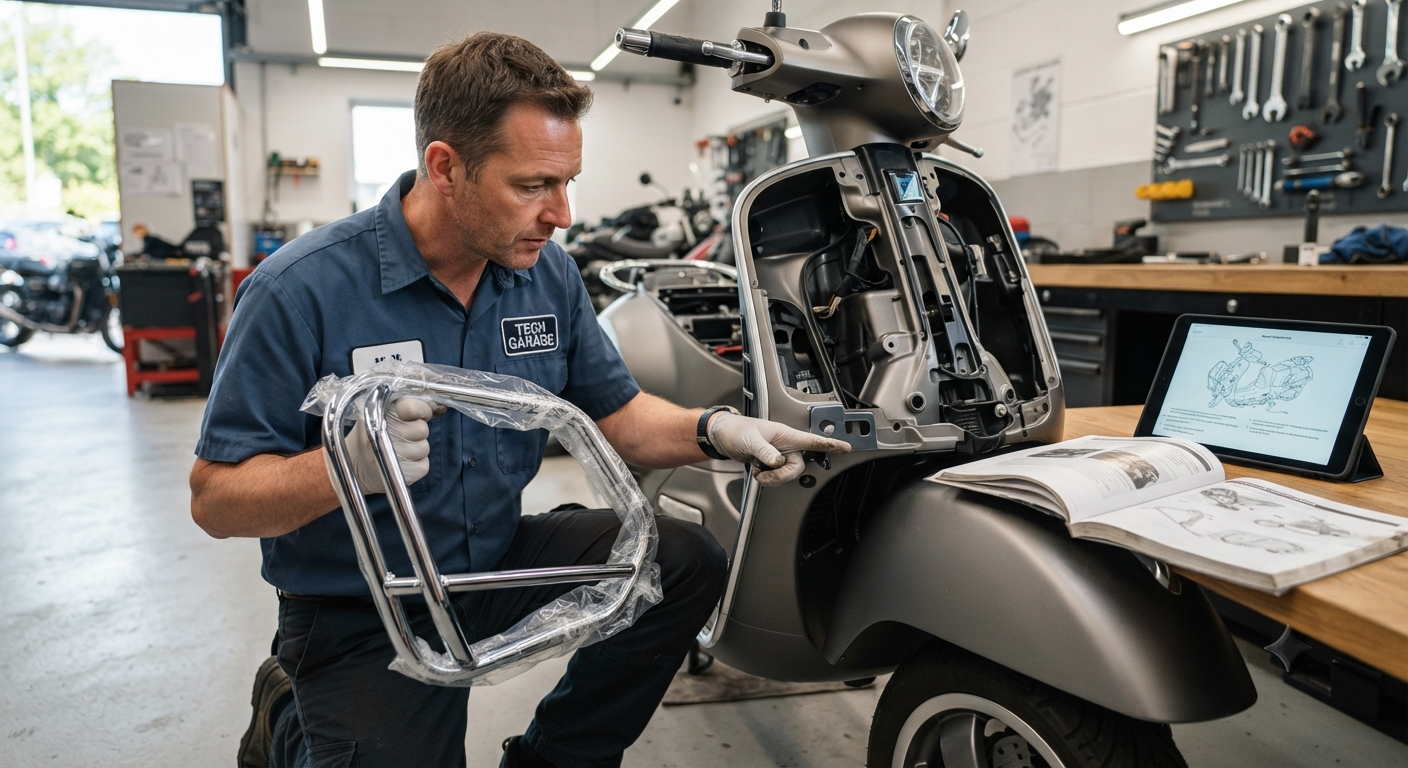
A scooter crash guard might look like a simple metal frame attached to the bodywork, but its design involves more than bending a few steel tubes and fixing them to a vehicle. The shape, material, mounting points, weld quality, and clearance around nearby components all influence how the guard performs in everyday use.
For riders who commute through crowded streets, park in tight spaces, or use their scooters regularly, a heavy-duty guard can be a useful protective accessory. However, the term “heavy-duty” should mean more than a thick appearance or a bulky design. Good engineering is about creating a guard that is strong enough for its intended purpose, fits the scooter correctly, and does not interfere with normal operation.
Understanding the engineering behind scooter guards makes it easier to choose an accessory based on practical considerations rather than appearance alone.
What Makes a Scooter Guard Heavy-Duty?
A heavy-duty scooter guard is generally designed with durability, structural integrity, and reliable mounting in mind. Its performance depends on how its components work together rather than on any single feature.
For example, a guard made from strong steel may still be poorly suited to a scooter if its brackets are weak or its mounting points are incorrectly positioned. Similarly, a well-shaped frame can develop problems if the welds are inconsistent or the protective coating deteriorates.
Three factors deserve particular attention: material selection, structural design, and accurate fitment.
A properly designed guard should suit the scooter model and its intended use. It should not be selected simply because it looks larger or heavier than competing products.
The Role of Material Selection
Why Steel Is Commonly Used
Steel is widely used in tubular protective accessories because it offers useful strength, stiffness, and formability. Manufacturers can shape steel tubes into frames designed to fit around particular sections of a scooter.
The exact performance depends on the steel grade, tube diameter, wall thickness, manufacturing process, and overall geometry. These factors influence how the guard responds when a force is applied.
A thicker tube is not automatically the best option. Excessive weight can make an accessory unnecessarily bulky, while an unsuitable design may transfer unwanted loads to the scooter's mounting points.
The goal is to balance strength, weight, fitment, and the intended protective function.
Surface Finish and Corrosion Protection
Scooters regularly encounter rain, dust, road grime, and changing temperatures. These conditions can affect exposed metal, particularly when the protective coating becomes scratched or damaged.
Paint, powder coating, plating, and other suitable finishes can help protect metal surfaces from corrosion. The quality of the preparation and application matters, as does the condition of the finish during regular use.
Riders should inspect their guards occasionally for chipped coatings, rust, and signs of deterioration. Addressing these issues early can help maintain the accessory's condition.
Plastic Components Have a Different Purpose
Some scooter accessories use plastic for covers, trim, or cosmetic protection. Plastic can offer low weight, resistance to rust, and flexibility depending on the material used.
However, a plastic body protector should not automatically be considered equivalent to a structural metal crash guard. Each component needs to be evaluated according to its design and intended purpose.
When purchasing a protective accessory, check the actual product specifications rather than relying on descriptions such as “premium” or “heavy-duty.”
Precision Design: Why Shape and Geometry Matter
A crash guard's shape affects its fit, clearance, and response to external forces. The frame must follow the scooter's contours while leaving enough space for nearby body panels and moving components.
Tube Bending and Frame Geometry
Tubular guards are shaped to provide the required coverage without occupying unnecessary space. Consistent bends help the frame align with its mounting brackets and intended attachment points.
Poorly formed bends may create alignment problems or concentrated stress in certain areas. A guard that requires excessive force to fit may also place unwanted loads on the brackets or scooter structure.
Precision manufacturing helps reduce these issues by keeping dimensions and mounting positions consistent.
Mounting Points and Bracket Design
Mounting points are among the most important parts of a scooter guard. They connect the accessory to the vehicle, so their position and design affect stability and load transfer.
Brackets must align with the intended attachment points and use suitable hardware. Incorrectly positioned mounts, loose fasteners, or improvised modifications can compromise the installation.
A guard should never be forced into position merely because its overall shape looks correct. Confirm compatibility with the exact scooter model and variant before fitting it.
Weld Quality and Joint Strength
Where a guard uses welded steel tubes, the joints are critical to its structural integrity. Inconsistent welds, poor penetration, or manufacturing defects can create weak points.
A clean-looking weld is not, by itself, proof of strength. Proper manufacturing procedures and quality checks are important for ensuring that joints meet the design requirements.
For buyers, this means choosing products from sellers who provide clear specifications and avoiding accessories with visible cracks, irregular joints, or signs of poor finishing.
“A strong guard is not just thick metal; it is a carefully matched combination of material, geometry, joints, and mounting points.”
How Guards Respond to Impact
When a scooter tips over or contacts an obstacle, the guard may experience forces that travel through its frame and mounting hardware. The way those forces are distributed depends on the guard's shape, stiffness, attachment points, and the nature of the impact.
A well-designed guard may help keep certain body panels away from the ground or an obstacle during a minor incident. However, it cannot guarantee that the scooter will remain undamaged.
There is also an important engineering distinction between strength and impact performance. A component that is extremely rigid is not automatically safer in every collision. Excessive forces can be transferred to the mounting points or surrounding vehicle structure.
For this reason, a heavy-duty appearance should not be confused with verified crash performance. Claims about protection should be supported by appropriate testing rather than assumptions based on weight or thickness.
Crash guards are also not substitutes for helmets, safe riding practices, or manufacturer-approved safety equipment.
Why Model-Specific Fitment Is Essential
Scooters that look similar may differ in body dimensions, mounting locations, and component layouts. A guard intended for one model may not align correctly with another, even if both vehicles belong to the same brand.
Model-specific fitment helps ensure that the accessory sits in the intended position and leaves suitable clearance around nearby components.
Before ordering, check the scooter's exact model, manufacturing year, and variant. Review the product description and installation requirements carefully.
A correctly fitted guard should not obstruct steering, interfere with normal suspension movement, create contact with body panels, or make routine maintenance unnecessarily difficult. If installation requires unfamiliar tools or modifications, professional fitting is the sensible choice.
Maintenance: Keeping the Guard in Good Condition
Even a well-made accessory needs occasional inspection. Daily riding exposes guards to vibration, moisture, dust, and minor knocks.
A simple maintenance routine can help identify problems before they become more serious.
-
Check mounting bolts and fasteners periodically for looseness.
-
Look for rust, chipped paint, or damaged protective coatings.
-
Inspect welds and brackets for visible cracks or deformation.
-
Check whether the guard has shifted or started contacting nearby panels.
-
After a significant impact, have the guard and its mounting points inspected before continuing to use the scooter.
Do not attempt to straighten a significantly bent guard or repair a damaged structural joint without an appropriate assessment. Replacement may be necessary if the accessory's integrity has been compromised.
Choosing Heavy-Duty Scooter Guards at Paragon Accessories
For riders comparing protective accessories, Paragon Two Wheeler Accessories offers model-specific two-wheeler products, including front and side crash guards for selected scooters and motorcycles.
The important step is to review each product individually. Check the listed compatibility, construction details, finish, mounting requirements, and current price rather than assuming every guard offers the same level of protection.
You can explore available options through the Paragon Two Wheeler Accessories website. For help identifying a suitable product, share your scooter's exact model, year, and variant with the team before placing an order.
Contact details:
-
Phone: +91 90813 36242 / +91 92276 28929
-
Email: [email protected] or [email protected]
-
Address: Survey No. 671, Plot No. 2, Sopan Industrial Zone-1, Near Microwave Tower, NH-27, Shapar (Veraval), Rajkot – 360024, Gujarat.
If the product listing does not specify the material, coating, or fitting details you need, confirm those details before buying.
Final Thoughts
The engineering behind a heavy-duty scooter guard comes down to several connected decisions: choosing suitable materials, designing the frame carefully, producing reliable joints, and ensuring accurate fitment.
A guard that looks robust but fits poorly may create more problems than it solves. Likewise, a well-designed accessory needs proper installation and regular inspection to remain in good condition.
When choosing a scooter crash guard, look beyond its size and finish. Prioritise compatibility, construction quality, mounting hardware, and clear product information. Precision in these details is what makes a protective accessory worth considering for everyday riding.

 Arabic
 French
 Spanish
 Portuguese
 Deutsch
 Turkish
 Dutch
 Italiano
 Russian
 Romaian
 Portuguese (Brazil)
 Greek