


Home Radon Detection: When Should Brooklyn Homeowners Test Again?
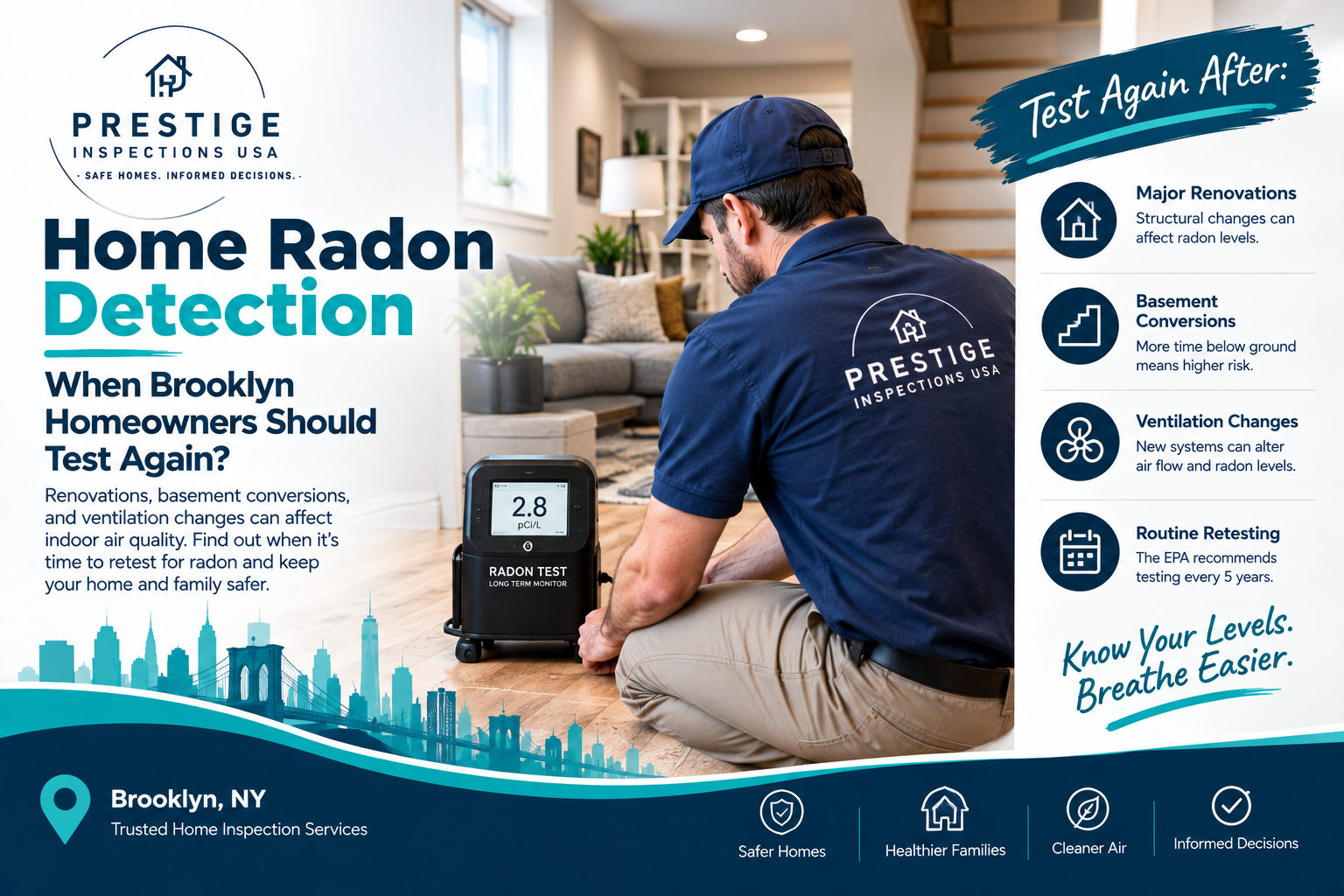
A home can change significantly after a renovation. An unfinished basement may become a family room, new windows may improve insulation, or a ventilation system may alter how air moves through the building. These improvements can make a property more comfortable, but they can also change indoor conditions that homeowners should reassess.
Home radon detection gives homeowners a way to measure radon levels rather than relying on a building’s appearance or previous test results. For Brooklyn property owners, knowing when to test again can be especially useful after remodeling, preparing a basement for regular use, or making changes to the home’s ventilation.
1. Retest After Major Renovations
Changes to foundations, basement floors, or other structural components can affect the pathways through which radon enters a building. If you are converting a basement into a bedroom, office, or recreation area, consider testing before the work begins and again after completion. This creates a useful comparison and helps identify whether further action is needed.
2. Check the Lowest Occupied Level
Radon commonly enters from the ground and may accumulate in areas that contact the soil, including basements and lower floors. If your household begins spending more time in a previously unused lower-level room, arrange testing in that area. A result from another floor may not accurately represent conditions where people will spend their time.
3. Recheck After Ventilation Changes
New windows, weatherization, heating upgrades, and ventilation changes can affect air movement inside a home. A previous low reading should not be treated as a permanent guarantee. The U.S. Environmental Protection Agency recommends retesting after major remodeling or changes to a home’s heating, ventilation, and air-conditioning system.
4. Understand the Numbers Before Taking Action
Radon results are usually reported in picocuries per liter (pCi/L). The EPA and New York State Department of Health recommend taking action to reduce indoor radon when results are 4 pCi/L or higher. Homeowners may also consider reducing levels between 2 and 4 pCi/L.
If a test indicates elevated levels, consult a qualified radon mitigation professional about appropriate measures. After mitigation, arrange follow-up testing to confirm that the system is working effectively.
5. Keep a Record of Every Test
Store test reports alongside renovation records, inspection documents, and maintenance receipts. Include the testing date, location, method, and result whenever that information is available. These records can help you compare results over time and provide useful documentation when selling or transferring a property.
New York State recommends testing homes every five years, with more frequent checks for homes that have radon mitigation systems. Retesting after major changes is also important.
Take a Proactive Approach to Indoor Air Quality
Radon cannot be seen or smelled, so testing is the practical way to determine its concentration inside a home. Whether you are renovating a Brooklyn brownstone or updating a modern residence, timely testing can help you make better-informed decisions.
Prestige Inspections USA offers radon testing services for Brooklyn homeowners and property buyers. Contact the team to discuss your property and determine the appropriate next steps for evaluating indoor radon levels.

 Arabic
 French
 Spanish
 Portuguese
 Deutsch
 Turkish
 Dutch
 Italiano
 Russian
 Romaian
 Portuguese (Brazil)
 Greek