


How Does a Panel Mount Connector Socket Prevent Failures?
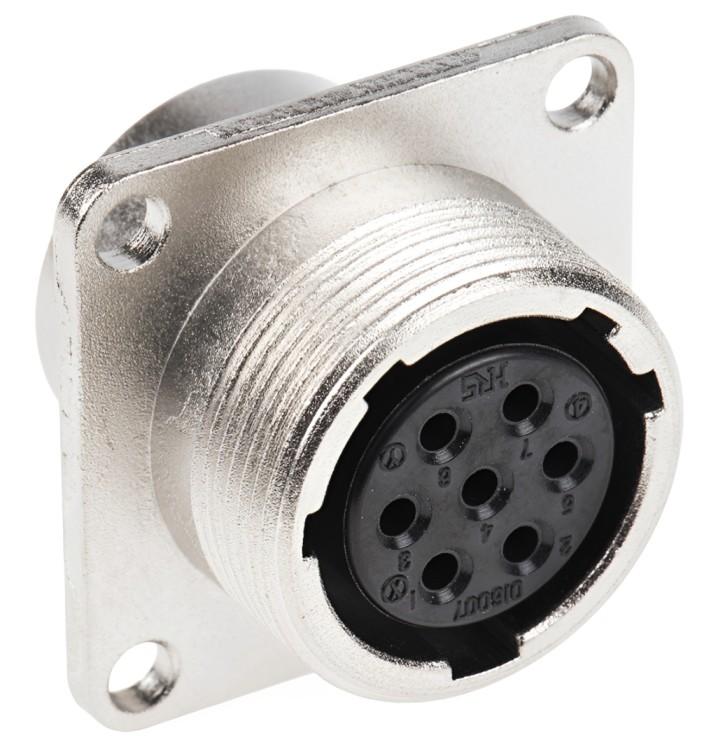
A connector on the outside of a machine might look like a minor detail, yet a loose contact or poorly sealed opening can interrupt an entire production line. A Panel Mount Connector Socket provides a fixed connection point between an enclosure's internal wiring and an external cable or device. Selecting and installing it correctly can make servicing easier while reducing avoidable electrical faults.
The real challenge is not simply finding a socket that fits. Engineers must balance electrical ratings, mechanical design, environmental exposure and the way a connector will be used over time.
Why Mount the Connection on a Panel?
A panel-mounted socket stays attached to equipment while a compatible mating connector is connected or removed. This gives technicians a defined interface instead of leaving loose wiring through an opening.
Common applications include machine sensors, automation cabinets, test instruments and industrial equipment. Different connections may carry power, low-level signals or data, so the design requirements are not interchangeable.
Define the Job Before Choosing a Connector
Start with the circuit rather than the catalogue photo. Record the number of contacts, voltage, current, expected mating frequency and available mounting space.
For demanding machinery, Industrial Circular Connectors offer several connector sizes and locking arrangements to consider during interface design. Always match the exact series and contact arrangement to the intended cable-side connector.
What Makes Two Similar Sockets Different?
Two sockets can look nearly identical yet differ in pin assignment, coding, locking method or termination style. M8 and M12 are common industrial connector sizes, but size alone does not establish mating compatibility.
Check whether the panel part mounts from the front or rear, whether it contains male or female contacts and which accessory or plug completes the connection. The word “socket” in a product title does not always describe contact gender, so read the manufacturer's drawing.
Compare Electrical Ratings Properly
A connector should be specified against its datasheet's current and voltage limits, with appropriate allowance for ambient temperature and the number of loaded contacts. An attractive rating for a single circuit is not permission to exceed the conditions of the published specification.
For low-level signals, contact material, shielding and routing may also matter. A suitable connector system must meet the electrical needs of the entire assembly, not merely its physical dimensions.
How Do You Prevent a Poor Panel Fit?
The mounting hole must match the connector's approved cut-out drawing. A hole that is too large can allow movement, while a badly positioned cut-out may interfere with locking nuts, internal wiring or nearby components.
Confirm panel thickness, mounting orientation and available clearance behind the enclosure face. Where the manufacturer specifies a fastening torque, apply it using the recommended method rather than tightening by instinct.
How Important Are Seals and Protective Caps?
Moisture and dust can eventually damage contacts or reduce insulation performance. Some panel connectors carry an ingress-protection rating, but the stated protection may apply only when correctly mated or fitted with a specified protective cap.
Compatible Circular Connector Accessories can provide sealing rings, caps or backshell options where the connector manufacturer allows them. An added accessory does not automatically increase the finished assembly's IP rating.
Think About the Unplugged Condition
A connector may spend part of its life disconnected during cleaning, transport or maintenance. Assess whether the exposed interface needs protection at those times, especially near water, metal dust or chemical residues.
Select caps and seals by exact series, not by visual resemblance.
What Stops Cable Movement Damaging the Connection?
Even a firmly mounted socket can experience trouble if the attached cable is repeatedly pulled or bent. Cable support and minimum bend radius should be considered alongside the connector's own retention system.
For separate cable entry points, suitable Cable Glands can secure and, where specified, seal cables entering the enclosure. They complement an engineered connection arrangement but should not be mistaken for strain relief on every mating plug.
Arrange cable routes so service movement does not place unnecessary force on terminals or connector contacts.
Why Does Termination Quality Matter?
Panel sockets may use solder, crimp, screw or PCB terminations. Each method calls for its own preparation standards and approved assembly procedure.
For crimp-contact versions, compatible Crimp Tools help produce the specified contact deformation when fitted with the correct dies or positioners. Ordinary pliers are not an acceptable substitute for a manufacturer's required crimp system.
Inspect wire stripping, contact seating and wire retention as directed. Avoid leaving stray strands or applying unsupported modifications to the contact.
What Should Be Checked Before Power-Up?
A short inspection at assembly can prevent difficult faults after installation. Useful checks include:
- Confirm the connector series and mating partner.
- Verify pin allocation against the wiring diagram.
- Check polarity, protective-earth arrangements and applicable safety requirements.
- Inspect the gasket and panel mounting hardware.
- Confirm connector locking and cable support.
- Test continuity and insulation where appropriate using approved methods.
- Record the part number for maintenance and replacement.
Do not energise an assembly until the relevant electrical checks have been completed by competent personnel.
How Can Maintenance Extend Service Life?
During planned inspections, look for damaged seals, loose fixings, corrosion, bent contacts and signs of overheating. Disconnect and isolate the system before inspecting exposed electrical parts.
Where suitable for the application, Heat Shrink Tubing can help identify or insulate cable tails behind the panel. It must not replace manufacturer-specified seals, damaged contact housings or mechanical strain relief.
If a connector shows damage, identify the underlying cause rather than repeatedly reconnecting it and hoping for improvement.
Reliable Connections Begin with Good Decisions
A Panel Mount Connector Socket is more than an opening for a cable. It is a carefully specified interface that connects equipment design with everyday maintenance.
Choosing the right mating system, respecting electrical ratings, preparing a correct cut-out and checking termination quality all contribute to dependable operation. With those details addressed early, panel connections become easier to service and less likely to interrupt important equipment.

 English
 Arabic
 French
 Spanish
 Portuguese
 Deutsch
 Turkish
 Dutch
 Italiano
 Romaian
 Portuguese (Brazil)
 Greek