


BIS CRS Certification: Requirements for Electronics Manufacturers in India
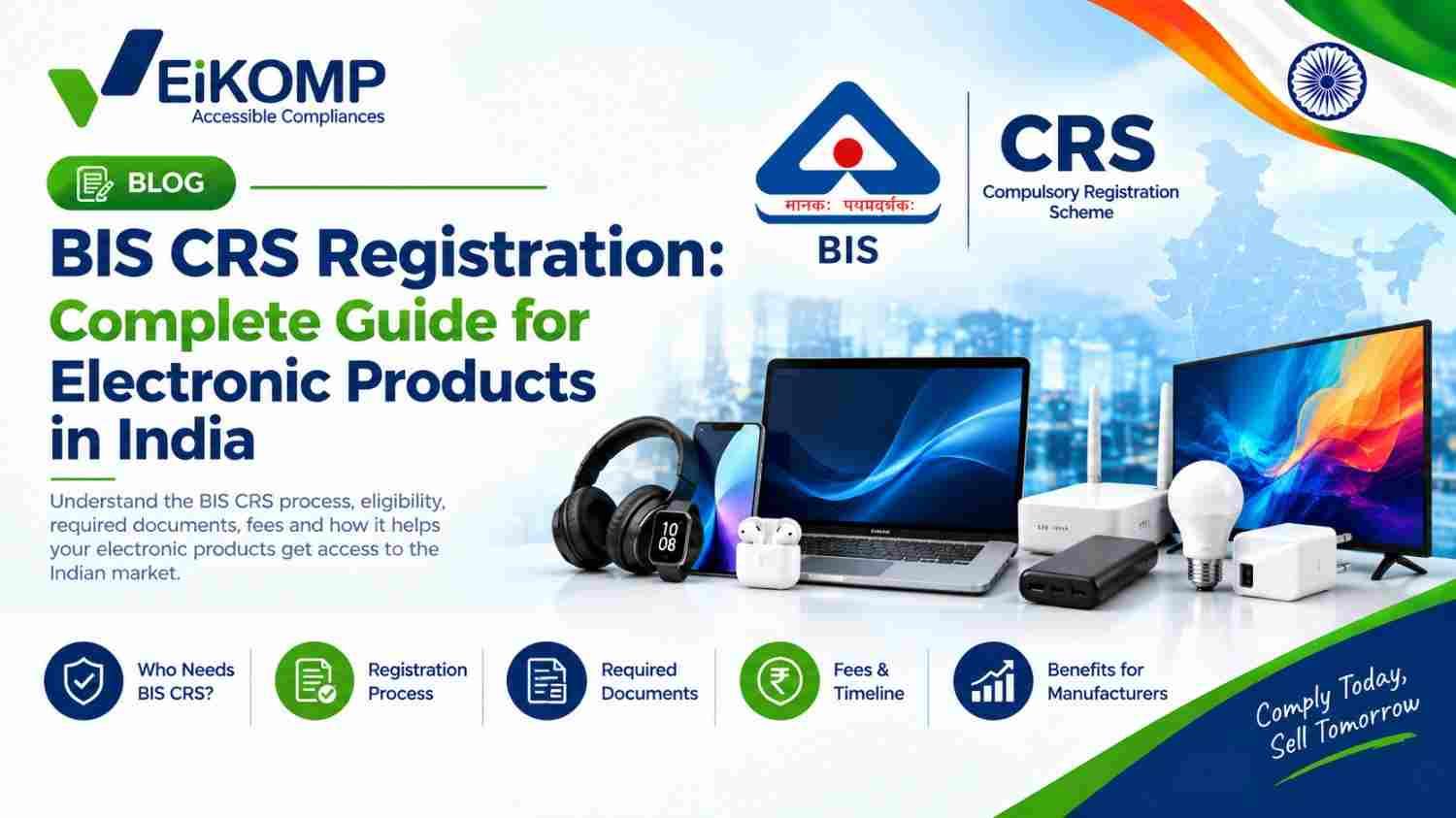
The growing use of electronic products in India has increased the importance of product safety, quality, and regulatory compliance. To ensure that notified electronic and IT products meet applicable Indian safety standards, the Bureau of Indian Standards (BIS) operates the Compulsory Registration Scheme (CRS).
CRS (Compulsory Registration Scheme) is a product registration system under which manufacturers must register specified products with BIS before manufacturing, importing, selling, or distributing them in India, as applicable under the relevant government orders. The scheme primarily focuses on product safety and conformity with the applicable Indian Standard.
For manufacturers, importers, and electronics brands, understanding the registration requirements is essential to avoid compliance issues and ensure smooth market entry. This guide explains the BIS CRS framework, the registration process, documentation, and the role of a professional consultant.
What Is BIS CRS?
BIS CRS is the registration framework administered by the Bureau of Indian Standards under Scheme II of the BIS conformity assessment system. It applies to electronic, information technology, and other notified product categories.
Under this scheme, manufacturers must demonstrate that their products comply with the relevant Indian Standard through testing at a BIS-recognised laboratory and submit the required application and supporting documents.
Unlike the traditional ISI Mark certification route, CRS generally follows a registration-based process. Once registration is granted, the manufacturer must comply with applicable BIS marking and labelling requirements, including the prescribed Standard Mark and registration number.
The scheme applies to both Indian and foreign manufacturers, provided their products fall within the notified categories. However, registration requirements depend on the exact product, its applicable standard, and the current government notifications.
Why Is BIS CRS Registration Important?
BIS CRS Registration helps manufacturers demonstrate that their products meet the required Indian safety standards. It also supports regulatory compliance when introducing electronic products into the Indian market.
Key benefits include:
-
Regulatory compliance: Helps manufacturers meet applicable compulsory registration requirements.
-
Product safety: Establishes conformity with the relevant Indian Standard.
-
Market access: Supports lawful market entry for products covered by applicable notifications.
-
Consumer confidence: Demonstrates that the product has undergone the required conformity assessment.
-
Business credibility: Helps brands, importers, and distributors manage product compliance more effectively.
Manufacturers should verify whether their products are covered by the latest applicable notifications before planning production or imports.
Products Covered Under BIS CRS Registration
BIS CRS Registration for Electronic Products applies to product categories specifically notified by the Government of India. The official BIS list includes various electronic, IT, lighting, and related products.
Examples of product categories that may fall under CRS include:
-
Mobile phones, laptops, notebooks, and tablets
-
LED lamps and specified LED lighting products
-
Power banks and power adaptors
-
Televisions and visual display units
-
Electronic games and certain audio-video equipment
-
CCTV cameras and recorders
-
UPS systems and specified inverters
-
Smartwatches, wireless headphones, and other notified electronic products
The applicable Indian Standard and registration requirements can vary by product category and model. Manufacturers should check the latest official BIS CRS product list before beginning the application process.
BIS CRS Registration Process
Obtaining registration requires product testing, document preparation, and submission of an application to BIS. The main steps are as follows.
Step 1: Identify the applicable standard
Confirm whether the product falls under CRS and identify the relevant Indian Standard and current regulatory requirements.
Step 2: Product testing
Submit product samples to a BIS-recognised laboratory under CRS. The product must meet the requirements of the applicable standard, and the test report must satisfy BIS submission requirements.
Step 3: Prepare the documents
Collect the required manufacturer, product, technical, and legal documents. Ensure that the information is consistent across the application and supporting records.
Step 4: Submit the online application
Register through the official CRS portal and complete Form VI with accurate product and manufacturer details. Pay the applicable fees and submit the application.
Step 5: Submit supporting documents
Follow the portal instructions for submitting the required hard copies, original test report, and affidavit-cum-undertaking. The official application instructions specify submission of these documents within 15 days of online filing.
Step 6: BIS scrutiny and approval
BIS examines the application and may raise queries or request corrections. After satisfactory compliance with the applicable requirements, registration may be granted.
Applicants should follow the latest instructions on the official CRS portal, as procedures and requirements can change.
Documents Required for BIS CRS Registration
The documents required may vary depending on the product, manufacturer, and application circumstances. Common requirements include:
-
Manufacturer's business registration details
-
Factory address and manufacturing information
-
Product specifications and technical details
-
Product samples and applicable laboratory test reports
-
Brand and model information
-
Authorisation documents, where applicable
-
Prescribed affidavit-cum-undertaking
-
Application form and proof of applicable fee payment
Foreign manufacturers without a liaison office or branch office in India must appoint an Authorized Indian Representative (AIR) in accordance with BIS guidelines. The prescribed documentation and eligibility conditions should be verified before filing.
Why Hire a BIS CRS Consultant?
The registration process can be challenging for manufacturers unfamiliar with Indian regulatory requirements. A BIS CRS Consultant can help businesses understand the applicable standard, organise technical documents, coordinate laboratory testing, and prepare the application.
Professional support can also help identify common documentation gaps, track application progress, and prepare responses to BIS queries. For foreign manufacturers, guidance on AIR appointment and supporting documents can be particularly useful.
However, a consultant cannot guarantee approval or replace the manufacturer's responsibility for product conformity. Final registration decisions remain with BIS, and the product must satisfy the applicable requirements.
Conclusion
BIS CRS Registration is an important compliance requirement for manufacturers of electronic and IT products covered by India's compulsory registration framework. From identifying the applicable Indian Standard to completing product testing and submitting the application, each stage requires accurate information and proper documentation.
Manufacturers planning to enter the Indian market should verify the current product list and applicable notifications before launching their products. Working with an experienced BIS CRS Consultant may simplify the process, reduce avoidable application errors, and help businesses manage regulatory compliance more efficiently.

 English
 Arabic
 French
 Spanish
 Portuguese
 Deutsch
 Turkish
 Italiano
 Russian
 Romaian
 Portuguese (Brazil)
 Greek
Greek