


Copper Welding Wires Plant Project Report 2026: Setup Cost, Raw Materials and ROI
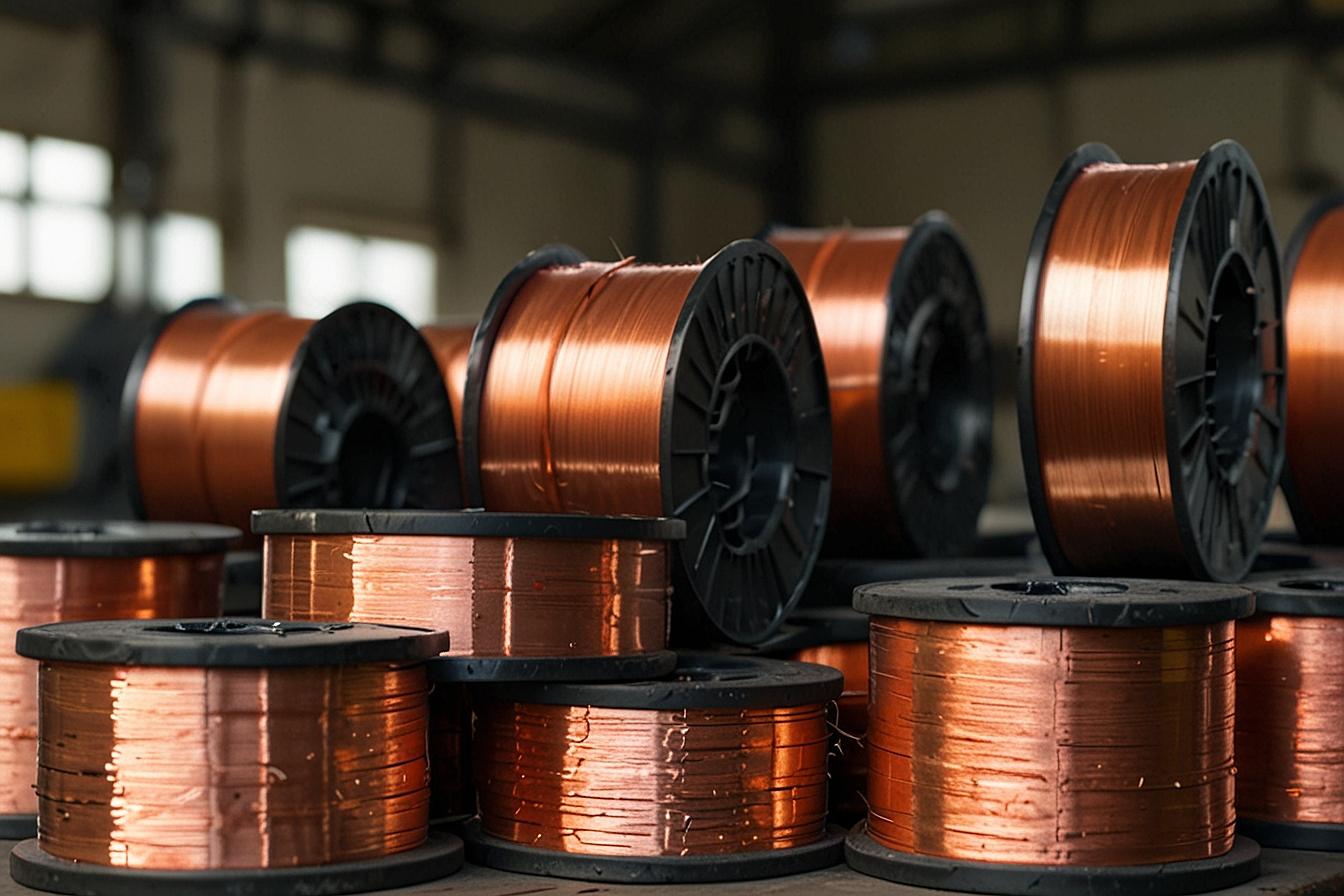
IMARC Group's report, "Copper Welding Wires Manufacturing Plant Project Report 2026: Industry Trends, Plant Setup, Machinery, Raw Materials, Investment Opportunities, Cost and Revenue," offers a comprehensive guide for establishing a manufacturing plant. The copper welding wires manufacturing plant report offers insights into the manufacturing process, financials, capital investment, expenses, ROI, and more for informed business decisions.
Copper Welding Wires Manufacturing Plant Project Report Summary:
- Comprehensive guide for setting up a copper welding wires manufacturing plant.
- Covers market trends and industry outlook for 2026.
- Detailed project setup, including unit operations and processes.
- Raw material and utility requirements.
- Infrastructure and machinery specifications.
- Workforce and staffing requirements.
- Packaging and transportation details.
- Financial aspects: investment opportunities, cost analysis, and revenue projections.
In addition to covering operational aspects, the report offers detailed insights into the copper welding wires manufacturing plant process and project economics:
- Detailed insights into the copper welding wire drawing and coating process.
- In-depth project economics and financial metrics.
- Covers capital investments and project funding.
- Analysis of operating expenses and income projections.
- Breakdown of fixed and variable costs, direct and indirect expenses.
- Evaluation of ROI (Return on Investment) and NPV (Net Present Value).
- Profit and Loss account analysis.
- Comprehensive financial analysis for decision-making.
- Provides a roadmap for successfully establishing a copper welding wires manufacturing unit.
Request for a Sample Report: https://www.imarcgroup.com/copper-welding-wires-manufacturing-plant-project-report/requestsample
What are Copper Welding Wires?
Copper welding wires are precision-drawn metallic wires used as filler materials in various arc welding, MIG (Metal Inert Gas), TIG (Tungsten Inert Gas), and submerged arc welding processes. They are manufactured from high-purity copper or copper-alloy rods through a series of wire drawing, annealing, surface treatment, and spooling processes to achieve precise diameters, tensile strength, and conductivity characteristics required by industrial standards.
The most common type is ER70S-6 copper-coated steel welding wire (MIG wire), where a thin copper coating is applied over steel wire to prevent oxidation, improve electrical conductivity, and enhance arc stability. Pure copper welding wires (ERCu) are also produced for welding copper-to-copper or copper-to-steel joints. Copper welding wires are widely used in automotive manufacturing, shipbuilding, construction, pipeline fabrication, structural steel fabrication, and heavy engineering industries.
Key product specifications include wire diameter (ranging from 0.6 mm to 4.0 mm), tensile strength (typically 480–560 MPa), copper coating weight, and spool packaging (1 kg, 5 kg, 15 kg, 250 kg drum). Products must conform to AWS (American Welding Society), ISO, IS, or JIS standards depending on the target market.
Market Trends and Drivers
The global copper welding wires market is experiencing steady growth driven by rapid expansion in infrastructure, automotive, and industrial manufacturing sectors. The surge in construction activity — including bridges, pipelines, LNG terminals, and commercial buildings — is a primary demand driver. The booming automotive sector, especially electric vehicle (EV) manufacturing, which uses extensive copper wiring and welded assemblies, is creating new demand vectors for high-precision copper welding wires.
India's infrastructure push under flagship programs such as PM Gati Shakti, National Infrastructure Pipeline (NIP), and Make in India is generating strong domestic demand. Shipbuilding expansion in South Korea, China, and India, along with growth in the defense and aerospace fabrication sectors, are adding to global consumption. The shift from manual metal arc welding (MMAW) to automated MIG/MAG welding processes in manufacturing plants is increasing the per-unit consumption of copper welding wires.
Technological advancements in wire drawing precision, copper coating uniformity, and low-spatter formulations are improving product performance and expanding application scope. Growing exports from Indian manufacturers to the Middle East, Africa, and Southeast Asia are creating significant revenue opportunities. Rising copper recycling adoption is also reducing raw material costs and improving production sustainability.
Key Insights Covered in the Copper Welding Wires Manufacturing Plant Report
Market Coverage
- Market Trends: Analysis of current and emerging trends in the copper welding wires market.
- Market Segmentation: Breakdown by wire type (MIG, TIG, submerged arc), diameter, end-use industry, and geography.
- Regional Analysis: Distribution and performance across India, China, Europe, North America, and the Middle East.
- Price Analysis: Evaluation of pricing trends for copper rod, steel rod, and finished welding wire products.
- Impact of COVID-19: Examination of supply chain disruptions and demand recovery patterns.
- Market Forecast: Outlook and projections for the copper welding wires industry through 2030.
Key Aspects Required for Setting Up a Copper Welding Wires Plant
Detailed Process Flow
- Product Overview: Comprehensive description of copper welding wire types, grades, and specifications.
- Unit Operations Involved: Wire rod receiving → Rod breakdown drawing → Intermediate drawing → Fine wire drawing → Annealing → Copper electroplating/coating → Straightening → Spooling/coiling → Inspection → Packaging.
- Mass Balance and Raw Material Requirements: Calculations for copper rod / steel rod inputs vs. finished wire output — typical drawing yield 95–97%.
- Quality Assurance Criteria: AWS A5.18, IS 6419, ISO 14341 compliance; tensile strength, elongation, copper coating weight, diameter tolerance testing.
- Technical Tests: Mechanical testing, coating adhesion, arc performance evaluation, chemical composition analysis, spool geometry verification.
Project Details, Requirements, and Costs Involved
- Land, Location, and Site Development: Assessment of land requirements (1–3 acres for medium-scale), optimal location near MIDC/industrial estates with good power supply, and site development costs.
- Plant Layout: Design and layout for efficient material flow — rod storage, drawing section, annealing furnace, electroplating line, spooling section, QC lab, finished goods warehouse.
- Machinery Requirements and Costs: Wire drawing machines (single/multi-pass), annealing furnaces, copper electroplating tanks, spooling machines, straightening machines, tension meters, laser diameter gauges.
- Raw Material Requirements and Costs: High-purity copper rod (99.9% Cu), low-carbon steel rod (for MIG wire), copper sulphate for plating, drawing lubricants, packaging spools and drums.
- Packaging Requirements and Costs: Precision plastic spools (D100–D300), wire baskets, vacuum-sealed cartons, layer-wound 250 kg drums for industrial use.
- Transportation Requirements and Costs: Logistics for copper rod sourcing from smelters/traders and dispatch of finished wire to welding distributors and OEM customers.
- Utility Requirements and Costs: Power (high consumption — 300–1500 kW), water for cooling and plating, compressed air, rectifiers for electroplating.
- Human Resource Requirements and Costs: Wire drawing operators, electroplating technicians, QC inspectors, maintenance engineers, packaging staff, and management.
Key Profitability Drivers
- Product Mix Upgrade: Manufacturing TIG/ERCu pure copper wires and specialty alloy wires commands 4–6× higher selling price than standard MIG wire.
- Export Markets: Targeting USA, Europe, and Gulf markets yields 20–40% price premium over domestic prices; APEDA and Export Promotion Council (EEPC) support available.
- Capacity Utilisation: Operating at 75%+ capacity is critical for profitability; optimal margins achieved at 85–90% utilisation.
- Copper Price Hedging: Managing copper price volatility through MCX futures contracts is essential as raw material is 55–65% of OpEx.
- Backward Integration: Setting up in-house rod breakdown (from 8mm to 2mm) significantly reduces per-kg conversion cost.
- Certifications: AWS, ISI, BIS, CE, and ISO 9001 certifications unlock institutional buyers, tender markets, and export customers.
- Automation: CNC multi-pass wire drawing with auto-tension control reduces wire breaks, wastage, and labour dependency — improving yield to 97%+.
Ask an Analyst: https://www.imarcgroup.com/request?type=report&id=24208&flag=C
Project Economics
- Capital Investments: Initial costs for land, wire drawing machines, annealing furnaces, electroplating lines, spooling equipment, and infrastructure.
- Operating Costs: Ongoing expenses — copper rod, steel rod, electricity, labour, packaging, logistics, and maintenance.
- Expenditure Projections: Detailed forecasts of all costs over the short and long term.
- Revenue Projections: Expected income from domestic sales to welding distributors, OEM fabricators, and export customers.
- Taxation and Depreciation: Analysis of GST (18% on welding wires), income tax obligations, and depreciation benefits on plant and machinery.
- Profit Projections: Estimated profitability based on product mix, capacity utilisation, and copper market pricing.
- Financial Analysis: Comprehensive evaluation covering cash flow, ROI, NPV, IRR, and break-even analysis.
Key Questions Addressed in This Report
- How has the copper welding wires market performed so far and how will it perform in the coming years?
- What are the different types of welding wires and their specific market segments?
- What is the regional breakup and export-import dynamics of the copper welding wires market?
- What are the price trends for copper rod, steel rod, and finished welding wire?
- What are the various unit operations in a copper welding wire manufacturing plant?
- What is the total land and infrastructure requirement for setting up the plant?
- What are the machinery requirements and costs, including wire drawing and electroplating lines?
- How much investment is required and what is the expected ROI and payback period?
- What certifications and standards (AWS, BIS, ISO) are required for domestic and export sales?
- What government subsidies and financial support are available for copper wire manufacturers?
- What are the key operational challenges — copper price volatility, power costs, wire breakage — and how to manage them?
Customization Options Available
- Plant Location: Optimal site selection near copper rod suppliers — Rajkot, Bhavnagar, Jamnagar, Silvassa, Pune, or NCR industrial corridors.
- Plant Capacity: Customization from 50 MT/month to 3,000+ MT/month based on investment and market strategy.
- Machinery: Choice between fully automatic, semi-automatic, or manually supervised drawing and spooling lines.
- Product Range: Configuration for MIG wires (ER70S-6), TIG wires, pure copper wires (ERCu), bronze welding wires, or aluminium-bronze wires.
- Wire Diameter Range: Setup for ultra-fine (0.6 mm), standard (0.8–1.6 mm), or heavy gauge (2.0–4.0 mm) wire production.
- List of Machinery Providers: Identification of Indian and international wire drawing machine suppliers, electroplating equipment vendors, and spool manufacturers.
How IMARC Can Help?
IMARC Group is a global management consulting firm that helps the world's most ambitious changemakers to create a lasting impact. The company provides a comprehensive suite of market entry and expansion services. IMARC offerings include thorough market assessment, feasibility studies, company incorporation assistance, factory setup support, regulatory approvals and licensing navigation, branding, marketing and sales strategies, competitive landscape and benchmarking analyses, pricing and cost research, and procurement research.
Services
- Plant Setup & Feasibility Studies
- Factory Auditing & Process Optimisation
- Regulatory Approvals and Licensing (BIS, AWS Certification, ISO, EEPC)
- Company Incorporation & Business Structuring
- Incubation Services for First-Generation Manufacturers
- Recruitment & HR Services
- Marketing, Sales & Export Strategy
Contact Us:
IMARC Group
134 N 4th St. Brooklyn, NY 11249, USA
Email: [email protected]
Tel No:(D) +91 120 433 0800
United States: (+1-201971-6302)

 English
 Arabic
 French
 Spanish
 Portuguese
 Deutsch
 Turkish
 Dutch
Dutch
 Italiano
 Russian
 Portuguese (Brazil)
 Greek
Greek