


When Should TVS Diodes Be Used for Reliable Circuit Protection?
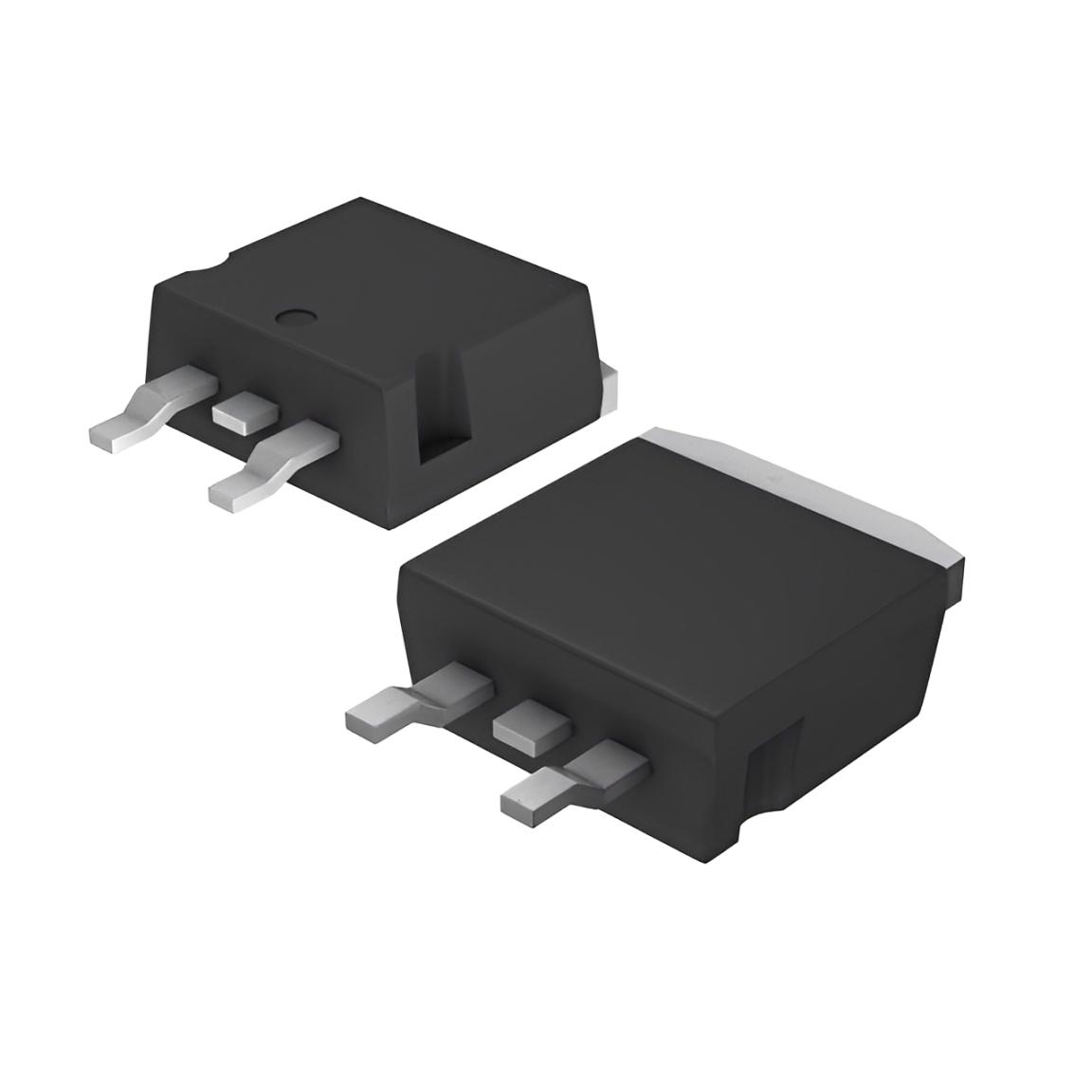
Electrical systems can experience sudden voltage disturbances even when they are designed around stable power sources. A cable connection, switching event, static discharge, or inductive load can create a short but intense surge that travels through a circuit faster than many components can tolerate.
This is where TVS Diodes become highly valuable. A Transient Voltage Suppression diode is designed to react quickly when an unexpected rise in voltage occurs. Instead of allowing the full surge to reach sensitive circuitry, the device provides a controlled path for excess current and helps limit the voltage to a safer level.
Because modern electronics often use low-voltage semiconductor components, transient protection is increasingly important in automotive systems, industrial controls, telecommunications, computing hardware, consumer electronics, and power conversion equipment.
What Problems Are TVS Diodes Designed to Solve?
TVS diodes are primarily used to deal with temporary overvoltage conditions rather than continuous voltage regulation.
These events may be extremely brief, but they can still damage delicate circuit structures.
Common causes include:
- Electrostatic discharge from people or equipment
- Switching of motors and relays
- Inductive load interruption
- Sudden changes in current
- Power supply disturbances
- Long cable runs
- Lightning-induced surges
- Automotive electrical activity
- External connector interaction
Without suitable protection, these events can lead to damaged ICs, failed interfaces, unstable operation, corrupted data, or complete equipment failure.
TVS diodes help reduce this risk by reacting before the transient can place excessive stress on the protected electronics.
Why Are Transients Dangerous to Modern Electronics?
Modern semiconductor devices are compact and operate at relatively low voltages. This allows designers to create fast, efficient, and densely integrated systems, but it can also reduce tolerance to overvoltage.
A transient can damage a circuit in several ways.
It may:
- Break down insulation layers
- Damage semiconductor junctions
- Corrupt digital communication
- Cause unexpected system resets
- Shorten component life
- Create latent defects that appear later
- Trigger permanent failure
The challenge is that the event may disappear almost immediately, making the source of the problem difficult to diagnose.
Including TVS protection during the design stage can therefore be far more effective than trying to identify damage after repeated failures occur.
How Do TVS Diodes React During an Overvoltage Event?
A TVS diode normally remains in a high-resistance state while the applied voltage stays within the expected operating range.
When the voltage rises above a defined threshold, the device begins to conduct.
This causes surge current to flow through the TVS diode rather than continuing through more sensitive parts of the circuit.
The protection action can be viewed as a simple sequence:
- The circuit operates at normal voltage
- A sudden transient enters the system
- Voltage rises toward the diode's breakdown level
- The TVS diode begins conducting
- Excess current is diverted
- The voltage is limited
- The transient passes
- The diode returns to its standby condition
This fast transition is one of the main advantages of TVS-based protection.
When Should a Unidirectional TVS Diode Be Used?
Unidirectional TVS diodes are commonly selected for DC circuits.
They are especially useful when the protected line normally operates with a fixed polarity.
Applications may include:
- DC power rails
- Battery connections
- Automotive modules
- Embedded control boards
- Industrial DC systems
- Power adapters
In these systems, the unidirectional device can provide strong protection against positive transients while also behaving like a conventional diode under reverse-polarity conditions.
When Is a Bidirectional TVS Diode More Suitable?
Bidirectional TVS diodes are designed for circuits where voltage can move in both directions.
They are often preferred for AC signals and certain communication interfaces.
Typical uses include:
- Alternating signal lines
- Communication buses
- Audio connections
- Industrial data lines
- Certain sensor interfaces
- AC-powered systems
The bidirectional configuration can respond to positive and negative transient events without relying on a single fixed polarity.
Which TVS Diode Ratings Matter Most?
Choosing an appropriate TVS diode requires careful comparison between the device ratings and the protected circuit.
Reverse Stand-Off Voltage
This value indicates the maximum voltage that can normally be applied without significant conduction.
It should be high enough to avoid interfering with regular circuit operation.
Breakdown Voltage
This is the region where the TVS diode begins conducting more strongly.
It represents the point where the device transitions into active protection.
Clamping Voltage
Clamping voltage shows how high the voltage may rise while the diode is conducting a specified surge current.
This value should remain below the maximum level the protected circuitry can tolerate.
Peak Pulse Current
This indicates how much short-duration current the diode can handle under specified conditions.
Peak Pulse Power
Peak pulse power helps show the device's ability to withstand surge energy over a defined waveform.
Why Should Signal Speed Influence TVS Diode Selection?
Protection components do not exist electrically in isolation.
When a TVS diode is connected to a high-speed signal line, its capacitance becomes part of the circuit.
If that capacitance is too high, it can interfere with signal quality.
Possible effects include:
- Reduced bandwidth
- Distorted waveforms
- Slower signal transitions
- Increased bit errors
- Lower data reliability
For this reason, low-capacitance TVS devices are often selected for modern communication interfaces.
They are commonly used on:
- USB lines
- Ethernet interfaces
- HDMI connections
- High-speed serial buses
- Data acquisition channels
- Communication connectors
The goal is to provide surge protection while keeping signal disturbance as low as possible.
How Are TVS Diodes Used in Power Electronics?
Power circuits are exposed to a different set of risks than data interfaces.
Switching regulators, inductors, relays, transformers, and long supply cables can create substantial voltage transients.
TVS diodes can be positioned across supply lines to help suppress these events before they reach sensitive control circuitry.
They are frequently used in:
- DC converters
- Power distribution modules
- Battery systems
- Industrial power supplies
- Embedded controllers
- Telecom power equipment
In these applications, pulse power and current ratings can be just as important as voltage rating.
Why Are Automotive Applications So Demanding?
Vehicle electrical systems are particularly challenging because the supply voltage can be affected by many different loads.
Motors, alternators, relays, solenoids, and battery switching can all generate disturbances.
TVS diodes may be used to protect:
- Electronic control units
- Lighting modules
- Infotainment systems
- Battery management circuits
- Vehicle sensors
- Communication networks
- Charging electronics
Automotive applications may also require devices that can tolerate wide temperature ranges and repeated surge exposure.
What Should Be Considered During PCB Layout?
Even a correctly rated TVS diode can perform poorly if the board layout is unsuitable.
Fast surge currents can create unwanted voltage across long or narrow traces because of parasitic inductance.
Designers should aim to:
- Place the TVS diode near the point of entry
- Keep current paths short
- Use low-impedance connections
- Avoid large routing loops
- Route surge current away from sensitive circuitry
- Use suitable copper width
- Maintain clear separation between protected and unprotected areas
Good placement helps the protection device react before the surge travels deeper into the system.
What Benefits Do TVS Diodes Provide in Electronic Design?
TVS diodes are widely used because they combine fast protection with relatively simple implementation.
Their benefits include:
- Rapid response to transient voltage
- Compact package options
- Strong surge handling
- Support for AC and DC applications
- Protection against electrostatic discharge
- Low-capacitance options for fast signals
- Multiple power ratings
- Easy PCB integration
- Improved system reliability
They can also reduce the risk of expensive field failures caused by intermittent or unpredictable electrical events.
Why Should TVS Diodes Be Selected as Part of the Original Design?
Transient protection is most effective when considered early in the design process.
Instead of adding protection only after a failure appears, engineers can identify likely surge entry points and protect them from the beginning.
Important areas often include external connectors, power inputs, communication ports, exposed control lines, and interfaces connected to long cables.
TVS diodes provide a practical way to protect these locations without adding complicated circuitry.
When selected according to circuit voltage, surge strength, signal speed, polarity, thermal conditions, and PCB layout, they can significantly improve the durability of an electronic system.
As electronic products continue to become more compact and more sensitive to electrical stress, TVS diodes remain an important part of dependable circuit protection.

 English
 Arabic
 French
 Spanish
 Portuguese
 Deutsch
 Turkish
 Dutch
Dutch
 Italiano
 Russian
 Portuguese (Brazil)
 Greek
Greek