


Teen Patti Card Rankings Explained: A Complete Guide to Every Hand
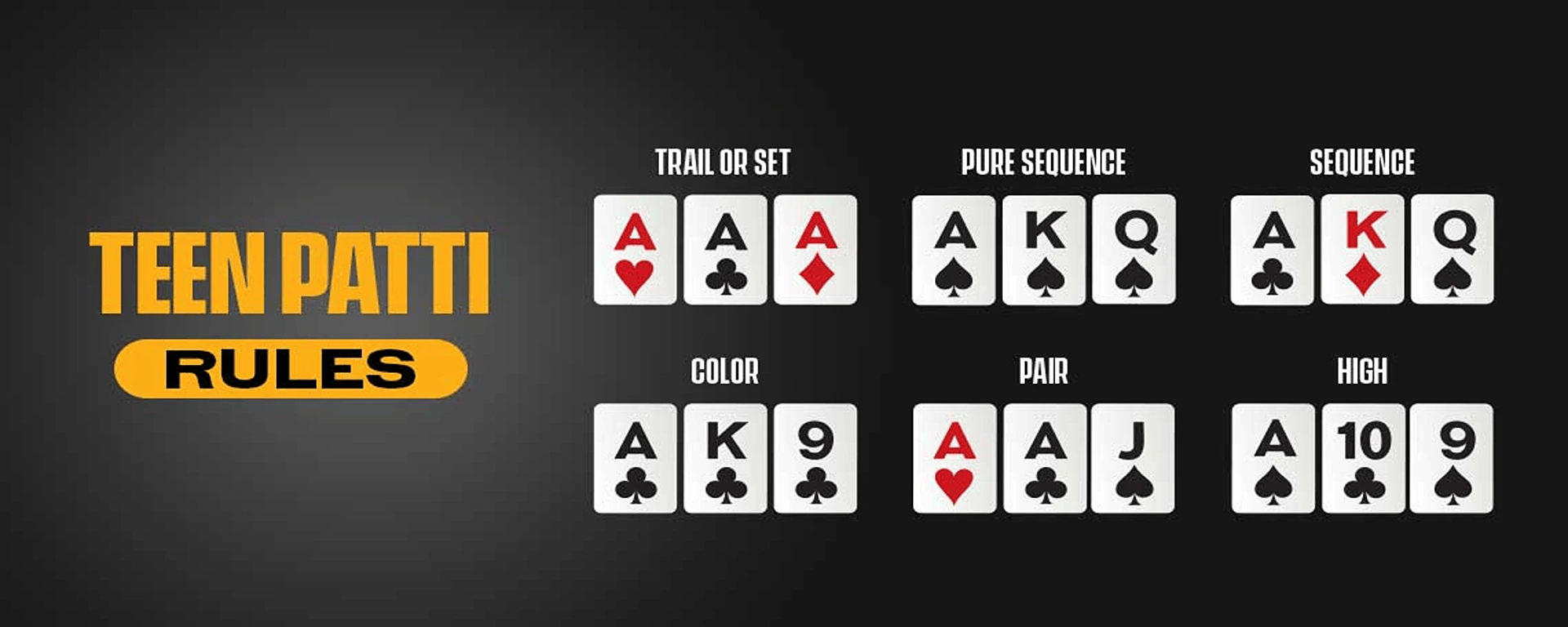
Teen Patti is a popular three-card game that combines simple rules with the excitement of comparing different card combinations. Whether you are learning the game for the first time or trying to understand how two hands are compared, knowing the correct card rankings is an essential starting point.
The strength of a hand depends on the cards you receive and the ranking system followed at the table. Some combinations are powerful because all three cards share the same rank, while others depend on consecutive values, matching suits, or pairs.
In this guide, we will explain every major Teen Patti hand, show examples of each combination, and discuss common mistakes that beginners should avoid.
What Are Teen Patti Card Rankings?
Teen Patti is traditionally played with a standard 52-card deck without jokers. Each player receives three face-down cards, and the objective is to have a stronger hand than the other active players according to the rules being used.
In the commonly used traditional ranking system, hands are compared from the strongest combination to the weakest. Learning this order makes it easier to recognize the value of your cards and understand the outcome of a round.
The standard ranking order is:
- Trail or Three of a Kind
- Pure Sequence
- Sequence
- Color
- Pair
- High Card
Some variations use different rules for particular sequences or tie-breaking situations, so it is always worth checking the rules of your chosen game.
1. Trail or Three of a Kind
A Trail, also known as a Trio or Three of a Kind, is generally the strongest standard Teen Patti hand.
It consists of three cards with the same rank, such as three kings or three sevens. Since the cards all share the same value, this combination ranks above the other standard hands.
Examples:
- A♠ A♥ A♦
- K♠ K♥ K♦
- 7♠ 7♥ 7♦
If two players have a Trail, the higher-ranked trio usually wins. For example, three aces beat three kings.
Trails are relatively rare, which is one reason they hold the highest position in the traditional ranking system.
2. Pure Sequence
A Pure Sequence consists of three consecutive cards of the same suit. It combines two characteristics: the cards follow a sequence, and all three belong to one suit.
Examples:
- 4♠ 5♠ 6♠
- 7♥ 8♥ 9♥
- 10♦ J♦ Q♦
A Pure Sequence ranks below a Trail but above an ordinary Sequence.
When comparing two Pure Sequences, the rules of the particular game determine how their strength is established. Many traditional versions compare their highest cards, with special treatment for certain sequences.
For beginners, the key point is simple: consecutive cards of the same suit form a Pure Sequence, not merely a Color or an ordinary Sequence.
3. Sequence
A Sequence, sometimes called a Run, contains three consecutive cards that are not all of the same suit.
Examples:
- 4♠ 5♥ 6♦
- 8♣ 9♦ 10♠
- 10♥ J♣ Q♦
A Sequence ranks below a Pure Sequence and above a Color in the commonly used traditional hierarchy.
The important distinction is that the card values must follow a consecutive order. Having three cards with different suits does not automatically make a Sequence; their ranks must also form a valid run.
Sequence comparisons can depend on the game's rules, especially when ace-high or ace-low combinations are involved. Check the specific sequence order before assuming one hand beats another.
4. Color
A Color consists of three cards of the same suit that do not form a valid sequence.
Examples:
- 2♠ 7♠ K♠
- 3♥ 8♥ Q♥
- 4♦ 9♦ A♦
All three cards must share a suit, but their values do not need to be consecutive.
For example, 2♠ 7♠ K♠ is a Color because all three cards are spades. It is not a Pure Sequence because the card ranks are not consecutive.
When two players have a Color, their cards are generally compared by rank, starting with the highest card and moving to the next card if necessary. The exact tie-breaking procedure should follow the table's rules.
Remember that a Color is stronger than a Pair but weaker than a Sequence in the commonly used traditional ranking system.
5. Pair
A Pair contains two cards of the same rank and one additional card of a different rank.
Examples:
- A♠ A♦ 6♥
- K♣ K♥ 4♠
- 8♦ 8♠ Q♥
A Pair ranks below a Color and above a High Card.
If two players have Pairs, the higher pair usually wins. For example, a pair of queens beats a pair of tens. If both players have the same pair rank, the remaining card is normally used to compare the hands.
The third card is sometimes called the kicker. Although it may appear less important than the matching pair, it can decide the result when the pairs are equal.
A useful beginner tip is to identify the matching cards first and then check the value of the remaining card.
6. High Card
High Card is the weakest standard Teen Patti hand. It occurs when the three cards do not form a Trail, Pure Sequence, Sequence, Color, or Pair.
Examples:
- A♠ 9♦ 4♣
- K♥ 7♠ 2♦
- Q♣ 8♥ 3♠
Even though the combination is the lowest category, not all High Card hands have equal strength.
For example, a hand with an ace as its highest card will generally beat a High Card hand whose highest card is a king, provided the applicable rules use the usual card-value comparison.
If the highest cards are equal, the next-highest cards are compared, followed by the final card if necessary.
This is why looking only at one card can lead to mistakes. The complete three-card combination matters.
Teen Patti Hand Rankings at a Glance
The following table summarizes the commonly used traditional ranking order.
| Rank | Hand | Example |
|---|---|---|
| 1 | Trail | A♠ A♥ A♦ |
| 2 | Pure Sequence | 4♠ 5♠ 6♠ |
| 3 | Sequence | 4♠ 5♥ 6♦ |
| 4 | Color | 2♠ 7♠ K♠ |
| 5 | Pair | K♣ K♥ 4♠ |
| 6 | High Card | A♠ 9♦ 4♣ |
The order above is a helpful reference for beginners. However, special variants may introduce jokers, wild cards, or different hand-ranking rules.
How to Compare Two Teen Patti Hands
Understanding individual combinations is only part of learning the game. You should also know how to compare two hands correctly.
Step 1: Identify the hand category
First, determine whether each hand is a Trail, Pure Sequence, Sequence, Color, Pair, or High Card.
The stronger category wins over a weaker category under the standard ranking system.
Step 2: Compare the card values
If both players have the same category, compare their card ranks using the rules of the game.
For example, a pair of aces generally beats a pair of kings.
Step 3: Check the remaining cards
When two hands share the same primary combination, the remaining card values may determine the winner.
For example, if both players have a pair of eights, a hand with a king as the third card would generally beat one with a ten, assuming standard kicker comparison.
Step 4: Follow the table's tie-breaking rules
Certain sequences and tied combinations may be treated differently by different versions of Teen Patti. Never assume that every app or table uses identical rules.
Common Mistakes Beginners Should Avoid
Learning the rankings becomes easier when you understand the errors that frequently cause confusion.
Confusing a Color with a Pure Sequence: A Color has three cards of the same suit, while a Pure Sequence has three consecutive cards of the same suit. Every Pure Sequence has a matching suit, but the cards must also form a valid sequence.
Assuming a Pair beats a High Card: A Pair ranks above a High Card, even when the High Card hand contains one individually high-ranking card.
Ignoring the third card: When two players have the same pair, the remaining card may decide the result.
Forgetting that rules can vary: Some Teen Patti variations use wild cards or special sequences. Read the instructions before playing an unfamiliar format.
Treating a strong hand as a guaranteed win: A strong combination does not guarantee that you will win every round, particularly when other players may hold an even stronger hand.
Do Card Rankings Help You Make Better Decisions?
Knowing hand rankings helps you understand what you hold, but it does not remove the uncertainty involved in card games.
A few practical habits can make the learning process more effective:
- Memorize the six standard hand categories in order.
- Practise identifying combinations using sample cards.
- Learn how equal pairs, sequences, and high-card hands are compared.
- Read the rules before joining a different game format.
- Keep entertainment and financial decisions separate, and never assume a particular hand or strategy guarantees a profit.
It is also useful to distinguish between understanding the cards and predicting the outcome. Card rankings tell you how combinations compare; they cannot reveal an opponent's hidden cards with certainty.
Frequently Asked Questions
Which is the strongest hand in Teen Patti?
A Trail, or Three of a Kind, is generally the strongest standard hand. It contains three cards of the same rank, such as three aces.
Is a Pure Sequence stronger than a Trail?
No. In the commonly used traditional ranking system, a Trail ranks above a Pure Sequence.
Is a Color stronger than a Sequence?
No. A Sequence generally ranks above a Color. A Color contains three cards of the same suit, whereas a Sequence contains consecutive card ranks.
Can a Pair beat a Color?
No. A Color ranks above a Pair in the standard traditional hierarchy.
What happens when two players have the same hand category?
The card values and the applicable tie-breaking rules determine the result. Depending on the combination, the highest card, pair rank, or remaining cards may be used for comparison.
Are Teen Patti rankings identical in every online game?
Not necessarily. Traditional rankings are widely used, but digital versions may introduce special rules, wild cards, or alternative formats. Always check the rules provided by the specific game.
Does knowing the rankings guarantee a win?
No. Understanding the rankings helps you compare hands accurately, but it cannot guarantee an outcome. Random card distribution and the rules of the game still determine what happens in each round.
Conclusion
Teen Patti becomes much easier to understand when you know how each three-card combination is ranked. From the powerful Trail to the basic High Card, every category has its own characteristics and place in the traditional hierarchy.
The most important step is to learn the difference between a Pure Sequence, Sequence, and Color, then practise comparing hands with the same ranking. Once these fundamentals become familiar, following a round and understanding its result becomes far less confusing.
Whether you are learning through a traditional card game or exploring a digital version, a clear understanding of the rules will help you approach Teen Patti with greater confidence. Remember that rankings explain card strength, not guaranteed outcomes, and always check the rules of the version you are using.

 English
 Arabic
 French
 Portuguese
 Deutsch
 Turkish
 Dutch
Dutch
 Italiano
 Russian
 Romaian
 Portuguese (Brazil)
 Greek
Greek