


Why Your Sump Pump Stops Protecting the Basement and What to Check Before Replacing It
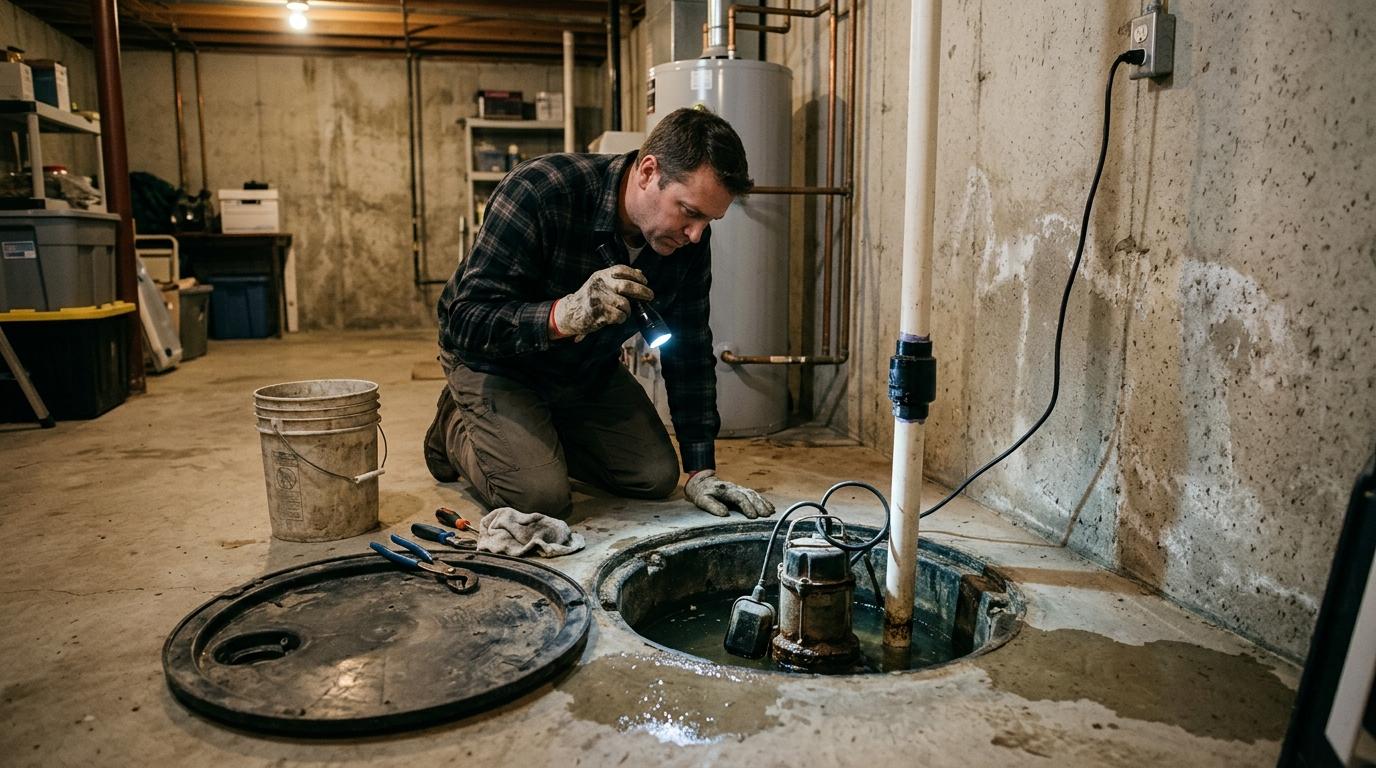
A sump pump that stops working can leave your basement exposed to water damage when you need protection the most. Some pumps fail without warning, while others show signs of trouble through unusual noises, repeated cycling, or water that remains in the sump pit. For homeowners in Lowell, MA, heavy rainfall, melting snow, and changing groundwater levels can put additional demands on basement drainage systems. The important thing is to identify what has stopped working before assuming the entire pump needs replacement. Many problems involve smaller components that can be repaired without installing a new unit.
Why Does a Sump Pump Stop Working?
A sump pump removes water that collects in a basin below the basement floor. As the water rises, a float switch or another type of level sensor activates the motor, which pushes water through a discharge pipe away from the building. A failure anywhere in this process can prevent the system from working correctly. Electrical interruptions, blocked pipes, faulty switches, worn components, and sediment buildup are among the possible causes. Understanding which part has failed helps homeowners avoid spending money on repairs that will not solve the underlying problem.
Electrical Supply and Float Switch Problems
A pump may remain completely silent because it is not receiving power or because its automatic switch has failed. A tripped circuit breaker, interrupted outlet, damaged power cord, or defective float switch can prevent the motor from starting. Sometimes, the switch is working but cannot move because it is touching the basin wall or has become trapped against the discharge pipe. Before replacing a silent pump, a technician should determine whether electricity is reaching the unit and whether its switching mechanism operates as intended.
Sediment Buildup and Blocked Water Flow
Sand, small stones, and other debris can collect at the bottom of a sump pit over time. If these materials reach the pump inlet, they may restrict water flow or interfere with the impeller responsible for moving water. A motor can sometimes operate normally while the pump delivers very little water. Blockages may also occur in the discharge pipe, particularly where the line bends or terminates outdoors. Cleaning the affected components may restore normal operation, provided the motor and internal parts have not suffered permanent damage.
What Different Pump Symptoms Tell You About the Problem
The way a sump pump behaves can provide useful clues about the cause of failure. A unit that refuses to start requires a different inspection from one that runs continuously without removing water. Listening to the motor, observing the water level, and noting when the problem occurs can help narrow down possible faults. However, these observations cannot confirm the condition of every internal component. Several failures can produce similar symptoms, so the full operating cycle should be checked before deciding on a repair.
Common warning signs include:
-
Pump remains silent: The electrical supply, float switch, or motor may have failed.
-
Motor runs without removing water: A blocked inlet, discharge restriction, air lock, or damaged impeller may be responsible.
-
Pump switches on and off repeatedly: Water may be returning through a faulty check valve, or the float may be incorrectly adjusted.
-
Pump runs continuously: The float could be stuck, the incoming water may exceed the pump's capacity, or the discharge system may be restricted.
-
Unusual grinding or rattling: Debris or worn mechanical components may be interfering with operation.
One useful detail is whether the water level actually falls during operation. Hearing the motor does not prove the pump is removing water. If the motor runs but the level remains unchanged, the discharge system needs attention. If the water level falls and then rises immediately after shutdown, water flowing backward through the discharge pipe may be contributing to the problem. This distinction can prevent unnecessary motor replacement when the actual fault is elsewhere in the system.
What Should You Check Before Calling for Repairs?
A few basic observations can help homeowners explain the problem accurately and identify whether immediate assistance is necessary. Before doing anything, check the surrounding floor for standing water and look for electrical equipment that may have become wet. Never touch plugs, switches, or pump wiring while standing in water. If the basement has flooded around electrical equipment, stay out of the affected area and arrange for a qualified electrician to make the system safe before attempting further inspection.
When the area is dry and safe, start by looking at the water level in the basin. Check whether the pump has power without opening electrical components or handling damaged wiring. If the circuit breaker has tripped repeatedly, leave it off and request professional inspection. You can also look for visible obstructions around the float without reaching into an energized sump pit. These observations may identify a simple external problem, but they should not involve opening the motor housing or attempting electrical repairs.
Check the Discharge Outlet
The discharge outlet deserves attention because a working motor cannot protect the basement if water has nowhere to go. From a safe, dry location, observe whether water exits the pipe while the pump operates. During colder months in Lowell, exposed discharge sections can become blocked by ice, while leaves or debris may restrict an outlet during other seasons. A poorly positioned outlet can also return discharged water toward the foundation, increasing the amount the pump must handle. The outlet should direct water to an appropriate location without creating hazards or violating local drainage requirements.
Test the Pump Only When Conditions Are Safe
For a pump that is accessible in a dry basement, a controlled water test can show whether its automatic cycle works. Follow the manufacturer's instructions and add clean water to the sump basin until the activation level is reached. Observe whether the pump starts, lowers the water level, and shuts off without unusual noises. Do not run the pump dry or allow the basin to overflow. If the unit fails to start, trips a breaker, or produces abnormal sounds, stop the test and arrange an inspection rather than repeating it.
Which Problems Can Be Repaired Without Replacing the Pump?
Not every sump pump failure requires a completely new unit. A blocked inlet, restricted discharge pipe, or obstructed float can sometimes be corrected through cleaning and adjustment. A damaged float switch may also be replaceable, depending on the pump model and availability of compatible components. Similarly, a defective check valve can often be replaced without disturbing the main motor. These repairs are most worthwhile when the pump is otherwise in good condition and has demonstrated reliable operation after the problem is corrected.
The decision becomes more complicated when water has entered the motor housing, internal components show serious wear, or the unit repeatedly overheats. Many residential sump pumps have sealed motors that are not intended for homeowner repair. Opening the housing without proper equipment can damage the seals and create electrical hazards. In these situations, replacing the complete pump may be safer and more practical than attempting internal repairs. A technician should consider the pump's condition, repair costs, replacement part availability, and expected remaining service life before recommending either option.
When Is Replacement a Better Decision?
Repairing an older pump is not always the most economical choice, especially when several components are approaching the end of their working lives. A unit that has experienced repeated motor failures or severe corrosion may continue to cause problems after one defective part is replaced. Replacement can also be appropriate when the existing pump cannot remove water quickly enough during normal high-water conditions. However, poor performance does not automatically mean a larger motor is needed. The discharge pipe, vertical pumping distance, and incoming water volume must also be considered.
The most important distinction is between a failed component and an unsuitable system. For example, installing another pump of the same size will not solve repeated basement flooding if the existing discharge line is severely restricted. Likewise, a more powerful pump may not correct poor drainage around the foundation. Homeowners seeking sump pump repair should expect a technician to examine the complete operating system before recommending a replacement. That approach helps address the cause rather than simply replacing equipment.
What Should a Professional Sump Pump Inspection Include?
A proper inspection should examine more than whether the motor turns on. The technician needs to observe the pump through a complete operating cycle, check the condition of accessible components, and determine whether water is leaving the basement at an appropriate rate. Float movement, inlet condition, discharge restrictions, and check valve performance are especially important. If electrical problems are suspected, testing should be carried out by someone qualified to work on the equipment. The inspection should also identify whether the pump is operating within the manufacturer's rated capacity.
Another valuable step is checking what happens immediately after the pump stops. If a noticeable amount of water returns to the basin, the check valve may be leaking or failing to close properly. If the pump runs continuously despite relatively little incoming water, the problem may involve the float mechanism or discharge system. If the water enters faster than the pump can remove it, the technician should investigate the system's capacity and the source of water entering the basement. These findings help determine whether cleaning, component replacement, or a different drainage solution is necessary.
How Can Lowell Homeowners Reduce Future Pump Failures?
Regular inspection is one of the simplest ways to prevent an unexpected sump pump failure. A unit may remain unused for long periods and still develop problems from corrosion, debris, or a stuck switch. Testing the equipment before periods of heavy rain can reveal faults while the basement is still dry. Homeowners should also keep the basin reasonably free of debris, watch for changes in operating noise, and make sure the outdoor discharge outlet remains clear. Any cleaning or maintenance that involves touching pump components must be performed with the electrical supply safely disconnected.
A battery backup system can provide additional protection when the main pump loses electricity, but it should not be treated as a permanent substitute for repairing a faulty primary pump. Backup equipment has its own battery, controls, and pumping limitations, all of which require periodic testing. Homeowners should also pay attention to how often the primary pump operates during ordinary weather. A sudden increase in cycling may indicate a developing drainage problem rather than normal pump wear. Identifying that change early can help prevent equipment failure during the next major storm.
Conclusion
A failing sump pump does not always need to be replaced, but the correct repair depends on understanding why it stopped working. Checking the power supply, automatic switch, water flow, and discharge system can reveal whether the problem involves a replaceable component or a more serious mechanical failure. Pump performance also depends on total dynamic head, which accounts for the height water must travel and resistance within the discharge system. Understanding this factor helps explain why a running pump may still struggle to remove water. For Lowell homeowners, timely inspection, safe troubleshooting, and regular maintenance provide a more dependable approach to keeping basement water under control.

 English
 Arabic
 French
 Portuguese
 Deutsch
 Turkish
 Dutch
Dutch
 Italiano
 Russian
 Romaian
 Portuguese (Brazil)
 Greek
Greek