


Gamla Buying Guide: Choose the Best Pots for Your Plants
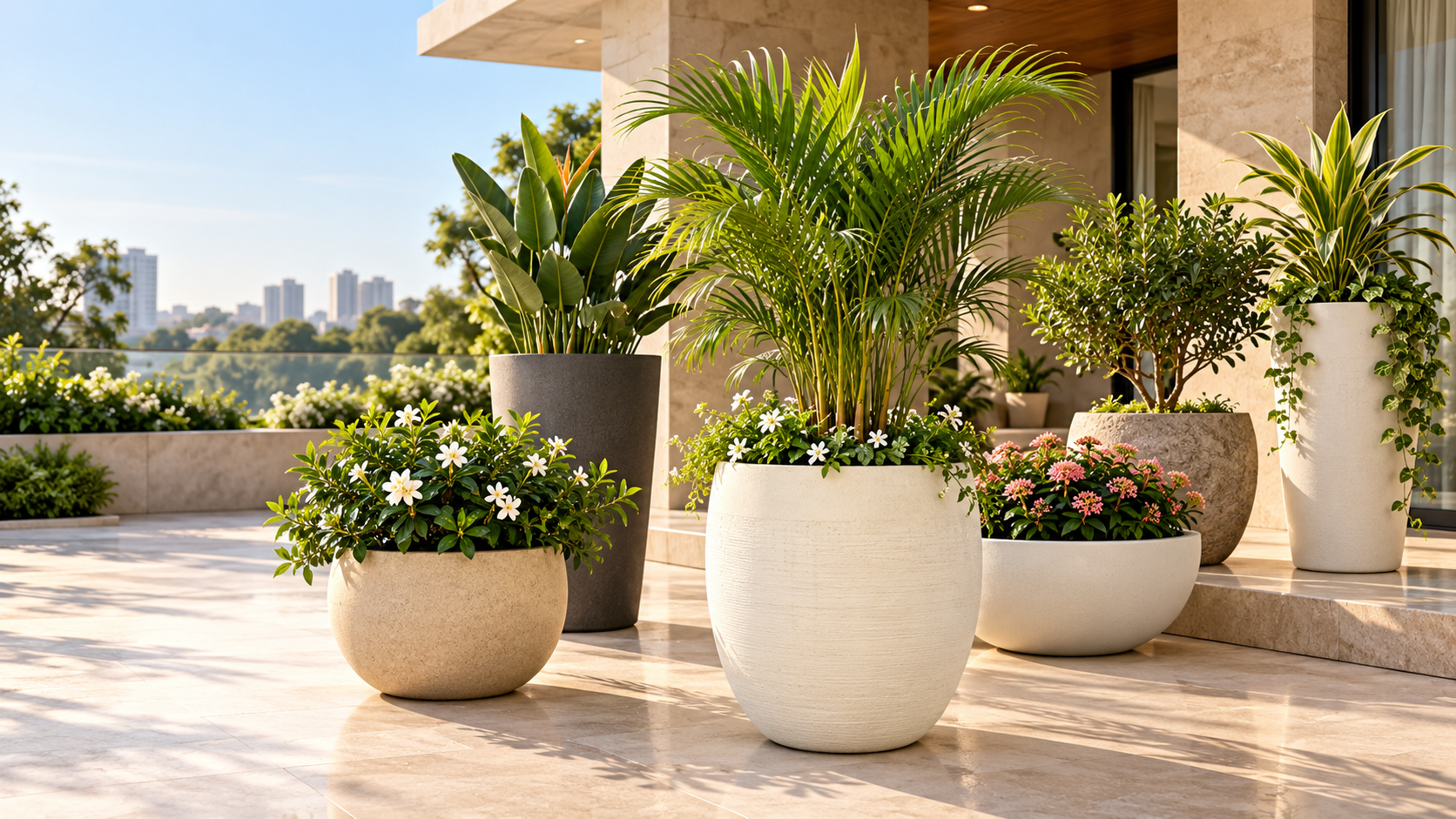
Half the gamla orders that go wrong were lost at the quotation stage, not in the factory. The buyer compared two prices, picked the lower one, and never asked about wall thickness. Six months later the rim is chipped, the gelcoat has chalked in the sun, and the supplier has stopped answering calls.
That's the problem this guide is built around. A gamla is a simple object, which is exactly why people underestimate it. Interior designers, nurseries and landscape architects who buy in volume know that the pot is the one item the client touches, sees and photographs every day. It has to survive transport, heat, rain and watering, and it still has to look right in year three.
What Goes Into a Gamla: Specification Basics
Most buyers ask for size and colour. Few ask what the pot is actually made of or how it was laid up. Here's the short version of what matters.
Material: FRP versus the Alternatives
Fibreglass reinforced plastic (FRP) is glass fibre set in polyester resin. It is lighter than concrete and does not crack the way terracotta does. Plastic moulded pots are cheaper, but they tend to fade and go brittle under strong sun. For commercial lobbies, rooftop terraces and premium homes, FRP is usually the sensible middle ground.
Wall Thickness and Reinforcement
Thickness is the number that separates a pot that lasts from one that dents when a gardener leans on it. A large floor-standing gamla should have a visibly even wall with no thin patches near the base or the rim. Ask for the thickness in millimetres, by size. If the supplier answers with "standard thickness," you've learned something.
Finish and Colour Options
Gelcoat finishes can be glossy, matte or textured to mimic stone or metal. Matte tends to hide fingerprints and minor scuffs better in high-traffic areas. Glossy looks sharper in photographs but shows every mark.
The Detail Most Buyers Skip: Drainage
Here's what nobody tells you until the first monsoon. A gamla without a pre-planned drainage hole, or with one drilled badly after moulding, can trap water at the root zone. Ask whether holes are formed during production and whether the pot can be supplied without one for indoor use with a liner. Drilling on site is where cracks begin.
Five Questions to Put to Any Gamla Supplier
Before you place an order, run every supplier through these. Compare the answers, not just the rates.
-
What is the wall thickness, by size, in millimetres? A good answer gives numbers per model. A bad answer is "it's strong, don't worry."
-
What resin and gelcoat do you use, and is the finish UV-stabilised? A good answer names the resin type and explains the UV treatment. A bad answer is "same as everyone uses."
-
Can I see a production sample before the bulk order? A good supplier sends a sample or photographs from the actual batch. A bad one shows catalogue pictures from another manufacturer's pots.
-
How do you pack for transport? A good answer describes edge protection, nesting rules and carton or crate strength. A bad answer is "we pack carefully."
-
What happens if 6 of 100 pots arrive damaged? A good supplier has a written replacement process with a photo-proof window. A supplier who says "we'll handle defects case by case" doesn't have a policy. That's a negotiation you'll lose after the shipment lands.
Why FRP Gamla Pays Back in Margin Protection
Benefits only count if they cut your risk or protect your margin. These do.
-
Lower breakage in transit. FRP handles knocks that would shatter terracotta or ceramic, so fewer replacements eat into your project profit.
-
Easier handling on site. A lighter pot means smaller crews and fewer lift-related delays on upper floors and terraces.
-
Colour stability. Properly UV-stabilised gelcoat resists fading, which means fewer callbacks from clients who notice a pot looking tired in the second year.
-
Weather tolerance. Rain, heat and temperature swings are a daily reality across Indian regions. A well-made FRP pot doesn't swell, flake or crack from them.
-
Consistent batches. Moulded production lets you reorder matching pots months later, which matters when a project is delivered in phases.
-
Low upkeep. Wipe-clean surfaces cut the maintenance time you'd otherwise quote into a landscaping contract.
Honest note, though: FRP is not maintenance-free. Surface chips can happen, and a poor-quality pot will fade regardless of material. Quality of manufacture is what you're really buying.
Where to Source Gamla in India
Finding reliable Gamla manufacturers in India takes some digging, because many sellers are traders rather than makers. Ask directly: do you mould these yourselves, or do you buy and resell? It changes who is accountable when something goes wrong.
Geography matters too. Manufacturers closer to major transport corridors can ship to Delhi NCR, Mumbai, Bengaluru and Hyderabad with fewer handling stages, and every extra handoff raises damage risk. If you are comparing Gamla suppliers in India, ask where the goods are produced and from which dispatch point they leave, not just where the sales office sits. Freight cost per pot can swing your margin more than the unit price difference between two quotes.
For nurseries and garden centres that restock regularly, working with direct Gamla manufacturers also gives you repeat-order consistency. Traders change their sources. A factory doesn't change its moulds without telling you.
About Us
We're FRP Planters. We design and manufacture FRP pots and planters for homes, offices, hotels and landscape projects across India. Our work is made for interior designers, nurseries, garden centres and landscape architects who need pots that look premium and hold up after the handover.
Here's something we learned the hard way. Early on, we saw that pots shipped without rim protection arrived with chipped edges far more often than the rest of the batch. We changed our packing. That one change cut our complaint volume more than any material upgrade did. That's what repeat customer feedback does to a factory floor.
Conclusion
A good gamla earns its place quietly. It looks right, it survives the site, and nobody calls you about it. Pick your gamla supplier on specifications, packing and replacement terms, and the price will take care of itself. The next project you bid on will thank you for the checklist.
Frequently Asked Questions
1. What is a gamla, and why is FRP a good material for it?
A gamla is a pot or planter used to hold plants indoors and outdoors. FRP suits it because it combines strength with low weight and resists cracking, which cuts breakage and handling cost. It isn't indestructible, though. A hard impact on a corner can still chip the gelcoat.
2. How do I verify genuine Gamla manufacturers in India?
Ask for factory photographs, a sample from the current batch and the production address. Real Gamla manufacturers will tell you how many pieces per day their moulds can turn out. If the answers stay vague, you're probably speaking to a trader.
3. Are Gamla suppliers in India able to do custom sizes?
Many can, but custom work depends on mould cost and quantity. Expect a tooling charge for a new shape, and a longer lead time than for catalogue designs. If a supplier promises a custom design in three days, ask what exactly they're promising.
4. What is a sensible MOQ when buying from Gamla suppliers?
It varies by size and finish. Larger pots usually carry lower MOQs because each one takes more production time. Ask each of the Gamla suppliers you're comparing for MOQ per design, not per order, since that's where surprises hide.
5. Will an FRP gamla fade in strong sun?
Poorly made ones will. Pots with UV-stabilised gelcoat resist fading far better, but no coating lasts forever in harsh sun. Ask what UV treatment is used and request photos of older installed pieces if you can get them.

 English
 Arabic
 French
 Spanish
 Portuguese
 Deutsch
 Turkish
 Dutch
Dutch
 Italiano
 Russian
 Romaian
 Greek
Greek