


Shilajit Resin vs. Powder vs. Capsules: Which Should You Choose
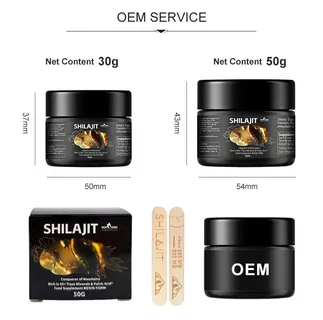
Shilajit is available in several forms, including resin, powder, and capsules. Although these products may contain the same general natural substance, they can differ in processing, concentration, convenience, ingredient composition, and quality-control requirements. Choosing the right form involves more than deciding which one looks traditional or is easiest to consume.
For some people, resin offers flexibility in adjusting the amount used. Others prefer capsules because they provide a measured serving without requiring preparation. Powder may appeal to consumers who want a format that can be incorporated into a supplement routine, although its ingredients and processing methods need careful evaluation.
So, which form is best? The answer depends on your priorities, the manufacturer's quality standards, and the evidence available for the specific product. This guide compares shilajit resin, powder, and capsules to help you make an informed decision before you Buy Shilajit.
What Is the Difference Between Shilajit Resin, Powder, and Capsules?
The main difference is the product's physical form and how it is prepared for consumption. Resin is typically a concentrated, sticky preparation. Powder is a dry formulation that may consist of processed shilajit or a blend of ingredients. Capsules contain a measured quantity of powder or extract inside a shell.
These formats are not automatically equal in purity or effectiveness. A carefully tested capsule may be more reliable than an untested resin, while a properly processed resin may be preferable to a powder with unclear ingredients. The finished product's composition and quality controls matter more than its appearance.
Shilajit Resin: Traditional Form and Key Considerations
Shilajit resin is a thick, sticky substance commonly associated with traditional use. It is usually supplied in a jar or similar container and may need to be measured and dissolved in a suitable liquid according to the manufacturer's instructions.
Advantages of Shilajit Resin
One advantage of resin is that it can offer flexibility in measuring a serving, provided the product includes clear instructions and the consumer uses a reliable measuring method.
Resin may also have a relatively simple ingredient list. Some products contain only purified shilajit, although this should always be confirmed by checking the label rather than assumed from the product's appearance.
Another potential advantage is that consumers can inspect its texture and consistency. However, these characteristics are not reliable tests of purity, authenticity, or safety.
Limitations of Shilajit Resin
Resin can be sticky and difficult to handle, especially in cooler environments when its consistency may change. Measuring a small serving can also be less convenient than taking a premeasured capsule.
Taste and smell may be significant considerations for people who dislike the characteristic earthy flavor of shilajit. Resin also requires appropriate storage and careful handling to avoid contamination.
Most importantly, a resin-like texture does not prove that a product has been properly purified. Consumers should look for credible laboratory testing, including relevant heavy-metal and microbiological assessments.
Who May Prefer Resin?
Resin may suit people who prefer a traditional format, do not mind preparing a serving, and can follow the manufacturer's measuring and storage instructions. It is not necessarily the best choice for someone who prioritizes portability or precise premeasured servings.
Shilajit Powder: A Dry and Versatile Format
Shilajit powder is sold as a dry material. However, the term can describe different formulations, so consumers should determine whether a product contains purified shilajit powder, a standardized extract, or a mixture with carriers and other ingredients.
Advantages of Shilajit Powder
Powder is generally easier to transport and handle than sticky resin. It can also be convenient for manufacturers who formulate products with defined serving sizes or combine ingredients in a blended supplement.
Depending on the formulation, powder may be easier to mix into a drink or incorporate into a supplement routine. Nevertheless, not every powder is intended to be mixed into beverages, so the product instructions should determine how it is used.
Limitations of Shilajit Powder
Powder products can differ considerably in composition. Some may contain processing aids, carriers, or additional ingredients that affect the amount of actual shilajit in each serving.
A product labeled as a shilajit extract may have a different concentration from a product containing dried shilajit material. This means that comparing equal weights of two powders does not necessarily provide a meaningful comparison of their composition.
Consumers should also be cautious of products that advertise unusually high fulvic acid percentages without explaining the testing method or providing credible documentation. A single marker does not establish overall quality or safety.
Who May Prefer Powder?
Powder may suit people who prefer a dry supplement format and are comfortable reviewing ingredient lists and serving instructions. It can be a practical choice when the manufacturer clearly identifies the formulation and provides reliable quality documentation.
Shilajit Capsules: Convenience and Measured Servings
Shilajit capsules typically contain powder or an extract enclosed in a capsule shell. They are designed to simplify consumption by providing a premeasured quantity of the formulated material.
Advantages of Shilajit Capsules
Convenience is the main advantage. Capsules do not usually require dissolving, mixing, or handling a sticky substance. They are easy to carry when traveling and may be easier to incorporate into an established supplement routine.
Capsules also offer a defined amount of the formulation per unit. This can make it easier to follow label instructions consistently, although the amount of capsule contents is not necessarily the same as the amount of purified shilajit or a particular active constituent.
For consumers who dislike the taste of resin, capsules may offer a more comfortable option.
Limitations of Shilajit Capsules
Capsules may contain fillers, binders, or other ingredients, depending on the formulation. The label should identify these ingredients and indicate how much shilajit or extract each serving provides.
Capsules can also be difficult for people who have trouble swallowing them. Furthermore, convenience does not guarantee quality. A capsule product still requires appropriate manufacturing controls and testing for contamination.
The number of milligrams listed on the label should be interpreted carefully. For example, 500 mg of a blended formulation is not necessarily equivalent to 500 mg of purified shilajit.
Who May Prefer Capsules?
Capsules may suit people who value portability, consistent serving sizes, and minimal preparation. They can be a sensible option for beginners who prefer not to measure resin, provided the product is transparent about its contents and quality testing.
Shilajit Resin vs. Powder vs. Capsules: Comparison Table
| Feature | Resin | Powder | Capsules |
|---|---|---|---|
| Physical form | Thick, sticky substance | Dry material or formulation | Powder or extract inside a shell |
| Ease of use | Requires measuring and preparation | Depends on formulation and instructions | Usually the simplest to take |
| Serving consistency | Depends on measuring accuracy | Depends on product instructions and measuring method | Premeasured per capsule |
| Taste | Usually noticeable | Depends on the formulation | Usually masks most of the taste |
| Portability | Moderate; container must be handled carefully | Generally convenient | Generally very convenient |
| Ingredient transparency | May have a simple ingredient list | Must be checked for carriers and blends | Must be checked for fillers and extract details |
| Quality verification | Requires reliable testing | Requires reliable testing | Requires reliable testing |
| Best suited for | People who prefer a resin format | People who prefer a dry formulation | People who prioritize convenience |
| Main consideration | Accurate measurement and storage | Composition and concentration | Actual shilajit content per serving |
No format is universally superior. The best choice is the product whose composition, testing, serving instructions, and convenience fit your needs.
Which Form Has the Most Benefits?
A common misconception is that resin is always more potent than powder or capsules. There is insufficient evidence to conclude that one physical form is inherently more effective across all products.
The relevant factors include the source material, purification method, chemical composition, concentration, and quality of the finished product. Drying, extracting, or formulating shilajit can change the properties of a preparation, but the impact depends on the specific manufacturing process.
Research findings for one shilajit preparation cannot automatically be applied to every resin, powder, or capsule. A clinical study may investigate a particular extract with a defined composition, whereas a commercial product may have a different formulation.
Fulvic acid content alone is also insufficient to determine effectiveness. Analytical methods can vary, and the percentage of one constituent does not establish the overall identity, purity, or clinical performance of the product.
When comparing options, look for clear product specifications and credible testing rather than relying on claims such as “strongest,” “most natural,” or “fastest acting.”
How to Choose High-Quality Shilajit
Whether you choose resin, powder, or capsules, use the following criteria to evaluate a product.
1. Check the Ingredient List
Confirm whether the product contains purified shilajit, a shilajit extract, or a blend. Review any carriers, fillers, flavorings, or additional ingredients, especially if you have allergies or dietary restrictions.
2. Look for Independent Laboratory Testing
A credible certificate of analysis should correspond to the specific product batch. Relevant testing may include lead, arsenic, mercury, cadmium, and microbiological contaminants.
Check whether the report identifies the laboratory, the tested batch, the testing date, and the results. A generic statement that a product is laboratory tested provides less useful evidence if the report is unavailable.
3. Understand the Serving Size
For resin, follow the manufacturer's measurement instructions. For powder, distinguish the weight of the complete formulation from the amount of shilajit itself. For capsules, check both the serving size and the amount of shilajit or extract per serving.
Do not assume that equal milligram amounts across different formulations are chemically equivalent.
4. Evaluate the Manufacturer
Look for transparent sourcing, clear storage instructions, appropriate manufacturing practices, and realistic product claims. Be cautious of sellers promising guaranteed results or claiming that their products cure medical conditions.
5. Consider Your Routine
The most practical product is one you can use according to its instructions without unnecessary difficulty. If you travel frequently, capsules may be convenient. If you prefer measuring a resin preparation, resin may suit you. If you want a dry format, a clearly labeled powder may be appropriate.
Before you Buy Shilajit, compare these factors alongside the price. A lower-cost product may not offer the same level of quality documentation, while a higher price does not automatically establish superior purity.
Case Study: Choosing Between Three Shilajit Products
Consider a hypothetical consumer comparing three products.
Product A is a resin advertised as traditional Himalayan shilajit. Its label provides general usage instructions, but the seller cannot provide a batch-specific laboratory report.
Product B is a powder with a clearly stated ingredient list and a reported extract concentration. However, the consumer needs to confirm whether the stated concentration reflects the shilajit itself or the full formulation.
Product C is a capsule product with a defined amount of shilajit extract per serving and a certificate of analysis matching the batch being sold. The available report includes relevant heavy-metal and microbiological results.
The consumer prefers convenient daily handling, so capsules appear to be the best practical fit. More importantly, Product C provides more verifiable quality information. Product A cannot automatically be declared unsafe because its report is unavailable, and Product C cannot be declared completely safe solely because it has been tested. The documentation simply gives the consumer a stronger basis for comparison.
This hypothetical example illustrates why product form, convenience, and quality evidence should be assessed separately. It is not a report of an actual consumer study or clinical trial.
Safety Considerations Before Using Shilajit
Shilajit products should be evaluated for safety regardless of their form. Raw or inadequately processed material may contain unwanted contaminants, including potentially harmful heavy metals.
Do not consume raw shilajit or assume that a product is safe because it is labeled natural, organic, Himalayan, or purified. Follow the product instructions and avoid exceeding the recommended serving.
Evidence regarding shilajit's long-term safety remains limited. People who are pregnant or breastfeeding, children, and individuals with chronic health conditions should seek advice from a qualified healthcare professional before use. Anyone taking prescription medication should also check for potential interactions with a healthcare professional.
Stop using the product and seek appropriate medical advice if you experience an unexpected adverse reaction.
Conclusion
Shilajit resin, powder, and capsules offer different advantages, but none is automatically the best option for everyone. Resin may appeal to people who prefer a traditional preparation, powder offers a dry format with formulation-dependent flexibility, and capsules provide convenient, premeasured servings.
The most important distinction is not simply the product's physical form. Purity, composition, manufacturing standards, serving accuracy, and independent laboratory testing are more useful indicators when evaluating quality.
Before you Buy Shilajit, read the ingredient list, confirm the actual amount of shilajit per serving, review available testing documentation, and choose a format that fits your routine. An informed decision should be based on transparent evidence rather than assumptions about which form is strongest or most effective.
Frequently Asked Questions
1. Is shilajit resin better than capsules?
Not necessarily. Resin may appeal to people who prefer a traditional format, while capsules offer convenience and premeasured servings. Quality and composition matter more than the physical form alone.
2. Is shilajit powder as effective as resin?
There is not enough evidence to conclude that powder and resin are universally equivalent or that one is always more effective. Their composition, processing, and concentration can differ between products.
3. Which form of shilajit is best for beginners?
Capsules may be easier for beginners because they typically provide premeasured servings and require little preparation. However, beginners should still check the ingredient list, follow label instructions, and choose a product with credible quality testing.
4. Does shilajit resin contain more fulvic acid?
Not necessarily. Fulvic acid content varies by source, processing, and product formulation. Resin's texture does not establish its fulvic acid concentration, which requires appropriate analytical testing.
5. Are shilajit capsules safe to take daily?
Daily use depends on product quality, serving size, individual health, and other medications or supplements. Long-term safety evidence remains limited. Consult a qualified healthcare professional before regular use, especially if you have a medical condition.
6. Can I mix shilajit resin or powder with water?
Some products are intended to be dissolved or mixed with a suitable liquid, while others may have different instructions. Follow the manufacturer's directions rather than assuming every formulation should be used in the same way.
7. What should I check before I Buy Shilajit?
Check the product's ingredients, source information, serving size, purification and manufacturing information, and batch-specific laboratory testing. Relevant tests should address heavy metals and microbiological contamination.
8. Is expensive shilajit always better?
No. Price alone does not establish authenticity, purity, or effectiveness. Compare verifiable testing, ingredient transparency, traceability, and manufacturing standards before making a decision.
9. Can shilajit resin be fake?
Products marketed as shilajit may be misidentified, adulterated, or inadequately processed. Appearance, stickiness, and solubility cannot conclusively establish authenticity. Credible testing and transparent sourcing provide stronger evidence.
10. Can I switch between resin, powder, and capsules?
Different formulations may contain different amounts and concentrations of shilajit. Do not assume that servings are interchangeable on a milligram-for-milligram basis. Review each product's instructions and consult a healthcare professional if you are uncertain about its use.

 English
 Arabic
 French
 Spanish
 Portuguese
 Deutsch
 Turkish
 Dutch
Dutch
 Italiano
 Russian
 Romaian
 Greek
Greek