


How Does a Bare Metal Server Work?
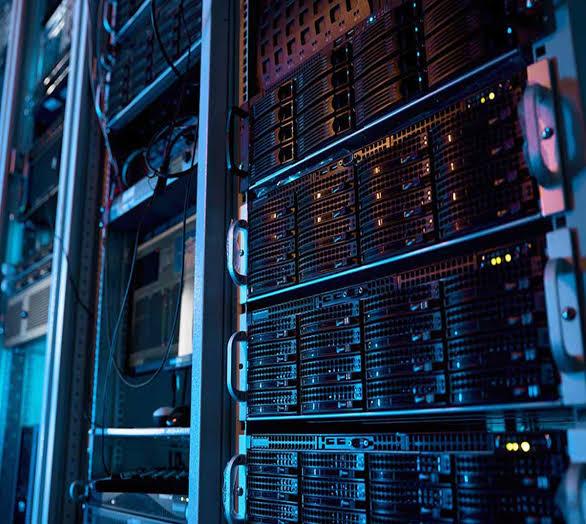
A bare metal server is a physical server dedicated to a single customer or organization. Unlike virtual servers, which share the resources of one physical machine among multiple users, a bare metal server provides exclusive access to its hardware. This includes the processor, RAM, storage drives, and network resources. Businesses use bare metal servers when they need high performance, greater control, enhanced security, and reliable infrastructure for demanding workloads.
A bare metal server operates directly on physical hardware bare metal server without requiring a virtualization layer to divide resources among multiple virtual machines. Customers can install their preferred operating system, configure applications, and manage server settings according to their requirements.
Depending on the hosting provider, users may access the server remotely through administrative tools or a control panel. They can also choose hardware configurations that suit their applications, including different CPU models, memory capacities, storage options, and network speeds.
Some bare metal servers run directly on an operating system, while others use a hypervisor to create virtual machines for specific workloads. In both cases, the underlying physical hardware remains dedicated to one customer.
Key Benefits of Bare Metal Servers
1. High Performance
One of the main advantages of bare metal hosting is consistent performance. Since hardware resources are not shared with other customers, applications can use the server's processing power, memory, and storage without competing against unrelated workloads on the same machine.
This makes bare metal servers suitable for databases, enterprise applications, high-traffic websites, and computationally intensive tasks.
2. Greater Security and Isolation
Bare metal servers provide physical hardware isolation between customers. This can reduce certain risks associated with shared infrastructure and help organizations meet specific security requirements.
However, dedicated hardware does not automatically guarantee complete security. Businesses must still maintain operating systems, configure firewalls, install security updates, and manage access permissions.
3. Full Configuration Control
Bare metal hosting offers considerable flexibility. Customers can select compatible operating systems, configure storage arrangements, install specialized software, and optimize server settings.
This level of control is valuable for developers and IT teams managing applications with particular hardware or software requirements.
4. Predictable Resource Availability
Because the hardware is dedicated to one customer, server resources are generally more predictable than those in heavily shared environments. This can be important for applications that require stable processing capacity and consistent response times.
Common Uses of Bare Metal Servers
Bare metal servers support a wide range of business and technical applications.
Website and application hosting: Businesses can host high-traffic websites, e-commerce platforms, and web applications.
Database management: Organizations can run large databases that require substantial memory, storage performance, and processing capacity.
Gaming servers: Game hosting providers use dedicated hardware to support multiplayer environments and demanding game workloads.
Cloud infrastructure: Companies can use bare metal machines as the foundation for private cloud platforms or specialized infrastructure services.
Artificial intelligence and machine learning: Servers equipped with suitable CPUs, GPUs, and memory can support AI training, inference, and data processing.
Enterprise software: Organizations can deploy resource-intensive business applications while maintaining greater control over their infrastructure.
Bare Metal Servers vs. Virtual Servers
The primary difference between bare metal and virtual servers is how physical hardware resources are allocated.
A virtual private server (VPS) runs on a physical machine whose resources are divided among multiple virtual environments. VPS hosting is often more affordable and convenient for smaller projects. However, performance can depend on the provider's resource allocation and infrastructure design.
A bare metal server provides dedicated physical hardware, making it attractive for workloads that demand consistent performance, specialized configurations, or stronger hardware-level isolation.
Bare metal servers usually cost more than entry-level VPS plans and may require additional technical expertise. Virtual servers, on the other hand, are often easier to scale quickly and deploy in smaller configurations.
What to Consider When Choosing a Bare Metal Server
Before selecting a bare metal server, evaluate your application's technical requirements and expected growth.

 English
 Arabic
 French
 Spanish
 Portuguese
 Deutsch
 Turkish
 Dutch
Dutch
 Italiano
 Romaian
 Portuguese (Brazil)
 Greek
Greek