


10 Different Types of Wrenches and Their Uses: A Guide for Technicians
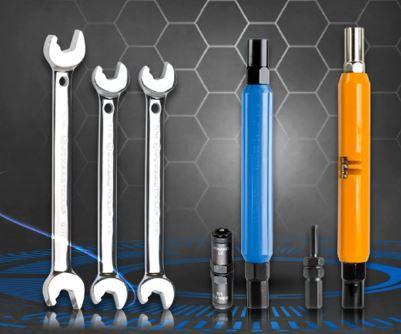
Wrenches are essential hand tools for tightening and loosening nuts, bolts, and other fasteners. From installing communication equipment to maintaining low voltage systems, technicians use wrenches to secure hardware and perform routine repairs. However, different jobs require different wrench designs, sizes, and levels of control.
Understanding the different types of Wrenches helps professionals select suitable tools for their applications. Whether you work as a CATV technician, broadband installer, telecom contractor, or DIY enthusiast, choosing the right wrench can improve access to fasteners and help prevent damage during installation.
This guide explains 10 common wrench types, their uses, and how to choose the right tools for your work.
What Is a Wrench?
A wrench is a hand tool designed to grip and turn nuts, bolts, and compatible fasteners. It uses leverage to help users apply rotational force, also known as torque.
In many countries, people use the terms wrench and spanner interchangeably. The preferred term often depends on regional usage. In the United States, “wrench” is common, while “spanner” is widely used in the United Kingdom and other regions.
Wrenches come in several designs, including fixed-size, adjustable, ratcheting, and torque-controlled models. Each design supports different fastening requirements.
10 Different Types of Wrenches and Their Uses
1. Adjustable Wrench
An adjustable wrench features a movable jaw that allows you to fit different fastener sizes with one tool. A worm gear adjusts the jaw opening, making it useful when you encounter various nut and bolt sizes.
Common uses: General maintenance, equipment installation, and repairs involving compatible fasteners.
Adjustable wrench tools can help technicians reduce the number of individual wrenches they carry. However, you should position the movable jaw correctly and ensure it fits snugly before applying force. A fixed size wrench often provides a more secure fit for repetitive or high torque applications.
2. Open End Wrench
An open end wrench has U-shaped openings that fit around the opposite sides of a nut or bolt head. Many models provide two different sizes, one at each end.
Common uses: Tight spaces, routine equipment assembly, and fasteners that require frequent repositioning.
Its open design allows quick access when surrounding components prevent you from sliding a closed wrench over the fastener.
3. Box End Wrench
A box end wrench surrounds the fastener with a closed head. This design engages more sides of a compatible nut or bolt than a typical open end wrench.
Common uses: Tightening or loosening suitable fasteners when you need secure engagement.
Choose the correct size to reduce slipping and the risk of rounding the fastener. Check the surrounding space to ensure the closed head can reach the fastener.
4. Combination Wrench
A combination wrench pairs an open end head with a box end head, usually in the same size.
Common uses: Equipment maintenance, assembly work, and general fastening tasks.
The open end offers convenient access, while the box end can provide a more secure grip. This combination makes the tool a practical choice for technicians who regularly work with fixed-size fasteners.
5. Socket Wrench
A socket wrench uses interchangeable sockets that fit different fastener sizes. Many socket wrench handles include a ratcheting mechanism, which allows you to turn a fastener repeatedly without removing the tool after each stroke.
Common uses: Repetitive fastening, maintenance work, and applications requiring different socket sizes.
A socket set offers flexibility, but you must match the socket to the fastener and use a compatible drive size.
6. Ratcheting Wrench
A ratcheting wrench incorporates a mechanism that allows rotation in one direction while resetting in the other. This feature reduces the need to remove and reposition the tool after every short turn.
Common uses: Fastening in confined spaces and tasks that involve repeated turning.
Jonard Tools also offers specialized speed wrenches designed for technicians who need to tighten and loosen compatible fasteners efficiently, including in restricted spaces.
7. Torque Wrench
A torque wrench helps users apply a specified amount of torque to a fastener. Depending on the design, it may provide an audible, tactile, or digital indication when the selected torque is reached.
Common uses: Assemblies where the equipment manufacturer specifies a torque requirement.
Do not confuse a torque wrench with a general purpose adjustable wrench. Torque controlled fastening requires the correct tool, setting, and procedure. Follow the manufacturer's specifications and calibration recommendations.
8. Allen Wrench or Hex Key
An Allen wrench, also called a hex key, has a hexagonal tip that fits a matching hexagonal recess in a screw or bolt.
Common uses: Equipment brackets, mounting hardware, compact assemblies, and compatible set screws.
Hex keys often come in metric or imperial sizes. Choose the correct system and size to avoid damaging the fastener.
9. Pipe Wrench
A pipe wrench uses adjustable, toothed jaws to grip and turn pipes and other compatible cylindrical objects.
Common uses: Plumbing and specific pipe handling applications.
Its teeth can mark or damage finished surfaces, so it is generally not the right choice for delicate communication connectors or finished equipment hardware. Use a tool designed for the specific component instead.
10. Crowfoot Wrench
A crowfoot wrench has an open wrench head designed to attach to a compatible ratchet, extension, or torque wrench.
Common uses: Reaching fasteners in confined or obstructed locations where a conventional wrench cannot fit.
When you use a crowfoot attachment with a torque wrench, follow the manufacturer's instructions. Depending on the attachment's orientation and effective lever arm, you may need to adjust the torque setting.
How Do Technicians Use Wrenches in Telecom and Cable Installation?
Telecom and low voltage technicians often encounter mounting hardware, brackets, cabinets, enclosures, and specialized connectors. The appropriate wrench helps them secure compatible fasteners without damaging surrounding components.
-
CATV and coaxial cable installers: Use suitable wrenches for mounting hardware and compatible equipment fasteners.
-
Broadband and telecom technicians: Keep commonly used sizes available for enclosure installation and field maintenance.
-
Satellite installers: Select appropriate tools for mounting brackets and compatible installation hardware.
-
CCTV and security camera installers: Use correctly sized wrenches when assembling camera mounts and equipment supports.
-
Field service technicians: Carry versatile tools that match the fasteners found in their regular service work.
-
Apprentices and DIY users: Start with common wrench types and expand their kits as they learn which tools their projects require.
Always follow the equipment manufacturer's instructions, especially when tightening connectors or components that require a specific torque.
How to Choose the Right Wrench Set
Before buying a wrench set, consider the following factors:
Size range: Choose sizes that match the fasteners you encounter most often. Check whether you need metric, imperial, or both.
Tool design: An adjustable wrench offers flexibility, while fixed size and box end designs provide a more specific fit. Ratcheting tools can help when space limits your turning movement.
Material and construction: Look for durable construction, well finished jaws, and a handle designed for comfortable use.
Portability: Field technicians may prefer a compact selection of frequently used tools, while maintenance teams may benefit from a more comprehensive set.
Application requirements: Use specialized tools when the task requires controlled torque, a particular jaw design, or access to recessed fasteners.
A carefully selected wrench set can be more useful than a large collection of tools that rarely match your actual work.
Wrench Safety and Maintenance Tips
Inspect wrenches before use. Replace tools with cracked handles, damaged jaws, or worn mechanisms. Keep the jaws clean and make sure adjustable mechanisms move smoothly.
Fit the wrench fully onto the fastener before applying steady pressure. Avoid forcing an incorrectly sized tool, extending the handle with an improvised pipe, or using a wrench as a hammer.
Keep tools organized and dry after use. For torque wrenches, follow the manufacturer's storage, inspection, and calibration instructions.
Frequently Asked Questions
What are the 10 different types of wrenches?
Ten common types are adjustable, open end, box end, combination, socket, ratcheting, torque, Allen or hex key, pipe, and crowfoot wrenches. Each serves a different fastening or access requirement.
What is the difference between wrenches and spanners?
The terms generally describe tools used to turn nuts and bolts. Regional naming conventions differ, although some technical contexts use “spanner” for specific fixed size designs.
Should I buy a wrench set or an adjustable wrench?
An adjustable wrench offers versatility for occasional work involving different fastener sizes. A wrench set provides dedicated sizes for a more precise fit and may be preferable for frequent professional use. Your tasks should determine your choice.
What are adjustable wrench tools used for?
Adjustable wrench tools accommodate a range of compatible fastener sizes. They suit general maintenance and installation work, provided you adjust the jaw correctly and avoid exceeding the tool's intended capacity.
Find the Right Wrenches for Your Work
Choosing the right wrench starts with understanding the fastener, the available working space, and the application's requirements. From adjustable wrench tools to specialized speed and torque wrenches, the right design can help technicians complete fastening tasks with better control.
Explore Jonard Tools Wrenches collection to compare professional hand tools designed for telecom, fiber optic, low voltage, electrical, and other technical applications.


 English
 Arabic
 French
 Spanish
 Portuguese
 Deutsch
 Turkish
 Italiano
 Russian
 Romaian
 Portuguese (Brazil)
 Greek
Greek