


Silica Sand Market 2026 | Industry Size, Share, Growth, Trends & Future Outlook Report by 2034
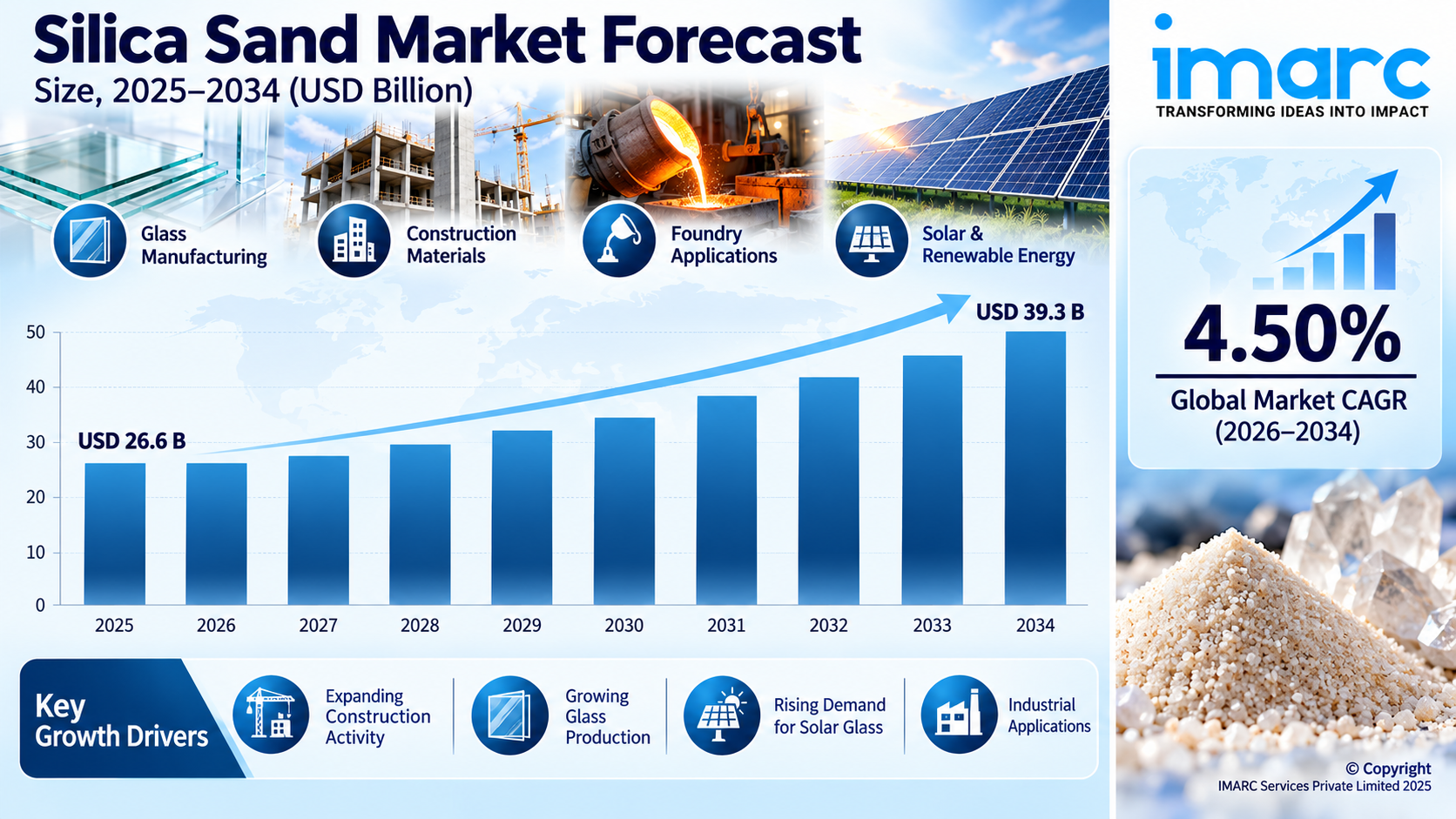
According to a research report by IMARC Group, the global silica sand market size reached USD 26.6 Billion in 2025 and USD 27.7 Billion in 2026. Looking forward, IMARC Group expects the market to reach USD 39.3 Billion by 2034, exhibiting a growth rate (CAGR) of 4.50% during 2026–2034. The market growth is primarily driven by increasing demand from the construction and glass manufacturing industries, continual advancements in hydraulic fracturing technology for oil and gas extraction, and evolving environmental and regulatory requirements.
Silica Sand Market Key At a Glance
-
Base Year: 2025
-
Historical Period: 2020–2025
-
Forecast Period: 2026–2034
-
Market Size (2025): USD 26.6 Billion
-
Market Size (2026): USD 27.7 Billion
-
Market Forecast (2034): USD 39.3 Billion
-
CAGR (2026–2034): 4.50%
-
Leading Regional Market: China
-
Dominant End-Use Segment: Glass Industry
Request for a Sample Report for Detailed Evaluation: https://www.imarcgroup.com/silica-sand-manufacturing-plant/requestsample
Silica Sand Market Report: Key Highlights
-
Market Size & Growth: The global silica sand market reached USD 26.6 Billion in 2025 and USD 27.7 Billion in 2026. It is projected to reach USD 39.3 Billion by 2034, registering a CAGR of 4.50% during 2026–2034, according to IMARC Group.
-
Regional Leadership: China represents the largest regional market, supported by its extensive construction, manufacturing, and automotive industries.
-
By End-Use: The market is segmented into glass industry, foundry, hydraulic fracturing, filtration, abrasives, and others, with the glass industry accounting for the largest share.
-
Key Market Drivers: Increasing demand from construction and glass manufacturing, expanding hydraulic fracturing activities, urbanization, and industrialization.
-
Key Market Trends: Growing demand for high-purity silica sand, technological advancements in mining and processing, and increasing emphasis on environmentally sustainable mining practices.
-
Key Market Applications: Silica sand is widely used in glass manufacturing, foundries, hydraulic fracturing, water filtration, abrasives, and construction-related applications.
-
Key Market Challenges: Stringent environmental regulations, mining permit requirements, land reclamation obligations, and the need to minimize the environmental impact of extraction and processing.
-
Emerging Opportunities: Development of sustainable mining and processing techniques, growing demand for specialized glass, and increasing applications in filtration and oil and gas extraction.
What Is Driving Silica Sand Market Growth in 2026?
Increasing Demand from the Construction Industry
The increasing demand for silica sand across the construction industry represents one of the key factors driving the growth of the global silica sand market. Silica sand is extensively used in the manufacturing of glass, concrete, and mortar, making it an essential raw material for infrastructure development and building construction. Rapid urbanization, expanding industrial activities, and rising investments in residential and commercial projects, particularly in emerging economies, are further contributing to market expansion.
China remains a significant contributor to silica sand demand, supported by its large-scale construction industry, ongoing infrastructure development, and growing residential and commercial real estate sectors. Government-backed housing programs and investments in transportation networks and urban infrastructure are generating demand for construction materials, including silica sand. Furthermore, the increasing focus on sustainable construction and energy-efficient buildings is driving the adoption of architectural glass, insulated glazing, and other glass-based building materials. These developments are shaping the silica sand market trends and creating new growth opportunities, while evolving construction requirements and industrial applications continue to influence the silica sand market analysis and the industry's long-term growth outlook.
Advancements in Hydraulic Fracturing Technology
The increasing adoption of hydraulic fracturing technology in the oil and gas industry is another factor supporting the growth of the silica sand market. Silica sand serves as a proppant in hydraulic fracturing, helping keep fractures open and facilitating the extraction of oil and natural gas from underground formations.
As oil and gas companies continue to invest in unconventional resource development, demand for suitable, high-quality proppants remains an important market driver. The United States is a significant market for silica sand used in hydraulic fracturing, supported by its established oil and gas extraction industry. Continued developments in hydraulic fracturing techniques and the growing requirement for effective extraction materials are creating opportunities for silica sand suppliers.
Technological Innovations in Filtration Systems
Technological innovations in water treatment and filtration are creating additional applications for silica sand. Its availability, affordability, and suitability for filtration processes make it an important material in water treatment applications. Researchers are also exploring silica-based materials and modified sand formulations to improve the removal of contaminants from wastewater.
Developments involving specialized silica-based adsorbents, including materials designed to remove certain pollutants from contaminated water, demonstrate the potential for innovation in this application area. As water treatment requirements evolve and the focus on effective wastewater management increases, filtration technologies may provide further opportunities for silica sand applications.
Environmental and Regulatory Factors
Environmental and regulatory requirements are playing an increasingly important role in shaping the silica sand market. Regulations governing sand mining, water use, air emissions, land management, and worker safety can influence production methods and operating costs. In the United States, mining operations may be subject to applicable federal and state environmental requirements, including permitting and land reclamation obligations.
These requirements are encouraging companies to adopt more sustainable extraction and processing practices. Measures such as reducing water consumption, improving resource efficiency, and implementing land reclamation projects are becoming increasingly important. Although regulatory compliance can create operational challenges, it also offers opportunities for companies investing in environmentally responsible mining technologies.
Silica Sand Market Segmentation Analysis
IMARC Group provides an analysis of the key trends in each segment of the global silica sand market, along with forecasts at the global and country levels for 2026–2034. The market is categorized based on end-use.
By End-Use
-
Glass Industry
-
Foundry
-
Hydraulic Fracturing
-
Filtration
-
Abrasives
-
Others
The glass industry represents the largest end-use segment in the global silica sand market. Silica sand is an essential raw material in the production of flat glass, container glass, and specialty glass products. Its chemical composition, purity, and suitability for high-quality glass production make it particularly important to manufacturers.
Demand for glass is supported by its extensive use in construction, automotive manufacturing, and consumer electronics. The increasing adoption of architectural glass in energy-efficient buildings and the growing use of specialized glass in various industrial applications are further supporting the segment. As manufacturers seek high-purity raw materials to meet product specifications, demand for suitable silica sand grades remains an important factor influencing the market.
The foundry industry also represents a significant application area, where silica sand is used in the production of molds and cores for metal casting. Hydraulic fracturing creates demand for silica sand used as a proppant in oil and gas extraction, while filtration applications benefit from its use in water treatment. Silica sand is also employed in abrasive products and various other industrial applications, contributing to its broad market demand.
By Region
-
China
-
United States
-
Italy
-
Turkey
-
Germany
-
Australia
-
Others
China accounts for the largest share of the global silica sand market, supported by its extensive construction, manufacturing, and automotive industries. The country uses silica sand across glass production, construction materials, and other industrial applications. Its large-scale infrastructure development and expanding manufacturing activities continue to support demand.
The United States represents an important market, particularly due to its hydraulic fracturing industry and demand for silica sand used in oil and gas extraction. Italy and Germany contribute through their established glass manufacturing and industrial sectors. Turkey and Australia are also among the markets covered in the report, reflecting the broader geographic distribution of silica sand production and consumption.
Key Regional Insight: China's Strategic Position
China's leading position in the global silica sand market is supported by its large construction industry, extensive manufacturing base, and significant demand for glass products. Rapid infrastructure development, residential and commercial construction, and industrial activity are contributing to the country's requirement for silica sand.
The country's glass manufacturing sector also plays an important role in sustaining demand for suitable silica sand grades. In addition, its automotive and renewable energy industries use glass products across a range of applications, providing further avenues for market expansion. China's established industrial ecosystem and broad range of end-use industries reinforce its strategic importance in the global silica sand market.
Competitive Landscape in the Silica Sand Industry
The global silica sand market features several established producers and suppliers competing on product quality, resource availability, production capacity, processing efficiency, pricing, and geographic reach. Companies are focusing on expanding their production capabilities and improving mining and processing operations to meet the requirements of customers across glass manufacturing, foundry, hydraulic fracturing, filtration, and other applications.
Technological advancements are supporting improvements in processing efficiency and product consistency, while research and development activities are helping companies address specialized end-use requirements. Market participants are also pursuing strategic partnerships, mergers, and acquisitions to strengthen their market positions and expand their geographic presence.
At the same time, environmental compliance is becoming an important consideration for producers. Companies are increasingly exploring practices such as reducing water usage, improving resource management, and implementing land reclamation projects to address regulatory requirements and environmental concerns.
Key Silica Sand Market Players Include:
-
Badger Mining Corporation
-
Cairo Minerals
-
Cape Flattery Silica Mines Pty., Ltd. (Mitsubishi Corporation)
-
Covia Holdings LLC
-
Euroquarz GmbH
-
Holcim AG
-
JFE Mineral & Alloy Company, Ltd.
-
Quarzwerke GmbH
-
Sibelco
-
Sil Industrial Minerals
-
Source Energy Services
-
Tochu Corporation
-
U.S. Silica
Recent Developments
-
February 2024: Manitoba approved a silica sand mining project in Hollow Water First Nation that was reported to have the potential to generate approximately USD 200 million annually in provincial taxes and create nearly 300 jobs, most of them in Selkirk.
-
August 2023: Chongqing Changjiang River Moulding Material Group Co., Ltd. (CCRMM) developed a process to convert previously discarded waste sand into reusable material. The resulting material was reported to offer reduced scorch, lower gas generation, and a diminished expansion coefficient, potentially helping reduce foundry production costs.
Market Drivers, Challenges & Opportunities
Major Market Drivers
-
Construction Industry Expansion: Increasing investment in infrastructure, residential housing, and commercial construction is supporting demand for silica sand used in glass, concrete, and mortar.
-
Glass Manufacturing Demand: The widespread use of silica sand in flat glass, container glass, and specialty glass production is supporting market expansion.
-
Hydraulic Fracturing Activities: Continued oil and gas extraction and the use of hydraulic fracturing technology are creating demand for silica sand used as a proppant.
-
Urbanization and Industrialization: Growing urban populations and expanding industrial activities, particularly in emerging economies, are increasing the need for silica sand across multiple applications.
-
Technological Advancements: Improvements in mining, processing, and filtration technologies are helping enhance product quality and operational efficiency.
Key Challenges
-
Stringent Environmental Regulations: Requirements governing mining operations, water usage, emissions, and land reclamation can increase compliance costs and operational complexity.
-
Environmental Impact of Mining: Silica sand extraction and processing require effective management of land, water, and other environmental considerations.
-
Quality and Purity Requirements: Specialized applications, particularly glass manufacturing, require silica sand that meets specific quality and chemical composition standards.
Emerging Opportunities
-
High-Purity Silica Sand: Growing demand for specialized glass products is creating opportunities for suppliers capable of meeting stringent purity and quality requirements.
-
Sustainable Mining and Processing: Investment in water-efficient processing, land reclamation, and environmentally responsible extraction techniques can help companies address regulatory challenges.
-
Advanced Filtration Applications: Innovations in water treatment and contaminant removal are creating opportunities for silica sand and silica-based materials.
-
Hydraulic Fracturing Applications: Continued demand for suitable proppants in oil and gas extraction offers opportunities for suppliers serving the energy industry.
-
Foundry and Industrial Applications: Improvements in sand recycling and processing can support material efficiency and create opportunities across foundry and other industrial uses.
Silica Sand Market FAQs
1. What is the current size of the silica sand market?
The global silica sand market reached USD 26.6 Billion in 2025 and USD 27.7 Billion in 2026. It is expected to reach USD 39.3 Billion by 2034, exhibiting a CAGR of 4.50% during 2026–2034.
2. What is driving the growth of the silica sand market?
The market is primarily driven by increasing demand from the construction and glass manufacturing industries, advancements in hydraulic fracturing technology, urbanization, industrialization, and the growing use of silica sand in filtration and other industrial applications.
3. Which region dominates the silica sand market?
China accounts for the largest silica sand market share, supported by its extensive construction, manufacturing, and automotive industries and the resulting demand for glass and other silica sand-based products.
4. Which segment holds the largest share in the silica sand market?
The glass industry represents the largest end-use segment in the global silica sand market, reflecting its extensive reliance on silica sand for the production of flat glass, container glass, and specialty glass products.
5. What are the key trends in the silica sand market?
Key trends include rising demand for high-purity silica sand, technological advancements in mining and processing, expanding hydraulic fracturing applications, innovations in filtration systems, and increasing emphasis on sustainable mining practices.
Conclusion: Silica Sand Market Outlook to 2034
The global silica sand market is poised for steady growth through 2034, supported by increasing demand from construction and glass manufacturing, advancements in hydraulic fracturing technology, and the expanding use of silica sand across filtration, foundry, and other industrial applications. Rising urbanization and industrialization are further contributing to the demand for this versatile industrial material.
While environmental regulations, mining-related impacts, and the need to meet specialized product quality requirements present ongoing challenges, investments in efficient processing and sustainable mining practices are creating new opportunities for industry participants. With China maintaining its position as the leading regional market and the United States, Italy, Germany, Turkey, and Australia contributing to global demand, the outlook through 2034 remains positive. Companies that focus on product quality, operational efficiency, high-purity materials, and environmentally responsible production practices will be well positioned to respond to evolving market requirements.
About the Author:
IMARC Group is a leading global market research company providing data-driven insights and expert consulting services to businesses seeking to achieve their strategic objectives. With a multi-disciplinary team of industry experts, IMARC delivers thorough, reliable market intelligence across sectors including Energy and Mining, Construction and Manufacturing, Automotive, Chemicals and Materials, and more.
Media & Sales Contact:
IMARC Group
United States: +1-201-971-6302
India: +91-120-433-0800
United Kingdom: +44-753-714-6104

 English
 Arabic
 French
 Portuguese
 Deutsch
 Turkish
 Dutch
Dutch
 Italiano
 Russian
 Romaian
 Portuguese (Brazil)
 Greek
Greek