


What are the step-by-step requirements to open a free zone company in Dubai?
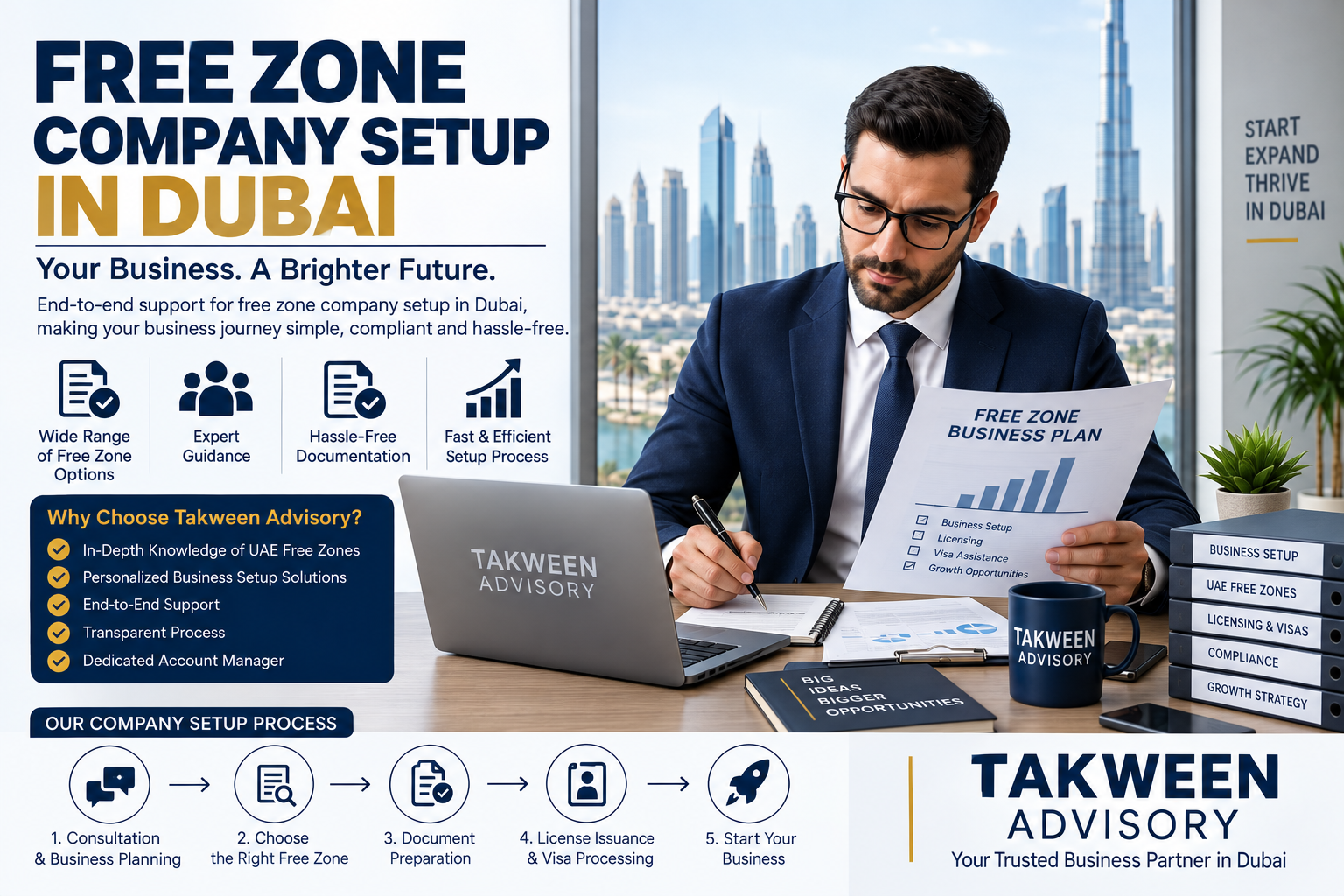
Summary:
A successful free zone company formation starts with choosing the right jurisdiction rather than simply selecting the cheapest package. Each free zone has its own authority, permitted activities, licence categories, office requirements, documentation standards, and procedures. For example, DMCC requires business information such as the proposed company name, activities, office or property information, and relevant supporting information, while it also requires companies to maintain Ultimate Beneficial Owner information in line with UAE requirements.
Overview:
The Free Zone Company Setup Dubai process is designed to provide entrepreneurs with a relatively structured route to establishing a company in the UAE. However, the exact procedure is not identical across every free zone.
Some businesses may need only straightforward incorporation documents, while others may require business plans, external approvals, professional qualifications, technical documents, or additional evidence because of the nature of their activities.
For example, Dubai Airport Freezone regulations require incorporation applications to include prescribed information and supporting documents, with a business plan required for proposed activities. Following approval and confirmation of the premises lease, the authority may issue the licence, certificate of incorporation, and registered constitutional documents.
Key Takeaways:
-
Select the free zone according to your business activity, not only the advertised package price.
-
Confirm the legal structure available for your ownership arrangement.
-
Prepare passport, address, UBO, and shareholder information accurately.
-
Reserve a compliant company name before completing incorporation.
-
Check whether your activity requires external or regulatory approvals.
-
Understand the office or workspace requirement before choosing a package.
-
Complete incorporation and licensing formalities through the selected free-zone authority.
-
Plan visa, banking, tax, accounting, and ongoing compliance requirements after licensing.
-
Takween Advisory can help coordinate the setup process and reduce avoidable documentation and planning errors.
Quick Answer
To open a free zone company in Dubai, choose the right activity and free zone, select the legal structure, reserve the company name, prepare shareholder and UBO documents, obtain approvals, complete incorporation, secure the required office solution, and receive the business licence.
What Is a Free Zone Company in Dubai?
A free zone company is a business entity established within a designated UAE free zone and licensed by the relevant free-zone authority.
Dubai has several free zones serving different commercial purposes, including trading, technology, professional services, logistics, commodities, media, manufacturing, and other specialised sectors.
The UAE Government identifies free zones as dedicated business environments and notes that the country has numerous free zones supporting sectors such as retail, agritech, healthcare, fintech, logistics, media, and information and communications technology.
The key point for entrepreneurs is that a free zone is not simply a location. It is also a regulatory and licensing environment. The selected authority determines many practical aspects of company formation, including permitted activities, licence categories, documentation, premises requirements, and administrative procedures.
Step 1: Define Your Business Activity
The first requirement is to identify exactly what your company will do.
This sounds simple, but it is one of the most important decisions in the formation process because your selected activity influences:
-
The appropriate licence category
-
The free zones available to you
-
Whether additional approvals are required
-
Office or facility requirements
-
Possible visa eligibility
-
Operational and compliance obligations
A consulting company, e-commerce business, general trading company, technology company, logistics operator, and manufacturing business may have very different requirements.
You should therefore prepare a clear description of your intended business activities before approaching a free-zone authority.
Why Activity Selection Matters
Choosing an activity only because it appears inexpensive can create problems later.
For example, an entrepreneur may initially select a broad professional activity but later discover that the intended commercial operation requires trading, importation, warehousing, manufacturing, or another specific authorisation.
Takween Advisory can help entrepreneurs review their intended activities and identify a suitable licensing structure before the application is submitted.
Step 2: Choose the Right Dubai Free Zone
Once your activities are clear, the next requirement is selecting an appropriate free zone.
There is no single best free zone for every business. The correct choice depends on your commercial model, customers, ownership structure, required facilities, location preferences, visa requirements, banking expectations, and long-term plans.
For example, a company involved in commodities may benefit from a specialised commodities-focused jurisdiction, while a professional consultancy may have different requirements from a company operating warehouses or manufacturing facilities.
The UAE Government specifically advises businesses to use free-zone structures according to the relevant business environment and services provided by each zone.
What to Check Before Choosing a Free Zone
Before committing to a jurisdiction, review:
-
Permitted activities
-
Available legal structures
-
Licence categories
-
Office requirements
-
Visa eligibility
-
Shareholder requirements
-
Additional approvals
-
Renewal obligations
-
Banking considerations
-
Long-term expansion options
The cheapest initial package is not always the most cost-effective structure over several years.
Step 3: Select the Legal Structure
The next step is determining the legal form of the company.
Depending on the free zone and business circumstances, an entrepreneur may be able to establish a free zone company with individual or corporate shareholders.
For example, DMCC states that an FZCO can have at least one shareholder, who may be an individual or corporate entity.
The structure can become more complicated when the shareholder is another company because the free zone may request corporate documents, ownership information, board resolutions, or other evidence.
A company with multiple individual shareholders will also require accurate identification and ownership information for each shareholder.
Step 4: Decide the Ownership and UBO Information
Free-zone authorities require accurate information about who owns and controls the company.
Ultimate Beneficial Owner, or UBO, information is an important part of the incorporation process and ongoing compliance.
DMCC, for example, states that companies must provide and maintain UBO information in accordance with UAE AML/CFT requirements and identify individuals meeting the relevant ownership or control threshold.
The information should be consistent across passports, corporate records, applications, and supporting documents.
Incorrect or incomplete ownership information can cause delays during incorporation and later during banking or compliance checks.
Step 5: Select and Reserve the Company Name
After establishing the intended activity and structure, choose an appropriate company name.
The proposed name should comply with the relevant free-zone naming rules and should not create conflicts with restricted terms, existing registrations, trademarks, or other naming requirements.
Some authorities require multiple proposed names.
For example, IFZA's published incorporation guidance states that applicants should provide three proposed company-name options in accordance with its naming guidelines.
The exact naming procedure varies by authority, so applicants should follow the rules of their chosen free zone rather than assuming every Dubai free zone uses the same process.
Step 6: Prepare the Required Documents
Document preparation is one of the most important stages of company formation.
For an individual shareholder, common documents can include:
-
Passport copy
-
Passport-size photograph
-
UAE visa copy, if applicable
-
Emirates ID, if applicable
-
Proof of residential address
-
Completed application forms
-
UBO information
IFZA, for example, lists a licence application form containing UBO information, passport copy, digital passport photo, and UAE visa and Emirates ID documents where applicable. It also identifies proof of address as part of its wider application process.
For a corporate shareholder, additional documents may include:
-
Certificate of incorporation
-
Memorandum and Articles of Association
-
Certificate of incumbency or equivalent document
-
Register of directors
-
Shareholder information
-
Board resolution
-
Corporate ownership information
-
UBO documentation
The exact documents depend on the free zone and corporate structure.
Step 7: Prepare a Business Plan Where Required
Not every free-zone company will require the same level of business-plan documentation.
However, certain authorities or activities may require a business plan as part of the incorporation application.
For example, Dubai Airport Freezone regulations identify a business plan among the documents that may accompany a company incorporation application.
A useful business plan should clearly explain what the company intends to do, who its customers are, how it will operate, and what commercial activities it expects to conduct.
Preparing this information early can make the application process more efficient.
Step 8: Submit the Initial Application
Once the documents and business information are ready, submit the application through the selected free-zone authority.
The application typically includes the proposed company details, shareholders, directors or managers where applicable, business activities, ownership information, and supporting documents.
Modern Dubai free zones increasingly provide digital incorporation processes.
DMCC currently describes its setup process as beginning with an online pre-approval application, followed by payment and document signing, after which the applicant selects an appropriate office solution.
Step 9: Obtain Initial or Activity-Specific Approvals
Some businesses can proceed through standard incorporation procedures, while regulated or specialised activities may require additional approvals.
Additional approvals can apply to areas such as healthcare, financial services, education, food, manufacturing, engineering, media, and other regulated sectors.
This is why activity selection should happen before submitting the application.
An entrepreneur should identify potential external approvals at the planning stage rather than discovering them after the company has already been incorporated.
Step 10: Complete Security and Compliance Checks
Free-zone authorities may conduct security, compliance, and documentation checks before issuing incorporation documents.
IFZA's published setup guide, for example, describes an incorporation process involving application and UBO submission, security clearance, and an e-legal documentation stage before official company documents are issued.
Applicants should ensure that names, passport details, ownership information, and other documentation are consistent.
Even a small discrepancy can result in a request for clarification or corrected documentation.
Step 11: Sign the Incorporation Documents
After the application is approved, the relevant incorporation documents need to be completed and signed.
Depending on the free zone, these may include:
-
Memorandum of Association
-
Articles of Association
-
Shareholder resolutions
-
Manager or director documents
-
Lease or office-related documents
-
Other authority-specific legal forms
DMCC regulations, for example, specify information concerning shareholders, directors, secretary, manager, share capital, company name, and business activity as part of company registration requirements.
The exact documentation should always be checked against the rules of the selected authority.
Step 12: Arrange the Required Office or Workspace
Office requirements vary significantly between free zones and licence types.
Some businesses may qualify for a flexi-desk or shared workspace arrangement, while other activities may require dedicated offices, warehouses, production areas, or specialised premises.
DMCC's current setup process specifically requires applicants to select an office solution, while its published information also states that visa capacity can be influenced by office space and licence type.
Certain specialised company structures may have different requirements. For example, DMCC introduced SPV and Holding Company licences in 2025 with no physical office lease requirement under those particular licence structures.
Therefore, entrepreneurs should never assume that one office requirement applies to every free-zone company.
Step 13: Pay the Applicable Government and Free-Zone Charges
After the application is accepted, the applicant generally needs to settle the relevant incorporation, licensing, registration, and premises charges.
The total amount depends on factors such as:
-
Free zone selected
-
Licence type
-
Number and type of activities
-
Company structure
-
Office solution
-
Visa requirements
-
Additional approvals
-
Registration services
-
Corporate shareholder documentation
For this reason, it is better to request a complete setup proposal instead of relying on a headline package price.
Understanding the Total Setup Budget
Even where a free zone advertises a basic licence package, entrepreneurs should check whether the quoted amount includes the licence, registration, establishment card, office solution, immigration services, visas, and other mandatory items.
DMCC, for example, currently publishes setup costs that vary according to business type and requirements, with its current setup page showing a broad range rather than one universal formation price.
This demonstrates why business owners should calculate the total first-year requirement rather than comparing only the advertised licence fee.
Step 14: Receive the Business Licence and Incorporation Documents
Once the required approvals, payments, documentation, and premises requirements have been completed, the free zone can issue the company's official documents.
These may include the business licence and certificate of incorporation, along with constitutional documents depending on the authority and company type.
DMCC currently states that an electronic licence is issued once company registration is complete.
At this point, the company has formally completed the core formation process, but several operational steps may still be required.
Step 15: Apply for Establishment and Immigration Services
If the company intends to sponsor owners or employees, it will generally need the relevant establishment and immigration-related arrangements.
Visa requirements depend on the free zone, company structure, office solution, and number of employees.
The process can include:
-
Establishment or immigration registration
-
Entry permit or status adjustment
-
Medical examination where applicable
-
Emirates ID application
-
Residence visa completion
Visa eligibility and quota should be confirmed before selecting the office package because workspace arrangements can affect the number of visas available in some free zones. DMCC, for example, explicitly notes that visa numbers can be determined by office size and licence type.
Step 16: Open a Corporate Bank Account
After company formation, the next major operational requirement is usually corporate banking.
A bank will normally conduct its own compliance and customer due-diligence assessment. The bank may review:
-
Company licence
-
Certificate of incorporation
-
Memorandum and Articles
-
Shareholder information
-
UBO information
-
Business model
-
Expected transaction activity
-
Source of funds
-
Customer and supplier profile
-
Personal identification documents
Company formation does not automatically guarantee bank-account approval.
Entrepreneurs should therefore prepare a clear business profile and supporting documentation before approaching a bank.
Step 17: Complete Tax and Ongoing Compliance Requirements
Obtaining a free-zone licence does not mean the company is exempt from every UAE tax or compliance obligation.
Corporate Tax rules can apply to UAE companies, including free-zone companies, although qualifying free-zone persons may receive a 0% Corporate Tax rate on qualifying income when the relevant conditions are satisfied.
DMCC currently describes itself as a qualified free zone for UAE Corporate Tax purposes and notes that the 0% rate applies to qualifying income subject to the relevant legislation and decisions.
Businesses should therefore evaluate Corporate Tax, VAT where applicable, accounting, bookkeeping, beneficial-owner information, licence renewal, and other compliance requirements from the beginning.
Documents Checklist for a Dubai Free Zone Company
For a straightforward individual-shareholder setup, the core documentation commonly includes:
Passport: A clear and valid passport copy for the shareholder and relevant company officers.
Photograph: A recent passport-style or digital photograph where required.
Proof of Address: Documents such as a utility bill or bank statement may be requested.
UAE Visa and Emirates ID: Required where the applicant is already resident in the UAE and applicable to the chosen authority.
Business Information: Proposed company name, intended activities, ownership structure, and office information.
UBO Information: Details identifying the ultimate beneficial owners.
Corporate shareholders may need additional incorporation, constitutional, ownership, and board documents.
How Long Does Free Zone Company Formation Take?
The timeline depends on the free zone, activity, shareholder structure, document completeness, security checks, and whether additional approvals are necessary.
A straightforward application with complete documents can move faster than an application involving regulated activities or corporate shareholders.
DMCC currently states that its complete setup process typically takes around 10 working days, depending on documentation and approvals. This should be viewed as a free-zone-specific reference rather than a universal Dubai timeline.
Applicants can reduce delays by preparing accurate documents before submitting the application.
Common Mistakes to Avoid
Choosing a Free Zone Based Only on Price
A low initial package may not provide the activities, office solution, visa capacity, or operational flexibility your business needs.
Selecting the Wrong Activity
The company should be licensed for activities that accurately reflect its actual operations.
Ignoring Additional Approvals
Regulated businesses may require approvals beyond the standard free-zone incorporation process.
Providing Inconsistent Documents
Names, passport details, addresses, ownership information, and corporate records should be consistent.
Underestimating Office Requirements
Some businesses can operate with flexible workspace arrangements, while others need dedicated premises or specialised facilities.
Treating the Licence as the End of the Process
After incorporation, the company may still need banking, visas, tax registration, accounting, compliance, and licence renewal planning.
Why Professional Assistance Can Make the Process Easier
The Free Zone Company Setup Dubai process involves multiple decisions that can affect the company's future operations.
An experienced business setup consultant can help entrepreneurs evaluate the proposed activity, compare appropriate jurisdictions, prepare documents, coordinate applications, identify additional approval requirements, and plan the post-incorporation steps.
Takween Advisory can support entrepreneurs throughout the setup journey by helping them develop a practical company-formation plan rather than simply selecting a standard package.
This approach can be particularly useful for foreign investors, first-time entrepreneurs, corporate shareholders, and businesses entering Dubai from overseas.
Final Thoughts
Opening a free zone company in Dubai can provide entrepreneurs with a structured route into the UAE market, but successful incorporation depends on choosing the correct activity, jurisdiction, legal structure, documentation, office solution, and compliance framework.
The Free Zone Company Setup Dubai process should therefore begin with business planning rather than immediately submitting a licence application.
From activity selection and company-name reservation to UBO documentation, incorporation, office arrangements, licensing, banking, visas, and tax compliance, each stage should be considered as part of the wider business structure.
Takween Advisory can help entrepreneurs understand these requirements, prepare for the relevant procedures, and build a practical setup plan suited to their business objectives in Dubai.
Frequently Asked Questions
What are the basic requirements to open a free zone company in Dubai?
The basic requirements generally include selecting a suitable business activity and free zone, choosing a legal structure, reserving a company name, providing shareholder and UBO information, submitting required identification documents, completing incorporation formalities, arranging the required workspace, and obtaining the business licence.
Can a foreigner own 100% of a Dubai free zone company?
Free-zone structures generally allow foreign investors to own their companies, subject to the rules of the selected free zone and applicable activity requirements. The exact legal structure and ownership rules should be confirmed with the relevant authority.
What documents are needed for a Dubai free zone company?
Common documents include a passport copy, photograph, proof of residential address, UAE visa and Emirates ID where applicable, application forms, UBO information, and business details. Corporate shareholders may need additional corporate and ownership documents.
Do I need an office to open a free zone company in Dubai?
The requirement depends on the free zone, licence type, and business activity. Some structures may permit flexi-desk or shared workspace solutions, while other activities require dedicated premises. Certain specialised structures may have different requirements.
Do I need a business plan to establish a free zone company?
Not every company requires the same business plan. Some free zones or activities may request one as part of the application. Dubai Airport Freezone regulations, for example, identify a business plan as an incorporation document for proposed activities.
How long does it take to establish a free zone company in Dubai?
The timeline varies by authority, activity, documentation, approvals, and shareholder structure. DMCC currently states that its setup process typically takes around 10 working days when documentation and approvals are completed.
Can I obtain a UAE residence visa through a free zone company?
Depending on the free zone and company structure, shareholders and employees may be eligible for UAE residence visas subject to the applicable immigration requirements, quota, and office arrangements.
Can a free zone company open a UAE corporate bank account?
Yes, a free zone company can apply for a UAE corporate bank account. However, bank approval is separate from company formation and depends on the bank's compliance, KYC, business-model, ownership, and source-of-funds assessment.
Is a free zone company subject to UAE Corporate Tax?
Free-zone companies can fall within the UAE Corporate Tax regime. Qualifying free-zone persons may benefit from a 0% Corporate Tax rate on qualifying income when the relevant statutory conditions are satisfied.
Can Takween Advisory help me set up a free zone company in Dubai?
Yes. Takween Advisory can assist entrepreneurs with free-zone selection, activity planning, documentation, incorporation coordination, licensing requirements, visa planning, banking preparation, and wider business setup considerations in Dubai.

 English
 Arabic
 Spanish
 Portuguese
 Deutsch
 Turkish
 Dutch
Dutch
 Italiano
 Russian
 Romaian
 Portuguese (Brazil)
 Greek
Greek