


How Can Buyers Compare Power Wrenches Before Ordering?
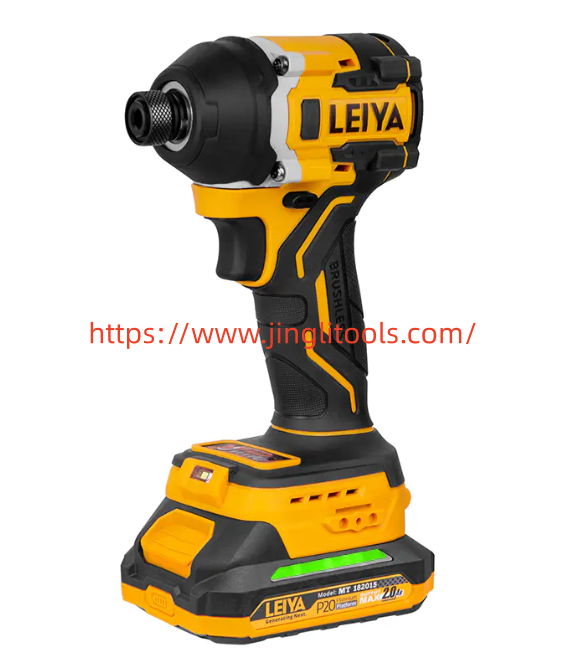
Power Wrenches should be selected according to the actual fastening requirements of a project rather than based only on appearance or a basic catalog specification. Buyers need to consider torque requirements, drive size, energy source, workspace, operating frequency, tool dimensions, accessories, maintenance, and customization. For importers, distributors, workshops, and industrial users, reviewing these factors before ordering can make sourcing clearer and reduce specification misunderstandings.
Define the Application Before Choosing
The working environment should be identified before comparing individual models. A tool used in vehicle maintenance may have different requirements from one used for machinery assembly, construction, equipment servicing, or production operations.
Buyers should provide information about fastener sizes, target torque, expected usage frequency, available workspace, operating conditions, and required mobility.
A detailed application description gives the manufacturer a clearer basis for discussing suitable configurations. It also helps avoid selecting a model simply because its appearance or basic specifications seem suitable.
Confirm the Torque Requirement
Torque is one of the key technical factors buyers should establish before ordering. The required range should be based on the actual fasteners and assembly requirements involved in the project.
Buyers can provide target torque values, measurement units, fastener sizes, and expected working frequency when sending an inquiry.
It is also useful to distinguish between normal working requirements and occasional higher-demand applications. Providing this information allows the manufacturer to evaluate the intended operating range more accurately.
Check Drive Compatibility
The drive interface should match the sockets and accessories already used by the buyer whenever possible.
Before confirming a model, buyers can check the required drive size and socket range. They should also ask whether compatible adapters, extensions, reaction components, or other accessories are available.
For companies purchasing several tools, maintaining compatible interfaces can simplify daily operation and make accessory management easier.
Review the Energy Source
The available energy source can influence the appropriate configuration. Depending on the working environment, buyers may consider battery-operated, electric, pneumatic, or hydraulic options.
For battery-operated equipment, questions may include voltage, battery capacity, charging arrangements, spare battery availability, and expected operating periods.
For pneumatic systems, buyers should review available air pressure and supply conditions. Electric equipment may require confirmation of voltage, frequency, cable length, and local electrical requirements.
The selected configuration should match the actual workplace rather than a general preference.
Consider Working Space
A tool with suitable torque may still be difficult to operate if the working area is restricted.
Buyers should consider head dimensions, tool length, handle position, working angle, clearance around fasteners, and surrounding structures.
Photos, drawings, and measurements can help the manufacturer understand difficult access points. This information is particularly useful when fasteners are located around machinery frames, pipes, panels, or other components.
Review Handling Requirements
Tool handling can affect the operator experience during repeated work. Buyers can examine weight, balance, grip arrangement, control position, trigger design, and reaction arrangements.
If equipment will be used for extended periods, buyers may want to evaluate a physical sample before placing a larger order.
For distributors, manuals and operating instructions can also be useful when preparing products for their own customers.
Ask About Materials and Production
Buyers should request information about major materials and production procedures. Questions may cover housing materials, drive components, gears, motors, surface treatment, assembly, and final inspection.
The purpose is to understand whether the manufacturing process corresponds with the intended application.
jinglitools can discuss product specifications, application requirements, and customization details with buyers before production begins. Establishing these requirements in advance can make communication clearer during manufacturing.
Request Samples Before Bulk Orders
A sample provides an opportunity to check the actual product rather than relying only on photographs or technical descriptions.
Buyers can review dimensions, controls, drive interface, appearance, accessories, handling, and basic operation. For projects with specific torque requirements, testing arrangements can also be discussed.
If the sample is approved, buyers can record the relevant specifications and use the approved unit as a reference for future production.
Discuss Testing and Inspection
Inspection requirements should be established before production begins. Buyers can prepare a checklist covering appearance, dimensions, torque output, drive interface, electrical specifications, accessories, labels, packaging, and quantity.
For repeat orders, maintaining an approved sample and written specification can help both parties reference the same requirements.
Where measurement or calibration documentation is required, buyers should discuss the format and testing arrangements before placing the order. Current industrial sourcing guidance also recommends reviewing accuracy, calibration documentation, and supplier testing information when purchasing torque equipment.
Consider Customization
Customization may involve product labels, packaging, housing appearance, accessories, voltage configuration, battery options, manuals, or other market-specific requirements.
Buyers should provide artwork, technical drawings, reference samples, measurements, and written instructions when necessary.
It is also useful to confirm which modifications are available and whether they affect minimum quantities, preparation time, or production arrangements.
A written specification can reduce misunderstandings and provide a common reference throughout production.
Review Spare Parts and Maintenance
Before ordering, buyers can ask about commonly replaced components, maintenance instructions, chargers, batteries, switches, drive components, and other accessories.
For distributors and service teams, clear spare-parts information can make future customer support easier.
Buyers planning regular orders may also want to discuss how replacement components are identified and whether product codes can remain consistent across future batches.
Compare Manufacturers by Full Specifications
Price is naturally part of a purchasing decision, but comparing only the final quotation can hide important differences.
Buyers should compare equivalent specifications, including torque range, drive size, energy source, accessories, testing, packaging, documentation, customization, spare parts, and delivery arrangements.
A complete comparison can show whether two quotations actually describe comparable products.
For companies planning repeat purchases, it is also useful to consider whether the manufacturer can maintain clear product records and support future specification adjustments.
Prepare a Clear Purchase Checklist
Before requesting a final quotation, buyers can prepare a checklist covering application, target torque, fastener size, drive specification, energy source, workspace, quantity, customization, packaging, inspection, accessories, and delivery requirements.Clear information helps manufacturers understand the project and gives both parties a common reference during technical discussions.For buyers who want to review available industrial tool options and discuss specific requirements with jinglitools, the product range is available at https://www.jinglitools.com/product/ before preparing a detailed inquiry.

 English
 Arabic
 French
 Portuguese
 Deutsch
 Turkish
 Dutch
Dutch
 Italiano
 Russian
 Romaian
 Portuguese (Brazil)
 Greek
Greek