


Kirkland Sleep Aid Pills: Effectiveness, Side Effects and Who Should Be Careful
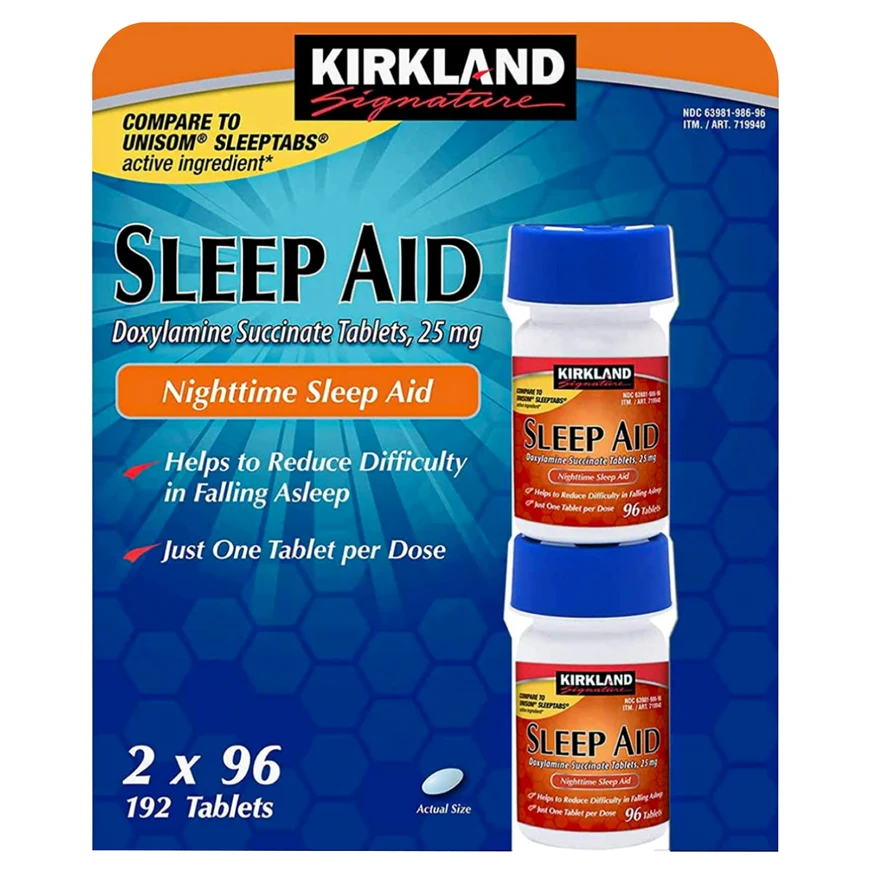
Quick answer: Each Kirkland Sleep Aid pill contains doxylamine succinate 25 mg, an antihistamine that causes drowsiness and is labelled for occasional difficulty falling asleep. They can help some adults fall asleep on an occasional night, but responses vary and the sedating effect may lessen with repeated nightly use. The most common side effects are next-morning drowsiness, dry mouth and dizziness, and older adults are more sensitive to them. Australia classes doxylamine sleep medicines as Pharmacist Only (Schedule 3).
|
Side effect |
Why it happens |
What to do |
|
Next-morning drowsiness |
Doxylamine is relatively long-acting |
Avoid driving or machinery until fully alert |
|
Dry mouth or constipation |
Drying (anticholinergic) effect |
Speak to a pharmacist if it persists |
|
Dizziness or unsteadiness |
Sedation |
Take care getting up during the night |
|
Blurred vision |
Anticholinergic effect |
Avoid driving; seek advice if it continues |
|
Difficulty urinating |
Anticholinergic effect |
Stop and see a doctor |
|
Confusion |
More likely in older adults |
Seek medical advice promptly |
Stress, travel and late-night screens can knock sleep off course, and some adults then consider a short-term sleep aid.
If you are researching kirklands sleep aid, the practical questions are how well it works, what side effects to expect, who should be careful, and when a sleep aid is not the right answer. This guide covers each one.
What Is Kirkland Sleep Aid?
Sold in the US under Costco's house brand, Kirkland Signature Nighttime Sleep Aid has one active ingredient: doxylamine succinate, 25 mg per tablet. Doxylamine is a first-generation antihistamine, and drowsiness, normally an unwanted side effect, is the reason it is used at night. Here, medicines like this are Pharmacist Only, so a pharmacist is part of their supply.
How Effective Are Kirkland Sleep Aid Tablets?
kirkland sleep aid tablets are labelled for one job: making it easier to fall asleep. In other words, they target sleep onset on an occasional night, not waking at 3 am or every other kind of disturbed sleep.
How well they work depends on two things:
-
The person. Some people feel clearly drowsy after a sedating antihistamine; others notice little effect, or feel groggy without sleeping better.
-
The cause. A sleepless night after a long-haul flight is a very different problem from sleep disrupted by chronic pain, sleep apnoea or anxiety. A sedating tablet does nothing for those underlying causes.
The sedating effect of antihistamine sleep aids can also become less noticeable with repeated nightly use, which is one more reason they are meant for occasional rather than regular use.
How Is It Taken?
The US label directs adults and children 12 years and over to take one tablet 30 minutes before going to bed, once daily or as directed by a doctor. It is not for children under 12, and the label limits use to bedtime.
Because doxylamine is relatively long-acting, timing matters. Taking it late at night and getting up a few hours later makes next-morning grogginess more likely, so it is best reserved for nights when you can sleep a full night. Always follow the directions on the pack you have.
Side Effects to Know About
Drowsiness is the intended effect, but it does not always switch off neatly in the morning. Doxylamine also has drying (anticholinergic) effects, which explain several of the side effects in the table above: dry mouth, constipation, blurred vision and, in some people, difficulty passing urine.
If you wake up feeling foggy, slowed down or unsteady, hold off on driving, using machinery or any safety-critical task until you are fully alert. Discuss severe or lingering side effects with a pharmacist or doctor.
Who Should Be More Careful?
Check with a doctor first if you have asthma, emphysema, chronic bronchitis or another breathing condition, glaucoma, or an enlarged prostate that makes urinating difficult. These are the conditions the label names, and the same advice applies during pregnancy or breastfeeding.
Older adults also need extra care. They are more sensitive to drowsiness, confusion and unsteadiness, which raises the risk of falls at night. First-generation antihistamines, including doxylamine, appear in the American Geriatrics Society Beers Criteria, a widely used list of medicines that are potentially inappropriate for older people.
Alcohol and Other Medicines
The label says to avoid alcoholic beverages, and to ask a doctor or pharmacist before use if you take any other medicines. Alcohol, sedatives, other antihistamines and certain pain relievers or anxiety medicines all add to doxylamine's effects. Some night-time cold and flu products contain doxylamine too, so check the active ingredients on everything you take to avoid an accidental double dose.
When a Sleep Aid Is Not the Answer
Two weeks is the limit the label sets: if sleeplessness carries on beyond that, stop and see a doctor, as ongoing insomnia may point to a medical problem.
If you notice yourself relying on sleep aid pills kirkland most nights, it is time to look at the cause. Ongoing poor sleep can be linked with stress or anxiety, shift work, pain, sleep apnoea, restless legs or the effects of other medicines.
For long-term insomnia, clinical guidelines recommend cognitive behavioural therapy for insomnia (CBT-I) as the first-line treatment rather than medicine. A GP can assess the cause and refer you if needed.
Frequently Asked Questions
Does Kirkland Sleep Aid work for everyone?
Kirkland Sleep Aid does not work the same way for everyone. Some people feel clearly drowsy, others notice little benefit, and it does not address underlying causes such as pain, anxiety or sleep apnoea.
Why might you feel groggy the morning after?
Next-morning grogginess happens because doxylamine is relatively long-acting and can still affect you after you wake. Taking it only when you can sleep a full night, and avoiding driving until fully alert, reduces the risk.
Is Kirkland Sleep Aid suitable for older adults?
Older adults should speak with a doctor or pharmacist before using Kirkland Sleep Aid. They are more sensitive to its drowsiness, confusion and unsteadiness, and doxylamine is listed in the Beers Criteria as potentially inappropriate for older people.
Can you take Kirkland Sleep Aid every night?
No, nightly use is not what Kirkland Sleep Aid is designed for. It is meant for occasional sleeplessness, and the label advises seeing a doctor if the problem continues past two weeks.
Final Thoughts
In short, Kirkland Sleep Aid pills are a doxylamine 25 mg medicine for occasional trouble falling asleep. They may help on the odd night, but results vary, next-morning drowsiness is common, and older adults and people with certain health conditions need extra care.
A tablet may ease one difficult night, but it cannot fix what is disturbing your sleep. Recurring sleeplessness, or sleeplessness beyond two weeks, is one for your GP or pharmacist.
Always read the label and follow the directions for use. If symptoms persist, talk to your health professional.

 English
 Arabic
 French
 Portuguese
 Deutsch
 Turkish
 Dutch
Dutch
 Italiano
 Russian
 Romaian
 Portuguese (Brazil)
 Greek
Greek