


Spices Filling Machine 101: Auger Technology, Key Specs, and What Buyers in India Should Know
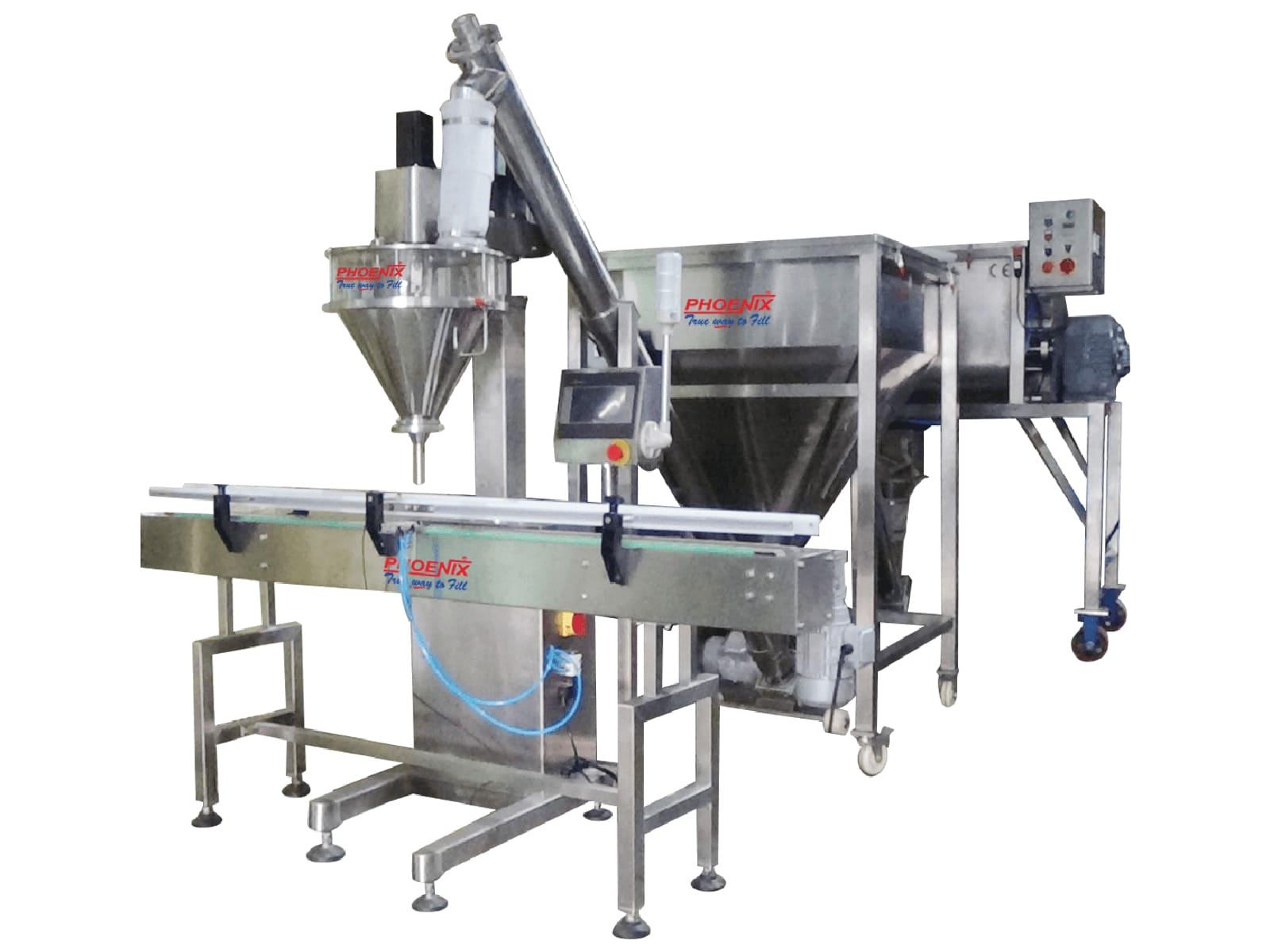
Spice processing is one of the more demanding corners of food packaging. Unlike liquids or free-flowing granules, ground spices — turmeric, chili powder, cumin, coriander — behave unpredictably on a packaging line. They compact under pressure, cling to metal surfaces with static charge, throw fine dust that clogs sensors, and vary in bulk density from one batch to the next depending on moisture content and grind size. A filling machine built for water or oil will underfill, overfill, or jam within an hour of running spice powder through it.
That's why spice producers — from small regional blenders to large export-oriented processors — rely on a specific category of equipment: the spices filling machine, almost always built around an auger screw metering system rather than a simple volumetric cup or piston filler.
Why Auger Fillers Dominate Spice Packaging
An auger filler uses a rotating screw inside a hopper to push a metered volume of powder through a discharge tube and into a waiting container. The number of screw rotations — not gravity, and not a fixed-volume cup — determines the fill weight, which is what makes auger technology so much more forgiving of a powder's inconsistent density.
For spices specifically, this matters in three ways:
· Compaction control. The screw breaks up clumps as it feeds, rather than letting the powder pack down the way it would in a gravity-fed cup.
· Dust management. A well-sealed auger head keeps fine powder contained instead of clouding the work area — important both for operator health and for keeping product off the packaging line's sensors and seals.
· Accuracy at low fill weights. Most commercial spice packs run somewhere between 50g sachets and 500g retail jars — a range where auger systems typically hold accuracy within ±0.5–1%, tight enough to satisfy weights-and-measures requirements without giving away product margin through overfill.
What to Actually Check on a Spec Sheet
When comparing spices filling machines, the marketing copy tends to look similar across manufacturers. The differences that matter show up in the numbers:
· Filling range — the low and high end of the weight window the machine is rated for. A machine tuned for 100–500g sachets will not perform well trying to fill 2kg bulk bags, and vice versa.
· Filling speed, usually expressed in containers or bottles per minute (BPM) — this is what determines whether the machine matches your actual production volume, not just your peak-capacity marketing number.
· Hopper capacity — how much product the machine can hold before a refill interrupts the line. A 70-liter hopper, for example, buys meaningfully more uninterrupted runtime than a 20-liter one on a multi-shift line.
· Accuracy tolerance — always ask for this as a percentage at a specific weight, not just “high accuracy.” Reputable manufacturers publish tolerance bands like ≤±1% below 500g and ≤±0.5% above it.
· Container compatibility — the range of container diameters and heights the machine can handle without a full changeover kit.
· Power and air requirements — auger fillers are electrically driven, but many also need a compressed-air supply for container indexing or capping stations downstream, so factor that into your utility planning.
Spices Filling Machine India: Sourcing Considerations
India is, by volume, the largest spice producer and exporter in the world, and its packaging-equipment demand reflects that scale — everything from small auger fillers for regional masala blenders to fully automated multihead lines for export-grade processors. Domestic Indian manufacturers cover a large share of this market, but a meaningful portion of buyers — particularly exporters shipping into the Gulf, and Gulf-based spice repackers sourcing back toward South Asian supply chains — also look outside India for equipment, either for redundancy, faster GCC-based servicing, or because a specific configuration isn't readily available locally.
This is where UAE-based manufacturers occupy a useful middle ground. Phoenix Dison Tec LLC, a Sharjah-based packaging equipment manufacturer operating since 1999, is one example: its spices filling machine uses an auger screw metering system rated for a 100–500g fill range at 20–50 bottles per minute, with a 70-liter hopper and accuracy held to ≤±1% below 500g. For a buyer in India evaluating options, a spec sheet like that is a useful benchmark to compare against local quotes — same underlying technology, but sourced from a manufacturer positioned to serve GCC-India trade lanes directly.
If you're specifically comparing a spices filling machine India-based manufacturers can service directly against a GCC-based alternative, the spec categories above — filling range, speed, hopper capacity, and accuracy tolerance — are the right starting point for an apples-to-apples quote comparison, regardless of which side of the trade lane the equipment ships from.
A Short Buying Checklist
Before signing off on any spices filling machine — whether the quote comes from a domestic Indian manufacturer or a GCC-based one — it's worth confirming:
1. The filling range actually covers your real product mix, not just your best-case pack size.
2. The quoted accuracy is tied to a specific weight band, not a vague percentage.
3. The hopper size matches your shift length, not just your peak throughput.
4. Container compatibility is confirmed for your actual bottle/pouch dimensions, not a generic range.
5. Local service and spare-parts support exist wherever the machine will actually run.
Spice packaging doesn't forgive equipment that's a poor fit for the product — the powder itself is the variable every other part of the line has to accommodate. Getting the filler technology and specs right up front is the difference between a line that runs quietly for years and one that needs constant recalibration.

 English
 Arabic
 French
 Spanish
 Portuguese
 Deutsch
 Turkish
 Italiano
 Russian
 Romaian
 Portuguese (Brazil)
 Greek
Greek