


How to Keep Trees Healthy and Manageable in Shreveport
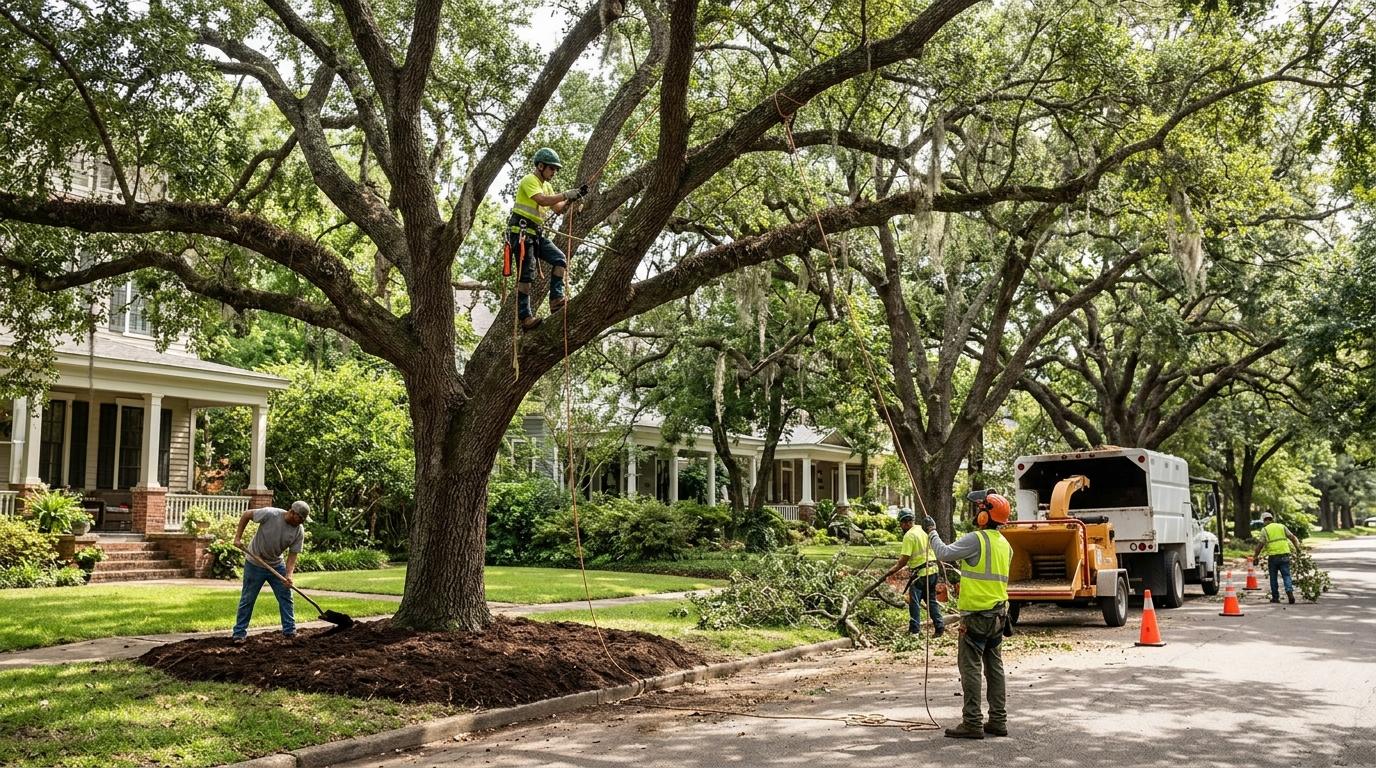
Trees add shade, privacy, beauty, and value to residential properties across Shreveport. They can also create problems when branches become overgrown, damaged, or poorly structured.
Routine maintenance helps homeowners manage those risks before they become urgent problems. Good pruning can improve clearance and remove damaged growth, while proper timing can reduce unnecessary stress on the tree.
For homeowners searching for tree trimming shreveport, the real question is not simply how much of a tree should be cut. It is understanding when trimming is needed, what should be removed, and how the work should be done.
Why Regular Tree Maintenance Matters
Trees continue to grow whether they are actively maintained or not. Over time, branches can extend toward roofs, driveways, sidewalks, fences, and utility lines. Dead branches may become loose, while crowded or poorly positioned growth can place extra stress on the tree's structure. Storms can make existing weaknesses worse.
Routine maintenance gives homeowners an opportunity to identify these issues before they turn into emergency problems. The goal is not to keep trees small. It is to manage growth in a way that supports healthy structure and safe clearance.
Remove Dead and Damaged Branches
Dead branches are one of the simplest reasons for professional pruning. They no longer contribute to healthy growth and may eventually break under wind or weather conditions. Damaged limbs can be another concern. Cracks, splits, broken branches, and storm injuries can create weak points in the canopy.
Removing hazardous growth can reduce risk while also improving the overall appearance of the tree. However, the location and size of the damaged branch matter. A small dead branch in an open part of the canopy is different from a large damaged limb positioned above a roof or driveway.
Manage Branches Around Buildings
Trees often grow toward available sunlight, which can bring branches closer to houses and other structures. Branches that contact roofs can scrape surfaces and create repeated maintenance problems. Growth near gutters can also interfere with drainage and make cleaning more difficult.
Branches near walls, windows, and outdoor structures may eventually create clearance issues. Proper pruning can maintain reasonable separation without removing more live growth than necessary.
Protect Clearance Around Walkways
Branches growing over sidewalks, driveways, and entrances can become a nuisance when they hang too low. Low branches may interfere with pedestrians, vehicles, lawn equipment, and outdoor activities. Over time, the problem usually becomes more noticeable as the tree grows.
Maintaining appropriate clearance makes the property easier to use and can reduce the chance of accidental contact with branches. The best solution is usually selective pruning rather than excessive cutting throughout the canopy.
Consider Utility Lines Before Pruning
Trees growing near power lines require special attention. Homeowners should not attempt to manage those branches themselves simply because they look reachable.
Branches that are close to electrical infrastructure can create serious safety hazards. The situation should be evaluated before any cutting is attempted.
A professional should identify the location of lines and determine whether the work falls within normal tree care or requires additional coordination.
Avoid Removing Too Much Live Growth
One common mistake is assuming that heavier pruning is always better. Removing too much live canopy at once can stress a tree and may encourage weak or poorly positioned new growth. It can also leave the tree with an unbalanced structure.
Proper pruning should have a clear purpose. That may include removing deadwood, improving clearance, correcting a structural problem, or managing a particular branch. The amount removed should be appropriate for the tree and its condition.
Young Trees Need Different Attention
Young trees often benefit from structural pruning as they develop. The objective is to establish a strong framework rather than repeatedly cutting the tree back. Small corrections made early can sometimes prevent much larger structural problems later.
As the tree matures, pruning priorities can change. Mature trees may need deadwood removal, clearance work, or selective structural correction instead of aggressive shaping. Treating every tree the same can result in unnecessary cuts.
Mature Trees Need Careful Assessment
Large mature trees require greater caution because the branches are heavier and the consequences of failure can be more serious. A mature tree may also have historical pruning wounds, included bark, cavities, or other structural features that are not obvious from the ground.
When a tree is large or close to structures, professional assessment becomes more important. Homeowners should especially avoid treating major pruning as a simple weekend project when climbing or heavy equipment would be required.
When Professional Help Makes Sense
Some maintenance can be simple, but larger trees and complex properties can make professional work much safer and more effective.
Professional tree trimming and pruning can help manage difficult branches, improve clearance, and address structural concerns with the right equipment and work plan. This becomes especially important when trees are close to houses, fences, roads, or utility lines.
A professional approach should also include consideration of where branches will fall and how the work area will be protected.
What to Expect From a Good Pruning Plan
A useful pruning plan should identify the reason for the work rather than simply state that the tree needs trimming.
For example, one tree may need deadwood removal while another needs clearance from a building. A third may need structural correction because of competing leaders or a weak branch union.
The work should be based on those individual conditions.
This approach creates a better outcome than applying the same trimming pattern to every tree on the property.
Tree Health and Safety Go Together
Healthy trees are not automatically safe, and unsafe trees are not always unhealthy.
A tree can be vigorous while still having a major structural problem. Likewise, a tree can have some dead branches without being an immediate removal candidate.
That is why homeowners should look at both health and structure when deciding whether maintenance is needed.
Regular observation helps identify changes before they become difficult to manage.
Seasonal Weather Can Change Tree Risk
Strong winds and severe weather can expose weak branches that previously appeared stable.
After a storm, homeowners should look for hanging limbs, broken branches, split unions, damaged bark, and sudden changes in the tree's shape.
Not every storm-damaged tree needs emergency removal, but some conditions require prompt attention.
Homeowners should avoid standing directly beneath damaged limbs while trying to inspect them. Large branches can shift without warning.
Final Thoughts
For homeowners searching for tree trimming shreveport, the most useful approach is to focus on tree condition rather than simply scheduling routine cutting.
Healthy pruning removes specific problems while preserving as much useful canopy as possible. The right work depends on the tree's age, structure, location, and surrounding property.
Regular assessment can help keep branches away from buildings and walkways, reduce hazards, and support better long-term growth. Professional pruning is particularly valuable when trees are mature, large, storm damaged, or positioned near structures and utility lines.

 English
 Arabic
 French
 Spanish
 Portuguese
 Deutsch
 Turkish
 Dutch
Dutch
 Italiano
 Russian
 Romaian
 Portuguese (Brazil)