


Mexico Dairy Alternatives Market Size Projected to Reach USD 1,088.9 Million by 2034 with a CAGR of 9.99%
IMARC Group has recently released a new research study titled “Mexico Dairy Alternatives Market Report by Product Type, Source, Formulation, Nutrient, Distribution Channel, and Region, 2026-2034,” offers a detailed analysis of the market drivers, segmentation, growth opportunities, trends and competitive landscape to understand the current and future market scenarios.
Mexico Dairy Alternatives Market Size, Growth, and Forecast (2026-2034)
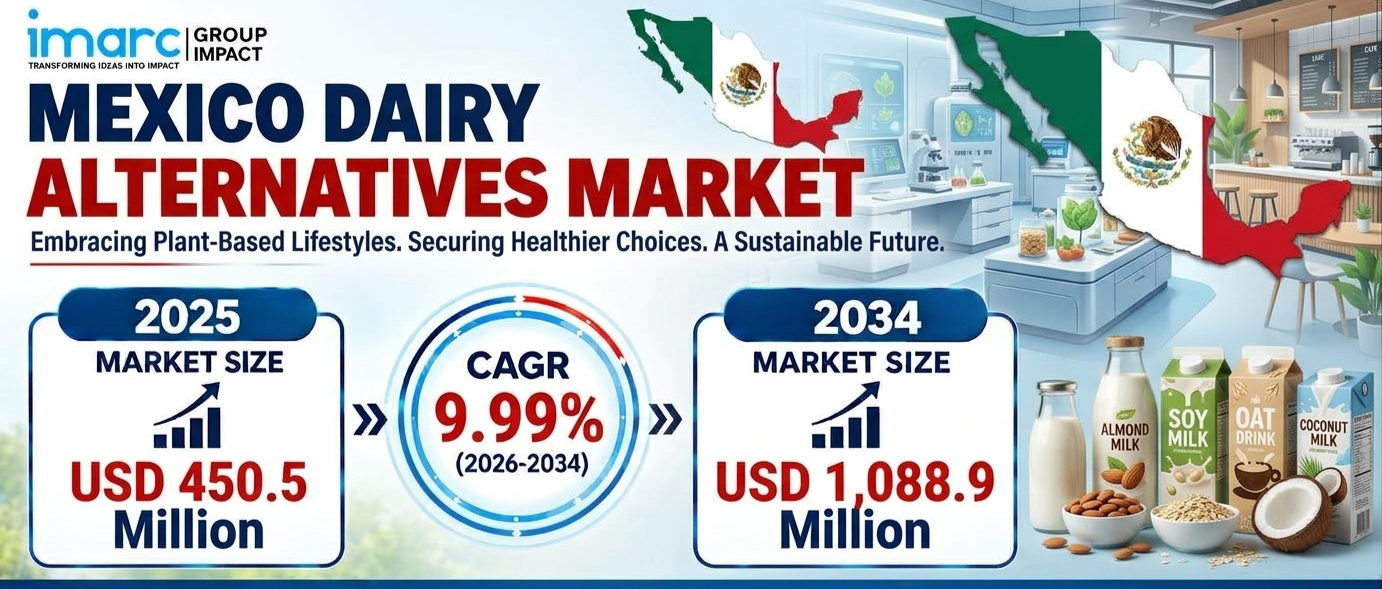
The mexico dairy alternatives market size reached USD 450.5 Million in 2025 and is projected to reach USD 1,088.9 Million by 2034, growing at a CAGR of 9.99% during 2026-2034. Growing consumer demand for plant-based products for health, environmental, and ethical reasons, rising lactose intolerance, and the shift toward vegan and flexitarian diets are the primary factors driving the mexico dairy alternatives market.
Dairy alternatives are plant-based substitutes for conventional dairy products, made from sources such as almond, soy, oats, hemp, coconut, and rice. They include milk, yogurt, cheese, creamers, and ice creams, and are consumed at home as well as in cafes and foodservice settings.
The mexico milk alternatives market is a central part of this shift, as almond, oat, and soy beverages move from a niche choice for lactose-intolerant consumers to an everyday option for health-conscious households. Flavor and formulation innovation, wider store availability, and a growing focus on sustainable manufacturing are further broadening the category across the country.
Explore Growth Opportunities in the Mexico Dairy Alternatives Market - Grab Your Sample Report for Evaluation: https://www.imarcgroup.com/mexico-dairy-alternatives-market/requestsample
Key Trends Driving the Mexico Dairy Alternatives Market
• Plant-based dairy alternatives growth: Lactose intolerance, rising health awareness, and concern over the environmental impact of animal agriculture are driving a strong preference for plant-based options. Almond, oat, and soy milk are expanding across segments, particularly in urban areas where exposure to international food trends is high. Technology is also shaping the category, as shown in July 2024 when NotCo demonstrated how its AI, Giuseppe, mimics animal-based products using plant-based ingredients.
• Move towards health-oriented lifestyles: Health-conscious consumers see plant-based milk and yogurt as lighter options with less fat, no lactose, and fewer additives. As obesity, diabetes, and cardiovascular disease become bigger concerns, demand is rising for products fortified with vitamins, minerals, and probiotics. In August 2024, NIÚKE Foods launched QMILQ, described as the first quinoa-derived plant milk, offering a gluten-free and lactose-free choice at the America’s Food & Beverage Show in Miami.
• Growing demand for sustainable products: Plant-based dairy production generally uses less water and land and generates fewer greenhouse gases than traditional dairy, which appeals to environmentally aware Mexican consumers. This is encouraging brands to adopt recyclable packaging and ethically sourced ingredients, and supports continued growth in the mexico milk alternatives market as sustainability becomes a purchase criterion.
Mexico Dairy Alternatives Market Report Segmentation:
The Mexico Dairy Alternatives Market report provides a detailed segmentation analysis to help businesses identify key growth segments and evolving industry dynamics. The market is categorized based on product type, source, formulation, nutrient, and distribution channel, offering comprehensive insights across the mexico dairy alternatives market.
Product Type Insights:
• Milk: Plant-based milk anchors the mexico milk alternatives market, with almond, oat, and soy beverages widely used at breakfast, in coffee, and in cooking.
• Yogurt: Plant-based yogurts appeal to consumers seeking dairy-free options with added probiotics and functional benefits.
• Cheese: Dairy-free cheeses are gradually widening choices for vegan and lactose-intolerant consumers.
• Creamers: Plant-based creamers support the coffee and tea occasion, particularly in cafes and urban households.
• Ice Creams: Plant-based frozen desserts offer indulgence without dairy and benefit from premium flavor innovation.
• Others: Other plant-based dairy products complete the range as brands experiment with new formats.
Source Insights:
- Almond, Soy, and Oats: Almond, soy, and oats are among the most familiar sources, valued for taste, versatility, and availability across retail formats.
- Hemp, Coconut, and Rice: Hemp, coconut, and rice offer alternatives for consumers looking for different flavors, textures, and allergen profiles.
- Others: Other sources, including quinoa and legumes, are emerging as brands broaden their plant-based portfolios.
Formulation Insights:
- Plain: Plain formulations, available sweetened and unsweetened, suit everyday use in beverages, cereals, and cooking.
- Flavored: Flavored formulations, available sweetened and unsweetened, attract younger consumers and support innovation in taste.
Nutrient Insights:
- Protein: Protein-focused products address consumers who want plant-based options with a stronger nutritional profile.
- Starch, Vitamin, and Others: Starch-based products, vitamin-fortified formats, and other nutrient-led offerings reflect growing interest in functional and fortified dairy alternatives.
Distribution Channel Insights:
- Supermarkets and Hypermarkets: Large retail formats offer wide shelf space and product variety, helping consumers discover and compare plant-based options.
- Convenience Stores: Convenience stores support quick, everyday purchases of ready-to-drink plant-based products.
- Online Stores: Online stores widen access to niche and premium brands beyond what physical outlets stock.
- Others: Other channels, including specialty outlets and foodservice, complement mainstream retail.
Regional Insights:
- Northern Mexico: Northern Mexico offers established modern retail networks that support the availability of packaged plant-based products.
- Central Mexico: Central Mexico, home to large urban populations, shows strong exposure to international food trends and plant-based diets.
- Southern Mexico: Southern Mexico reflects growing opportunities as retail access and product awareness improve.
- Others: Other regions contribute steady demand as distribution networks expand.
Mexico Dairy Alternatives Market: Recent News and Developments
- August 2024: NIÚKE Foods launched QMILQ, described as the first quinoa-derived plant milk, at the America’s Food & Beverage Show in Miami, positioning it as a gluten-free and lactose-free alternative to conventional dairy.
- September 2024: Nestlé introduced a new line of vegan almond milk in Mexico and Ecuador under the Nature’s Heart brand, combining almond milk with fruit juices in Almond + Apple and Almond + Tropical Fruit flavors as part of its focus on the expanding plant-based food market.
Challenges Impacting the Mexico Dairy Alternatives Market
Household penetration remains limited compared with conventional dairy. Mordor Intelligence reports that only about 15% of Mexican households had purchased plant-based milk at least once, against near-universal consumption of traditional milk, pointing to price and distribution barriers that still need to be addressed.
Nutrition perceptions can also hold back adoption. Nutrition experts note that almond and oat beverages generally contain little protein and that added calcium and other nutrients depend on fortification, which makes clear labeling and consumer education important for brands in the mexico milk alternatives market.
Investment Opportunities in the Mexico Dairy Alternatives Market
The mexico dairy alternatives market presents compelling investment opportunities supported by its projected growth from USD 450.5 Million in 2025 to USD 1,088.9 Million by 2034. Fortified, protein-rich, and functional plant-based products represent a high-value opportunity as consumers link dairy alternatives with healthier lifestyles.
Locally inspired flavors, yogurt, cheese, and creamer extensions, and sustainable packaging offer room for differentiation. Companies that combine product innovation with broad retail reach and strong online presence can build strong competitive positions in this expanding market.
Explore How Digitalization Is Accelerating Mexico’s Data Center Market - Read the Full Insight: https://www.imarcgroup.com/insight/digitalization-accelerating-mexico-data-center-market
Outlook of the Mexico Dairy Alternatives Market (2026-2034)
The outlook for the mexico dairy alternatives market is positive, supported by growing demand for plant-based products, rising lactose intolerance, and continuous flavor and formulation innovation. The market is projected to grow from USD 450.5 Million in 2025 to USD 1,088.9 Million by 2034 at a CAGR of 9.99%.
Health-oriented lifestyles, sustainability practices, functional fortification, and wider retail and foodservice availability will be the defining trends shaping the mexico dairy alternatives market through 2034.
Key Players in the Mexico Dairy Alternatives Market
The mexico dairy alternatives market is served by a mix of global food and beverage companies and specialized plant-based brands competing on the basis of product innovation, nutritional positioning, and retail distribution.
Nestlé: A global food and beverage leader with a long-standing presence in Mexico, Nestlé introduced vegan almond milk under the Nature’s Heart brand in Mexico and Ecuador in September 2024, reflecting its focus on the expanding plant-based market. The company has also announced plans to invest USD 1 billion in its Mexico operations between 2025 and 2027.
Danone: Through its Alpro and Silk brands, Danone offers plant-based oat and almond beverages in Mexico, with a focus on nutrition and taste that supports the growth of the mexico milk alternatives market, particularly in major urban areas.
Frequently Asked Questions (FAQs): Mexico Dairy Alternatives Market
1. What is the current Mexico dairy alternatives market size?
The Mexico dairy alternatives market size reached USD 450.5 Million in 2025 and is projected to reach USD 1,088.9 Million by 2034, growing at a CAGR of 9.99% during 2026-2034.
2. What are dairy alternatives?
Dairy alternatives are plant-based substitutes for conventional dairy products, including milk, yogurt, cheese, creamers, and ice creams, made from sources such as almond, soy, oats, hemp, coconut, and rice.
3. What are the key drivers of the mexico dairy alternatives market?
Key drivers include growing demand for plant-based products for health, environmental, and ethical reasons, rising lactose intolerance, vegan and flexitarian diets, and continuous flavor and formulation innovation.
4. What is the mexico milk alternatives market?
The mexico milk alternatives market covers plant-based milk made from sources such as almond, oats, and soy, and forms a core part of the broader mexico dairy alternatives market.
5. Who are the key players in the mexico dairy alternatives market?
Key players in the mexico dairy alternatives market include Nestlé and Danone, alongside other global and specialized plant-based brands serving household and foodservice customers.
Author IMARC Group
IMARC Group is a global management consulting firm that helps the world's most ambitious changemakers to create a lasting impact. The company provide a comprehensive suite of market entry and expansion services. IMARC offerings include thorough market assessment, feasibility studies, company incorporation assistance, factory setup support, regulatory approvals and licensing navigation, branding, marketing and sales strategies, competitive landscape and benchmarking analyses, pricing and cost research, and procurement research.
Contact Us
IMARC Group,
134 N 4th St. Brooklyn, NY 11249, USA,
Email: [email protected],
United States: +1-201971-6302

 English
 Arabic
 French
 Spanish
 Portuguese
 Turkish
 Dutch
Dutch
 Italiano
 Russian
 Romaian
 Portuguese (Brazil)
 Greek
Greek