


Natural Cosmetics Market Growth Gains Momentum as Clean Beauty Demand Rises
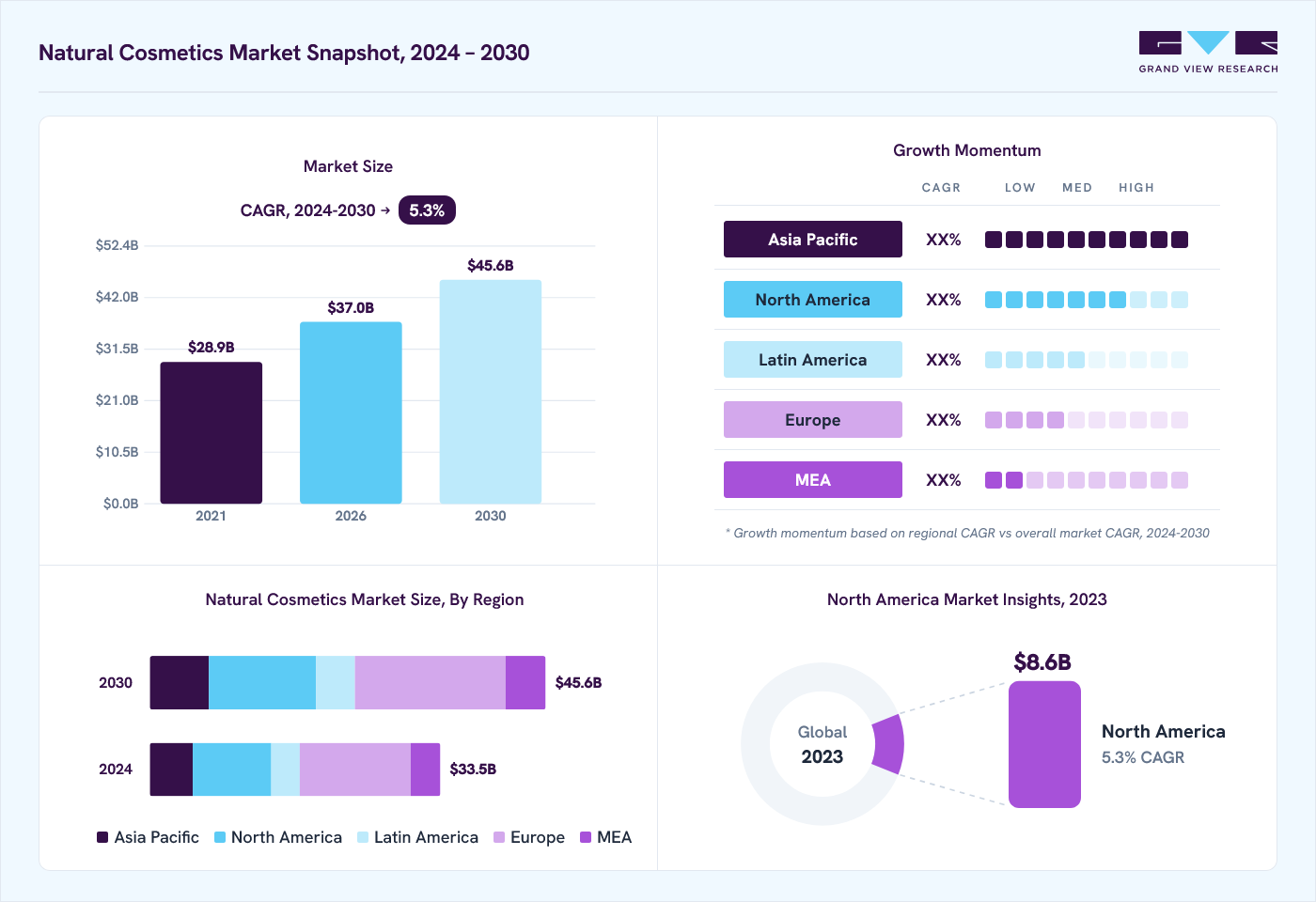
Walk into almost any beauty aisle today and the growing interest in ingredient-conscious products is difficult to miss. The natural cosmetics market was valued at USD 31.8 billion in 2023 and is estimated to reach USD 37.0 billion in 2026, before advancing to USD 45.6 billion by 2030, expanding at a 5.3% CAGR from 2024 to 2030. Rising spending on healthier cosmetics and increasing consumer concern about chemicals used in beauty products are among the factors supporting this expansion.
Why Ingredient Awareness Is Changing Beauty Choices
Natural cosmetics are gaining attention as consumers become more conscious of what they apply to their skin and hair. The market is benefiting from concerns surrounding synthetic compounds and their potential association with issues such as allergies, acne breakouts, blemishes, and rashes. This shift has encouraged major companies to expand their natural and organic product offerings.
At the same time, increasing internet usage, growing e-commerce activity, changing consumer preferences, technology advances, and improved awareness are creating additional opportunities. Digital marketing and social media campaigns are helping brands communicate product benefits while online platforms make a wider variety of cosmetics easier to discover and purchase.
Color Cosmetics Set the Current Market Pace
The product landscape shows that natural cosmetics are not limited to skincare. Color cosmetics represented the leading product category, accounting for a 30.1% market share in 2023. Rising cosmetic spending, urbanization, disposable income, and greater awareness of natural color cosmetics have supported this position. The growing availability of natural products across different platforms has further contributed to demand.
Hair care presents another important opportunity. It is projected to be the fastest-growing product segment, with a 5.3% CAGR during the forecast period. Greater awareness, a rising women population in countries including India, China, and Brazil, increasing interest in natural products, and growing cases of scalp issues and baldness are supporting the segment.
Retail Access Is Becoming Part of the Value Proposition
Consumers may increasingly seek natural ingredients, but accessibility remains critical. Supermarkets and hypermarkets held a 38.1% market share in 2023, supported by physical accessibility, convenience, and expanding retail demand. These channels have benefited as demand for natural cosmetics increased following the pandemic period.
Online retail, however, is changing how consumers discover and compare products. The online segment is expected to register an 8.8% CAGR through the forecast period. Internet availability, broad product selection, smartphone adoption, seamless bandwidth, and secure payment options are helping digital channels expand their role in cosmetics purchasing.
Affordability Creates Another Route Into Natural Beauty
Natural cosmetics are also finding traction across different price points. The medium price range accounted for the largest share at 44.9% in 2023, reflecting demand from middle- and upper-middle-income consumers looking for attractive pricing alongside better-quality products.
Meanwhile, the low-price segment is expected to grow at the fastest rate, recording a 6.1% CAGR during the forecast period. Products such as hair oils, face creams, moisturizers, and lotions are gaining prominence, while increasing internet usage and awareness are improving access to these offerings.
Regional Momentum Is Becoming More Diverse
Europe remained the largest regional market, accounting for 38.1% of revenue in 2023. Strong consumer awareness around personal care and hygiene, along with a shift toward natural products, continues to support the region. The UK led the European market in 2023, with demand influenced by population growth, interest in organic products, sustainability, recyclability, and changing preferences among Gen Z and millennials.
Asia Pacific, meanwhile, is the fastest-growing region, with a 5.4% CAGR expected during the forecast period. Increasing product awareness, rising disposable income, and supportive government regulations around natural ingredients are contributing to regional expansion. China has significant market potential, while India is experiencing rapid growth supported by disposable income, expanding income groups, interest in Ayurveda and organic products, and greater awareness of skin health.
Competition Is Moving Beyond Product Formulas
Recent developments also show how natural cosmetics are intersecting with technology and sustainability. L’Oréal launched HAPTA and Brow Magic technology prototypes in January 2023, while Soul Tree introduced Soumya Rasa in February 2024 with glass packaging intended to reduce plastic waste and support environmental sustainability.
The Next Phase of Natural Cosmetics Growth
The market's trajectory reflects a combination of health-conscious purchasing, ingredient awareness, broader retail access, digital discovery, and evolving beauty preferences. With the market projected to reach USD 45.6 billion by 2030, natural cosmetics are moving into a broader phase of adoption in which affordability, convenience, product variety, and consumer awareness can influence future demand.
FAQ
What is driving the growth of the natural cosmetics market?
Growth is supported by increasing spending on healthier cosmetics, concern about chemicals in beauty products, rising awareness, internet usage, e-commerce expansion, changing consumer trends, and wider availability of natural products.
Which region dominated the natural cosmetics market?
Europe dominated the market with a 38.1% revenue share in 2023, while Asia Pacific was identified as the fastest-growing region with a 5.4% CAGR during the forecast period.
Key Natural Cosmetics Companies:
· L'Oréal S.A
· Burt’s Bees
· 100% PURE
· KORRES S.A.
About us:
Grand View Research, a market research and consulting company, provides syndicated research reports, customized research reports, and consulting services. Grand View Research database is used by the world's renowned academic institutions and Fortune 500 companies to understand the global and regional business environment. Our database features thousands of statistics and in-depth analysis on 46 industries in 25 major countries worldwide.

 English
 Arabic
 French
 Spanish
 Portuguese
 Deutsch
 Turkish
 Italiano
 Russian
 Romaian
 Portuguese (Brazil)
 Greek
Greek