



THE NIGERIA CONVERSATION
EPISODE 2
TWO GOVERNORS, TWO RECORDS: WHAT ANAMBRA AND KANO CAN TEACH NIGERIA
By Benjamin Emmanuel
Political Affairs Researcher & Writer
Beyond Political Promises: Examining the Records of Peter Obi and Rabiu Musa Kwankwaso
Political leadership should not be judged by speeches alone. It should be examined through decisions made in office, public resources committed, institutions strengthened, communities served, and the lasting effects of government policies.
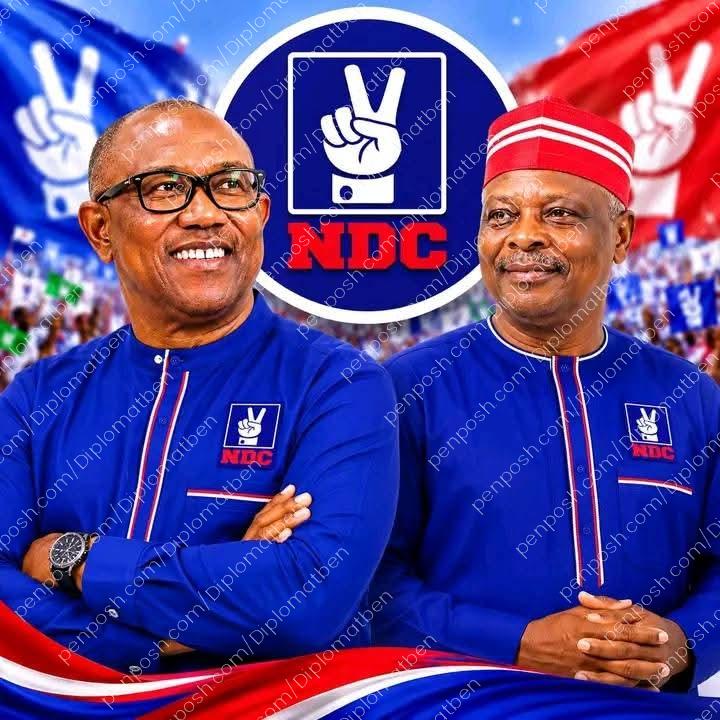
As Nigeria considers the proposed political partnership between Peter Obi and Rabiu Musa Kwankwaso ahead of the 2027 presidential election, their respective records as governors deserve careful examination.
Obi governed Anambra State from 2006 to 2014, while Kwankwaso served as governor of Kano State from 1999 to 2003 and again from 2011 to 2015.
Their administrations operated in different political, economic, and demographic circumstances. Anambra and Kano also have different development needs, population profiles, and revenue realities.
Nevertheless, their experiences offer an opportunity to examine two important dimensions of governance: the management of public resources and investment in human development.
For Nigerians considering what this partnership could mean at the federal level, the objective should be to understand what each man did, what the available evidence establishes, what remains contested, and what lessons could inform a national programme.
The argument for bringing these politicians together becomes stronger when it rests on verifiable experience rather than political mythology.
1. Peter Obi in Anambra: The Case for Fiscal Discipline
One of the most prominent features of Peter Obi's political identity is his emphasis on prudent financial management.
During his eight years as governor of Anambra State, Obi became associated with the argument that governments should protect public funds, avoid unnecessary expenditure, and invest resources in ways that benefit future generations.
Supporters have frequently cited his administration's reported savings and investments as evidence that state governments can exercise financial restraint while pursuing development.
This approach addresses a fundamental question in Nigerian governance: how can public officials demonstrate that the money entrusted to them is being managed responsibly?
A government that spends without adequate planning can accumulate liabilities, abandon projects, or leave future administrations with expensive obligations. Conversely, a government that saves without investing sufficiently in essential services may fail to meet urgent public needs.
Responsible financial management therefore requires both discipline and purpose.
The Anambra experience offers an opportunity to examine how these priorities can be balanced.
Savings, Investments and the Debt Debate
Obi's financial record has recently become the subject of renewed public scrutiny.
In September 2026, the Anambra State Government alleged that his administration was associated with eight external loan facilities contracted between 2007 and 2013, with a combined original value of approximately $123.77 million.
The state government subsequently said that $92.35 million remained outstanding as of June 2026.
Obi disputed the characterisation of these facilities as loans he personally took out on behalf of the state, arguing that the funding involved development-support arrangements and that the state's published debt figures needed to be properly reconciled with the facilities being cited.
An examination by Premium Times, published on 28 September 2026, found that the Debt Management Office recorded Anambra's external debt at approximately $30.32 million at the end of December 2013. The newspaper also reported that the state government's figure for the combined value of eight loan facilities was substantially higher than the DMO's recorded external debt at that date.
These figures cannot automatically be treated as interchangeable. The original value of a financing facility, the amount actually disbursed, the outstanding balance, and the debt recorded at a particular date are different measures.
The distinction matters because public debate about fiscal responsibility should be based on accurate accounting rather than figures selected to support a political position.
Sources: "Premium Times investigation" (https://www.premiumtimesng.com/regional/ssouth-east/912915-what-records-show-about-anambra-debt-under-peter-obi-amid-govts-123-7m-claim.html); "Channels Television report on Obi's response" (https://www.channelstv.com/2026/09/25/i-did-not-borrow-or-issue-bond-for-anambra-obi-challenges-123-77m-debt-claim/).
The available reporting supports a more precise conclusion: Anambra's external debt position and the financing arrangements associated with Obi's administration require careful differentiation. The public should have access to complete loan schedules, disbursement records, repayment histories, and independently verified handover accounts.
That is how the controversy can be resolved.
What Nigeria Can Learn
Regardless of how the competing claims are ultimately reconciled, the wider lesson is clear.
Every state and federal administration should publish understandable financial statements showing its opening balances, revenues, expenditure, savings, investments, liabilities, and outstanding debts.
When a governor claims to have saved public money, citizens should be able to verify the amount, location, ownership, and accessibility of those funds.
When a government contracts development financing, it should explain the purpose, conditions, repayment obligations, and measurable benefits.
Financial transparency should not depend on whether the politician involved is popular or belongs to a party that citizens support.
If Obi's emphasis on financial discipline is to become a foundation for national governance, it must be accompanied by complete disclosure and independent verification.
The objective should be to establish a standard that every future president and governor must meet.
2. Public Investment: What Did Anambra Gain?
Fiscal management cannot be assessed through bank balances alone. The ultimate purpose of public finance is to improve the lives of citizens.
During Obi's administration, Anambra's development agenda included education, healthcare, infrastructure, and support for economic activity.
His supporters frequently point to investments in schools and hospitals, as well as his administration's approach to financial management, when defending his record.
These claims deserve examination through project records, budget documents, service-delivery data, and independent assessments.
For education, the relevant questions include whether school facilities improved, whether teachers had the resources they needed, and whether children experienced better learning outcomes.
For healthcare, the questions include whether facilities became more accessible, whether equipment was maintained, and whether patients received better services.
For infrastructure, citizens should be able to establish which projects were completed, what they cost, how they were maintained, and whether they improved transport, trade, or access to essential services.
A list of completed projects can provide useful information, but it does not by itself establish the full social and economic impact of an administration.
The same principle applies to claims of financial savings.
A state government should be judged both by the soundness of its financial management and by the results citizens experience.
The Importance of Evidence
A serious assessment of Obi's Anambra record should bring together:
- Audited financial statements and budget-performance reports.
- Verified education and healthcare expenditure.
- Records of completed infrastructure projects and their costs.
- Data on public debt, investments, and outstanding liabilities.
- Independent assessments of changes in service delivery during his tenure.
These records would make it possible to distinguish documented achievements from political claims and to identify areas where the evidence remains incomplete.
For a prospective national administration, this distinction is essential.
Nigeria needs leaders who can explain not only how much money they saved or spent, but also what that money achieved.
3. Rabiu Kwankwaso in Kano: Education as a Development Strategy
Rabiu Musa Kwankwaso's political record has a different emphasis.
His two administrations in Kano State are particularly associated with educational expansion, scholarships, infrastructure, and programmes aimed at developing skills.
Education became a prominent part of the development identity associated with his administration and the wider Kwankwasiyya movement.
His supporters cite the establishment and expansion of educational institutions, scholarship programmes, and vocational training as evidence of an effort to broaden opportunities for Kano's population.
The importance of these initiatives is difficult to separate from the wider development challenges facing northern Nigeria.
Educational access and learning outcomes have varied considerably across the country, and parts of the North have faced substantial challenges involving school attendance, literacy, poverty, and access to educational facilities.
Expanding access to education is therefore an important policy objective.
But access is only the beginning.
A successful education programme must also ensure that children learn, teachers are adequately prepared, schools are maintained, and students acquire skills that allow them to participate productively in society.
Scholarships and Educational Opportunity
Kwankwaso's educational legacy includes scholarship programmes intended to support students pursuing further education.
The precise scale, cost, distribution, and long-term effects of these programmes should be established through official records and independent evaluation.
Nevertheless, the policy question is important for Nigeria as a whole.
Talented students from low-income households can struggle to continue their education because of tuition costs, accommodation, transportation, and other expenses.
A well-designed scholarship programme can reduce these barriers and help students acquire qualifications that might otherwise remain beyond their reach.
For a national administration, such programmes would require transparent eligibility rules, published expenditure, and reliable information about beneficiaries and outcomes.
Government should be able to show how many students completed their studies, what qualifications they obtained, and whether the investment helped them secure employment or contribute to national development.
Scholarships should be instruments of opportunity, not political patronage.
Technical Education and Skills Development
Kwankwaso's record is also associated with the expansion of educational institutions and technical training.
The broader lesson is that Nigeria needs more than a university-centred approach to education.
The country requires technicians, skilled artisans, agricultural specialists, engineers, health professionals, software developers, and workers capable of supporting modern manufacturing and infrastructure.
Technical and vocational education can help connect learning to employment, particularly when institutions work closely with employers and local industries.
A national development programme could build on this principle by strengthening technical colleges, improving apprenticeship systems, and linking public training programmes to sectors with demonstrated labour demand.
However, the success of these policies would need to be measured through completion rates, recognised qualifications, employer assessments, and employment outcomes.
The number of institutions established is important, but the capabilities those institutions produce are even more important.
4. Infrastructure and Housing: Development Must Be Sustainable
Kwankwaso's administrations are also associated with road construction, urban development, drainage projects, and housing initiatives.
These projects form part of the infrastructure record cited by his supporters.
Infrastructure is essential to economic development. Roads connect farmers to markets, transport links help businesses reach customers, drainage reduces the risk of flooding, and adequate housing can improve living conditions.
But infrastructure projects must be assessed according to their costs, quality, usefulness, and long-term financial implications.
A road that is poorly constructed or inadequately maintained can become an expensive liability. A housing project that is unaffordable to its intended beneficiaries may fail to address the problem it was designed to solve.
Similarly, large urban developments require careful planning, transparent procurement, and evidence that public investment meets genuine community needs.
An examination of Kwankwaso's infrastructure record should therefore establish which projects were completed, how they were financed, how they have performed over time, and what benefits they delivered.
The same standards should apply to every administration.
For Nigeria, the lesson is that infrastructure policy must combine ambition with careful project selection, independent engineering oversight, and reliable maintenance funding.
5. The Other Side of the Record: Claims Must Survive Scrutiny
A balanced assessment must examine claims made by supporters of both politicians.
Kwankwaso has previously claimed that he did not borrow money while serving as governor. However, an Africa Check investigation found that available evidence did not support that claim.
The investigation reported that Kano State's domestic debt increased substantially between 2011 and 2015 and examined borrowing associated with housing developments during his administration.
This does not, by itself, establish that the projects had no public value. Borrowing can finance useful infrastructure when it is affordable, transparently managed, and supported by realistic repayment plans.
It does establish why broad claims about never borrowing should be checked against official financial records.
Source: "Africa Check's investigation of claims by Nigerian presidential hopefuls" (https://africacheck.org/fact-checks/reports/oil-money-guns-fact-checking-nigerian-presidential-hopefuls-claims-town-hall-tv).
The distinction between borrowing responsibly and avoiding debt altogether is important.
A government can borrow and still manage its finances well. It can also avoid borrowing but fail to provide adequate services.
The appropriate questions are whether the financing was justified, whether the project delivered value, whether obligations were disclosed, and whether repayment was sustainable.
The same principle applies to Obi's financial record.
Political supporters should be willing to examine inconvenient evidence about their preferred leaders. Political opponents should also be required to support their allegations with reliable documentation.
That is how public debate can become more useful to citizens.
6. What Their Different Experiences Could Mean for Nigeria
The strongest argument for examining Obi and Kwankwaso together is not that their records are identical. It is that their experiences raise complementary questions about national development.
Obi's political message places substantial emphasis on financial discipline, accountability, and productive investment.
Kwankwaso's political record is associated with educational expansion, infrastructure, and grassroots mobilisation.
A national programme could seek to connect these priorities.
For example, public spending could be assessed according to its contribution to education, productivity, security, and employment. Technical training could be linked to agriculture and manufacturing. Infrastructure investment could be evaluated against its economic and social benefits.
A common programme could also establish clear standards for financial reporting and service delivery across federal ministries and agencies.
Such an approach would require agreement on priorities, financing, institutional responsibilities, and measurable outcomes.
It would also need to recognise that managing a state is different from managing the federal government.
A president must deal with national security, monetary and fiscal coordination, foreign relations, federal infrastructure, and the responsibilities of working with state governments and the National Assembly.
The experiences of two former governors may inform these challenges, but they cannot automatically resolve them.
The partnership's value would depend on how effectively its members translate their state-level experiences into a realistic national governing programme.
7. The Standards Nigerians Should Demand
If the Obi–Kwankwaso partnership is to present itself as an alternative approach to governance, it should be prepared to make specific commitments that citizens can verify.
These should include:
Transparent public finances: Publish budgets, expenditure reports, audit findings, and comprehensive debt disclosures.
Measurable education outcomes: Set targets for school attendance, literacy, teacher development, vocational training, and educational completion.
Accountable infrastructure spending: Publish project costs, procurement information, completion dates, and independent assessments of quality.
Responsible debt management: Explain the purpose, terms, and expected returns of borrowing, together with the repayment plan.
Public service performance: Establish measurable objectives for ministries and agencies and publish regular progress reports.
Equal treatment of citizens: Ensure that access to public services and development projects is based on public need and transparent criteria rather than political loyalty.
These commitments would help turn political promises into a framework for public accountability.
They would also allow citizens to judge the partnership using the same standards they should apply to every other political option.
Conclusion: The Past Must Inform the Future
Peter Obi's years in Anambra and Rabiu Musa Kwankwaso's years in Kano provide two different experiences through which Nigerians can examine the challenges of public administration.
Obi's record raises important questions about financial discipline, public investment, and the transparency of state finances.
Kwankwaso's record raises important questions about educational expansion, infrastructure development, skills training, and the sustainability of public projects.
Both records contain claims that deserve recognition where supported by evidence and scrutiny where the facts remain disputed.
Neither should be reduced to political praise or political condemnation.
For the proposed partnership to offer a credible national programme, it must draw lessons from both experiences: manage public resources transparently, invest in people, finance development responsibly, and measure success by outcomes rather than announcements.
The Nigerian public deserves complete records, reliable data, and clear explanations of what worked, what failed, and why.
A nation's future should not be built on political reputation alone. It should be built on evidence, accountability, and the willingness to learn from experience.
The central question for the Obi–Kwankwaso partnership is whether it can translate the lessons of Anambra and Kano into a coherent programme that delivers measurable improvements for Nigerians across all six geopolitical zones.
That is the standard against which any proposed national leadership should be judged.
The Nigeria Conversation — examining leadership, governance, public policy, and the future of Nigeria.
THE NIGERIA CONVERSATION
EPISODE 2
TWO GOVERNORS, TWO RECORDS: WHAT ANAMBRA AND KANO CAN TEACH NIGERIA
By Benjamin Emmanuel
Political Affairs Researcher & Writer
Beyond Political Promises: Examining the Records of Peter Obi and Rabiu Musa Kwankwaso
Political leadership should not be judged by speeches alone. It should be examined through decisions made in office, public resources committed, institutions strengthened, communities served, and the lasting effects of government policies.
As Nigeria considers the proposed political partnership between Peter Obi and Rabiu Musa Kwankwaso ahead of the 2027 presidential election, their respective records as governors deserve careful examination.
Obi governed Anambra State from 2006 to 2014, while Kwankwaso served as governor of Kano State from 1999 to 2003 and again from 2011 to 2015.
Their administrations operated in different political, economic, and demographic circumstances. Anambra and Kano also have different development needs, population profiles, and revenue realities.
Nevertheless, their experiences offer an opportunity to examine two important dimensions of governance: the management of public resources and investment in human development.
For Nigerians considering what this partnership could mean at the federal level, the objective should be to understand what each man did, what the available evidence establishes, what remains contested, and what lessons could inform a national programme.
The argument for bringing these politicians together becomes stronger when it rests on verifiable experience rather than political mythology.
1. Peter Obi in Anambra: The Case for Fiscal Discipline
One of the most prominent features of Peter Obi's political identity is his emphasis on prudent financial management.
During his eight years as governor of Anambra State, Obi became associated with the argument that governments should protect public funds, avoid unnecessary expenditure, and invest resources in ways that benefit future generations.
Supporters have frequently cited his administration's reported savings and investments as evidence that state governments can exercise financial restraint while pursuing development.
This approach addresses a fundamental question in Nigerian governance: how can public officials demonstrate that the money entrusted to them is being managed responsibly?
A government that spends without adequate planning can accumulate liabilities, abandon projects, or leave future administrations with expensive obligations. Conversely, a government that saves without investing sufficiently in essential services may fail to meet urgent public needs.
Responsible financial management therefore requires both discipline and purpose.
The Anambra experience offers an opportunity to examine how these priorities can be balanced.
Savings, Investments and the Debt Debate
Obi's financial record has recently become the subject of renewed public scrutiny.
In September 2026, the Anambra State Government alleged that his administration was associated with eight external loan facilities contracted between 2007 and 2013, with a combined original value of approximately $123.77 million.
The state government subsequently said that $92.35 million remained outstanding as of June 2026.
Obi disputed the characterisation of these facilities as loans he personally took out on behalf of the state, arguing that the funding involved development-support arrangements and that the state's published debt figures needed to be properly reconciled with the facilities being cited.
An examination by Premium Times, published on 28 September 2026, found that the Debt Management Office recorded Anambra's external debt at approximately $30.32 million at the end of December 2013. The newspaper also reported that the state government's figure for the combined value of eight loan facilities was substantially higher than the DMO's recorded external debt at that date.
These figures cannot automatically be treated as interchangeable. The original value of a financing facility, the amount actually disbursed, the outstanding balance, and the debt recorded at a particular date are different measures.
The distinction matters because public debate about fiscal responsibility should be based on accurate accounting rather than figures selected to support a political position.
Sources: "Premium Times investigation" (https://www.premiumtimesng.com/regional/ssouth-east/912915-what-records-show-about-anambra-debt-under-peter-obi-amid-govts-123-7m-claim.html); "Channels Television report on Obi's response" (https://www.channelstv.com/2026/09/25/i-did-not-borrow-or-issue-bond-for-anambra-obi-challenges-123-77m-debt-claim/).
The available reporting supports a more precise conclusion: Anambra's external debt position and the financing arrangements associated with Obi's administration require careful differentiation. The public should have access to complete loan schedules, disbursement records, repayment histories, and independently verified handover accounts.
That is how the controversy can be resolved.
What Nigeria Can Learn
Regardless of how the competing claims are ultimately reconciled, the wider lesson is clear.
Every state and federal administration should publish understandable financial statements showing its opening balances, revenues, expenditure, savings, investments, liabilities, and outstanding debts.
When a governor claims to have saved public money, citizens should be able to verify the amount, location, ownership, and accessibility of those funds.
When a government contracts development financing, it should explain the purpose, conditions, repayment obligations, and measurable benefits.
Financial transparency should not depend on whether the politician involved is popular or belongs to a party that citizens support.
If Obi's emphasis on financial discipline is to become a foundation for national governance, it must be accompanied by complete disclosure and independent verification.
The objective should be to establish a standard that every future president and governor must meet.
2. Public Investment: What Did Anambra Gain?
Fiscal management cannot be assessed through bank balances alone. The ultimate purpose of public finance is to improve the lives of citizens.
During Obi's administration, Anambra's development agenda included education, healthcare, infrastructure, and support for economic activity.
His supporters frequently point to investments in schools and hospitals, as well as his administration's approach to financial management, when defending his record.
These claims deserve examination through project records, budget documents, service-delivery data, and independent assessments.
For education, the relevant questions include whether school facilities improved, whether teachers had the resources they needed, and whether children experienced better learning outcomes.
For healthcare, the questions include whether facilities became more accessible, whether equipment was maintained, and whether patients received better services.
For infrastructure, citizens should be able to establish which projects were completed, what they cost, how they were maintained, and whether they improved transport, trade, or access to essential services.
A list of completed projects can provide useful information, but it does not by itself establish the full social and economic impact of an administration.
The same principle applies to claims of financial savings.
A state government should be judged both by the soundness of its financial management and by the results citizens experience.
The Importance of Evidence
A serious assessment of Obi's Anambra record should bring together:
- Audited financial statements and budget-performance reports.
- Verified education and healthcare expenditure.
- Records of completed infrastructure projects and their costs.
- Data on public debt, investments, and outstanding liabilities.
- Independent assessments of changes in service delivery during his tenure.
These records would make it possible to distinguish documented achievements from political claims and to identify areas where the evidence remains incomplete.
For a prospective national administration, this distinction is essential.
Nigeria needs leaders who can explain not only how much money they saved or spent, but also what that money achieved.
3. Rabiu Kwankwaso in Kano: Education as a Development Strategy
Rabiu Musa Kwankwaso's political record has a different emphasis.
His two administrations in Kano State are particularly associated with educational expansion, scholarships, infrastructure, and programmes aimed at developing skills.
Education became a prominent part of the development identity associated with his administration and the wider Kwankwasiyya movement.
His supporters cite the establishment and expansion of educational institutions, scholarship programmes, and vocational training as evidence of an effort to broaden opportunities for Kano's population.
The importance of these initiatives is difficult to separate from the wider development challenges facing northern Nigeria.
Educational access and learning outcomes have varied considerably across the country, and parts of the North have faced substantial challenges involving school attendance, literacy, poverty, and access to educational facilities.
Expanding access to education is therefore an important policy objective.
But access is only the beginning.
A successful education programme must also ensure that children learn, teachers are adequately prepared, schools are maintained, and students acquire skills that allow them to participate productively in society.
Scholarships and Educational Opportunity
Kwankwaso's educational legacy includes scholarship programmes intended to support students pursuing further education.
The precise scale, cost, distribution, and long-term effects of these programmes should be established through official records and independent evaluation.
Nevertheless, the policy question is important for Nigeria as a whole.
Talented students from low-income households can struggle to continue their education because of tuition costs, accommodation, transportation, and other expenses.
A well-designed scholarship programme can reduce these barriers and help students acquire qualifications that might otherwise remain beyond their reach.
For a national administration, such programmes would require transparent eligibility rules, published expenditure, and reliable information about beneficiaries and outcomes.
Government should be able to show how many students completed their studies, what qualifications they obtained, and whether the investment helped them secure employment or contribute to national development.
Scholarships should be instruments of opportunity, not political patronage.
Technical Education and Skills Development
Kwankwaso's record is also associated with the expansion of educational institutions and technical training.
The broader lesson is that Nigeria needs more than a university-centred approach to education.
The country requires technicians, skilled artisans, agricultural specialists, engineers, health professionals, software developers, and workers capable of supporting modern manufacturing and infrastructure.
Technical and vocational education can help connect learning to employment, particularly when institutions work closely with employers and local industries.
A national development programme could build on this principle by strengthening technical colleges, improving apprenticeship systems, and linking public training programmes to sectors with demonstrated labour demand.
However, the success of these policies would need to be measured through completion rates, recognised qualifications, employer assessments, and employment outcomes.
The number of institutions established is important, but the capabilities those institutions produce are even more important.
4. Infrastructure and Housing: Development Must Be Sustainable
Kwankwaso's administrations are also associated with road construction, urban development, drainage projects, and housing initiatives.
These projects form part of the infrastructure record cited by his supporters.
Infrastructure is essential to economic development. Roads connect farmers to markets, transport links help businesses reach customers, drainage reduces the risk of flooding, and adequate housing can improve living conditions.
But infrastructure projects must be assessed according to their costs, quality, usefulness, and long-term financial implications.
A road that is poorly constructed or inadequately maintained can become an expensive liability. A housing project that is unaffordable to its intended beneficiaries may fail to address the problem it was designed to solve.
Similarly, large urban developments require careful planning, transparent procurement, and evidence that public investment meets genuine community needs.
An examination of Kwankwaso's infrastructure record should therefore establish which projects were completed, how they were financed, how they have performed over time, and what benefits they delivered.
The same standards should apply to every administration.
For Nigeria, the lesson is that infrastructure policy must combine ambition with careful project selection, independent engineering oversight, and reliable maintenance funding.
5. The Other Side of the Record: Claims Must Survive Scrutiny
A balanced assessment must examine claims made by supporters of both politicians.
Kwankwaso has previously claimed that he did not borrow money while serving as governor. However, an Africa Check investigation found that available evidence did not support that claim.
The investigation reported that Kano State's domestic debt increased substantially between 2011 and 2015 and examined borrowing associated with housing developments during his administration.
This does not, by itself, establish that the projects had no public value. Borrowing can finance useful infrastructure when it is affordable, transparently managed, and supported by realistic repayment plans.
It does establish why broad claims about never borrowing should be checked against official financial records.
Source: "Africa Check's investigation of claims by Nigerian presidential hopefuls" (https://africacheck.org/fact-checks/reports/oil-money-guns-fact-checking-nigerian-presidential-hopefuls-claims-town-hall-tv).
The distinction between borrowing responsibly and avoiding debt altogether is important.
A government can borrow and still manage its finances well. It can also avoid borrowing but fail to provide adequate services.
The appropriate questions are whether the financing was justified, whether the project delivered value, whether obligations were disclosed, and whether repayment was sustainable.
The same principle applies to Obi's financial record.
Political supporters should be willing to examine inconvenient evidence about their preferred leaders. Political opponents should also be required to support their allegations with reliable documentation.
That is how public debate can become more useful to citizens.
6. What Their Different Experiences Could Mean for Nigeria
The strongest argument for examining Obi and Kwankwaso together is not that their records are identical. It is that their experiences raise complementary questions about national development.
Obi's political message places substantial emphasis on financial discipline, accountability, and productive investment.
Kwankwaso's political record is associated with educational expansion, infrastructure, and grassroots mobilisation.
A national programme could seek to connect these priorities.
For example, public spending could be assessed according to its contribution to education, productivity, security, and employment. Technical training could be linked to agriculture and manufacturing. Infrastructure investment could be evaluated against its economic and social benefits.
A common programme could also establish clear standards for financial reporting and service delivery across federal ministries and agencies.
Such an approach would require agreement on priorities, financing, institutional responsibilities, and measurable outcomes.
It would also need to recognise that managing a state is different from managing the federal government.
A president must deal with national security, monetary and fiscal coordination, foreign relations, federal infrastructure, and the responsibilities of working with state governments and the National Assembly.
The experiences of two former governors may inform these challenges, but they cannot automatically resolve them.
The partnership's value would depend on how effectively its members translate their state-level experiences into a realistic national governing programme.
7. The Standards Nigerians Should Demand
If the Obi–Kwankwaso partnership is to present itself as an alternative approach to governance, it should be prepared to make specific commitments that citizens can verify.
These should include:
Transparent public finances: Publish budgets, expenditure reports, audit findings, and comprehensive debt disclosures.
Measurable education outcomes: Set targets for school attendance, literacy, teacher development, vocational training, and educational completion.
Accountable infrastructure spending: Publish project costs, procurement information, completion dates, and independent assessments of quality.
Responsible debt management: Explain the purpose, terms, and expected returns of borrowing, together with the repayment plan.
Public service performance: Establish measurable objectives for ministries and agencies and publish regular progress reports.
Equal treatment of citizens: Ensure that access to public services and development projects is based on public need and transparent criteria rather than political loyalty.
These commitments would help turn political promises into a framework for public accountability.
They would also allow citizens to judge the partnership using the same standards they should apply to every other political option.
Conclusion: The Past Must Inform the Future
Peter Obi's years in Anambra and Rabiu Musa Kwankwaso's years in Kano provide two different experiences through which Nigerians can examine the challenges of public administration.
Obi's record raises important questions about financial discipline, public investment, and the transparency of state finances.
Kwankwaso's record raises important questions about educational expansion, infrastructure development, skills training, and the sustainability of public projects.
Both records contain claims that deserve recognition where supported by evidence and scrutiny where the facts remain disputed.
Neither should be reduced to political praise or political condemnation.
For the proposed partnership to offer a credible national programme, it must draw lessons from both experiences: manage public resources transparently, invest in people, finance development responsibly, and measure success by outcomes rather than announcements.
The Nigerian public deserves complete records, reliable data, and clear explanations of what worked, what failed, and why.
A nation's future should not be built on political reputation alone. It should be built on evidence, accountability, and the willingness to learn from experience.
The central question for the Obi–Kwankwaso partnership is whether it can translate the lessons of Anambra and Kano into a coherent programme that delivers measurable improvements for Nigerians across all six geopolitical zones.
That is the standard against which any proposed national leadership should be judged.
The Nigeria Conversation — examining leadership, governance, public policy, and the future of Nigeria.









 English
 Arabic
 French
 Spanish
 Portuguese
 Deutsch
 Turkish
 Italiano
 Russian
 Romaian
 Portuguese (Brazil)
 Greek