THE NIGERIA CONVERSATION
EPISODE 1
PETER OBI AND RABIU KWANKWASO: A PARTNERSHIP THAT COULD REDEFINE NIGERIA'S POLITICAL FUTURE
By Benjamin Emmanuel
Political Affairs Researcher & Writer
Leadership, National Unity and the Search for a New Direction
Nigeria's future demands a serious national conversation about leadership, economic opportunity, security, education, and the kind of country the next generation will inherit.
For millions of Nigerians, the question is no longer simply who occupies the highest political office. It is whether the people entrusted with power can build institutions that work, manage public resources responsibly, protect citizens, and create opportunities for ordinary families to prosper.
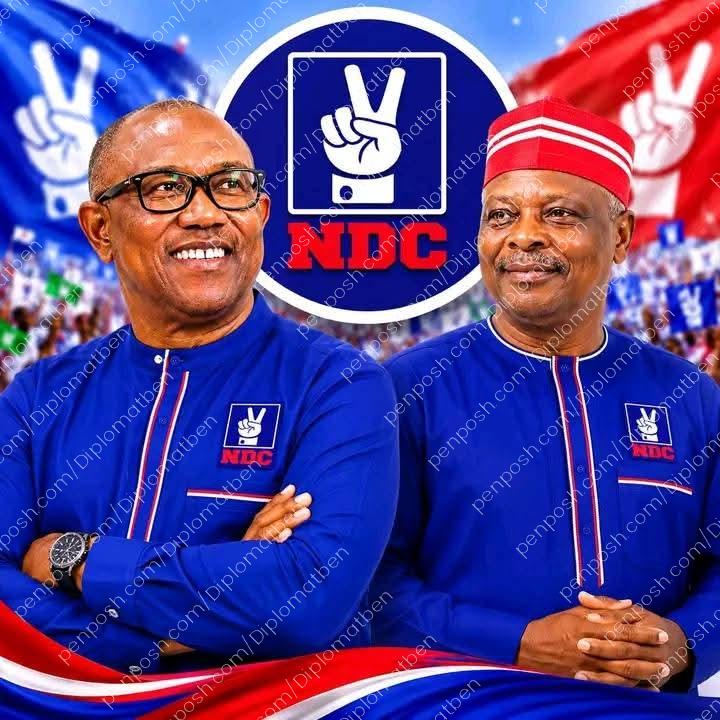
Against this background, the political partnership between Peter Obi and Rabiu Musa Kwankwaso deserves close examination.
The two politicians bring different experiences, political constituencies, and approaches to national development. Peter Obi, the former governor of Anambra State, has built his political message around prudent public expenditure, economic productivity, accountability, and institutional reform. Rabiu Musa Kwankwaso, the former governor of Kano State, has a political record associated with educational development, infrastructure, and grassroots political organisation.
Their partnership brings these experiences into one national conversation.
The important question is whether they can translate their different strengths into a coherent programme capable of addressing Nigeria's challenges.
Two Political Journeys, One National Question
Peter Obi rose to national prominence through his business background, his administration of Anambra State, and his 2023 presidential campaign under the Labour Party.
His political message attracted considerable attention among young Nigerians and citizens demanding greater accountability, economic reform, and a different approach to public administration.
Rabiu Musa Kwankwaso, meanwhile, developed a substantial political following through his years in public office, his two administrations in Kano State, and the Kwankwasiyya political movement.
His political identity is particularly associated with northern grassroots mobilisation and educational initiatives.
Their political histories are not identical. Neither are their policy positions on every issue.
That difference makes the substance of their partnership especially important.
A successful national administration would require more than bringing two influential politicians together. It would require them to agree on priorities, establish clear responsibilities, and demonstrate that their combined experience can produce practical solutions.
In September 2026, Nigeria Democratic Congress chieftain Buba Galadima told Channels Television that the party was working to harmonise differences between the two politicians' policy blueprints. This indicates that policy alignment is an important part of the political project, rather than something that should simply be assumed.
Why Their Combination Has Attracted Attention
The appeal of the Obi–Kwankwaso partnership lies partly in the possibility of connecting economic reform with human development and national political cooperation.
Nigeria needs a government that understands the importance of managing public finances responsibly. It also needs one that recognises that national development depends on schools, hospitals, infrastructure, security, and opportunities for young people.
Fiscal discipline without adequate investment in people can leave communities behind. Educational expansion without sustainable financing can become difficult to maintain. Infrastructure without proper planning and accountability can consume public money without delivering sufficient economic benefits.
The national challenge is to connect these priorities.
Obi's emphasis on productive investment and public accountability could contribute to an economic programme that measures government spending against results. Kwankwaso's experience in Kano and his association with educational initiatives could contribute to discussions about expanding skills, improving access to education, and strengthening grassroots development.
Together, these areas of experience could inform a national development agenda.
Whether that potential becomes reality will depend on the policies they adopt, the quality of their appointments, the institutions they establish, and their willingness to publish measurable results.
Beyond Geography: The Question of National Unity
The Obi–Kwankwaso partnership also raises an important question about Nigeria's political future: can leaders from different regional backgrounds build a common programme that places citizenship and national development above sectional interests?
Obi's political support has been particularly visible in southeastern Nigeria and among younger voters in other parts of the country. Kwankwaso has a substantial political base in Kano and among sections of the northern electorate.
Their partnership creates an opportunity for cooperation across regional political boundaries.
However, national unity requires more than a geographically diverse ticket.
It requires fair treatment under the law, equal protection of citizens, transparent public appointments, and a commitment to serving communities regardless of their ethnic, religious, or political identities.
Every region must be able to judge the government by its performance rather than by the background of its leaders.
The real test of this partnership would be whether it can transform regional cooperation into a shared national project.
The 2027 Question: What Would Change in the Lives of Nigerians?
Political alliances become meaningful when they offer credible answers to everyday problems.
A trader wants an economy in which prices are less unpredictable and businesses can survive. A farmer needs security, access to markets, and infrastructure that reduces production costs. A student needs quality education and a realistic pathway to employment. A parent wants affordable healthcare and the assurance that their children can travel safely.
These concerns should form the foundation of any serious national programme.
An Obi–Kwankwaso administration would need to explain how it intends to improve security, strengthen food production, support small businesses, expand educational opportunities, and make public spending more effective.
It would also need to explain how its policies would be financed and how Nigerians could measure progress.
Promises alone cannot establish the credibility of a government. The public needs clear targets, transparent budgets, independent oversight, and regular reports on what has been achieved.
That is the difference between an appealing political message and an accountable governing programme.
The Partnership Must Be Bigger Than Two Individuals
One of the most important questions is how the two leaders would work together if entrusted with national responsibility.
Peter Obi has publicly stated that Kwankwaso would not be a ceremonial vice president in his proposed administration. He has described the intended arrangement as one based on consultation and shared responsibility.
That commitment raises an important institutional question: how would the partnership function in practice?
The country would need clarity about the vice president's responsibilities, the administration's decision-making process, and the mechanism for resolving policy disagreements.
It would also need a competent cabinet, a professional civil service, effective legislative oversight, and institutions capable of operating according to the law.
No partnership, however promising its public presentation, can replace the need for sound institutions.
Nigeria needs a government in which public responsibilities are clearly defined and the conduct of leaders remains subject to democratic accountability.
Conclusion: A National Conversation Worth Having
Peter Obi and Rabiu Musa Kwankwaso have brought different political experiences and constituencies into a common national project.
Their partnership presents an opportunity to discuss how economic reform, education, security, accountability, and regional cooperation might be brought together within one governing programme.
But the significance of that partnership will ultimately depend on its substance.
Can the two politicians agree on a credible economic framework? Can they develop a practical security strategy? Can they make education and employment central to national development? Can they establish transparent institutions and demonstrate measurable improvements in people's lives?
These are the questions that Nigerians should continue to examine.
The country does not merely need new political arrangements. It needs a governing philosophy that translates public trust into public service.
The Obi–Kwankwaso partnership deserves to be judged against that standard: not simply by the expectations surrounding two prominent politicians, but by the policies they present, the commitments they make, and the results they can demonstrate.
The future of Nigeria should be a conversation about more than who leads. It must also be about how the country is governed, how its resources are used, and how every citizen can share in its progress.
The Nigeria Conversation — examining leadership, governance, public policy, and the future of Nigeria.









 English
 Arabic
 French
 Spanish
 Portuguese
 Deutsch
 Dutch
 Italiano
 Russian
 Romaian
 Portuguese (Brazil)
 Greek