


Bottle Preform Mold Factory Starts With Precision
A plastic bottle does not begin its life looking like a bottle. Before it reaches the familiar shape found on a shelf, it starts as a small tube-like part called a preform. That little piece already contains important information about the final container, and a Bottle Preform Mold Factory is where the tooling used to create it is designed, processed, assembled, and tested.
The preform may look uncomplicated, but its wall thickness, neck finish, weight, and dimensions need to match the requirements of the later bottle-forming process. A mold therefore has to reproduce tiny details repeatedly. The neck section is especially important because it may already contain the thread and opening structure used by the finished bottle.
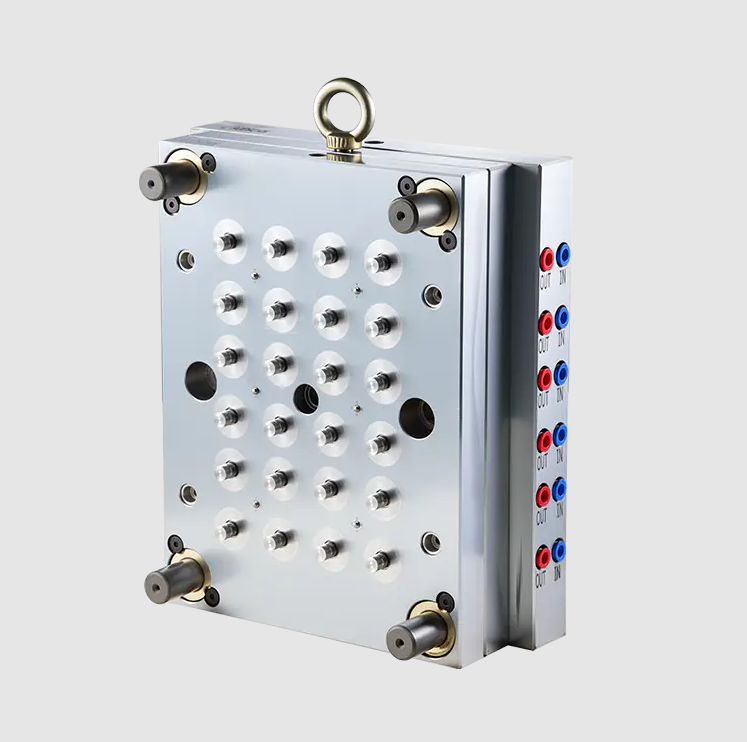
Inside a Bottle Preform Mold Factory, mold construction involves several interconnected parts. Cavity inserts shape the outside of the preform, while core components form the internal section. Hot runner systems can deliver molten PET directly toward individual cavities, reducing the need for conventional cold runners. In a multi-cavity mold, keeping material distribution balanced becomes a key engineering task.
PET behaves differently depending on temperature and processing conditions. The mold needs to receive the molten material in a controlled manner before cooling it into the required preform geometry. Cooling channels are therefore arranged around the cavity and core areas. Their location can affect how heat is removed from different sections of the molded part.
Cavity count also changes the structure of the tooling. A mold with 16 cavities has a different layout from one containing 48 or 72 cavities. More cavities mean more cores, inserts, cooling passages, hot runner connections, and ejection components need to work together during each molding cycle.
Manufacturing equipment inside a Bottle Preform Mold Factory can include CNC machining centers, wire-cutting equipment, EDM machines, grinding systems, and precision measuring instruments. Each process contributes to a different part of the mold. Fine machining may define cavity surfaces, while grinding can bring selected components to precise dimensions.
For buyers, discussing a project with a Bottle Preform Mold Factory usually starts with practical information: preform weight, neck finish, cavity count, PET material, injection machine specifications, cycle requirements, and expected bottle application. These details help connect the mold design to the actual production process.
A preform is only a small step in bottle production, but it carries the shape and dimensions needed for the next stage. That makes the Bottle Preform Mold Factory an important part of the process, turning carefully machined tooling into thousands of identical starting points for plastic bottles.

 English
 Arabic
 Spanish
 Portuguese
 Deutsch
 Turkish
 Dutch
Dutch
 Italiano
 Russian
 Romaian
 Portuguese (Brazil)
 Greek
Greek