


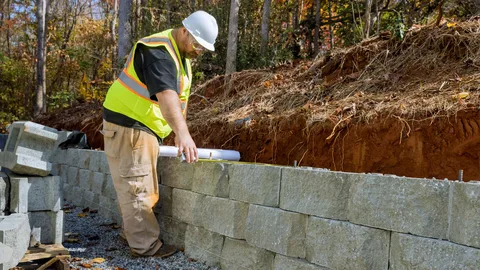
Retaining walls are among the most consequential structures in any landscape, yet they are frequently underestimated by homeowners who see them primarily as decorative features. A properly built retaining wall holds back earth, manages water, and creates usable flat space on sloped terrain. An improperly built one can lean, crack, or collapse entirely within a few seasons, taking landscaping, patios, and sometimes structural elements with it. The difference between these outcomes lies almost entirely in the quality of design, engineering, and construction, which is why selecting the right contractor matters so much. Retaining walls must resist soil pressure, hydrostatic force from trapped water, frost movement, and the weight of anything built above them, and these forces require proper base preparation, drainage, and material selection to manage effectively.
In regions with varied topography, clay-heavy soil, and seasonal freeze-thaw cycles, retaining walls are both common and uniquely challenging to build correctly. Homeowners seeking Retaining Wall Contractors Near Me are usually looking for professionals who understand these local conditions and can deliver a structure that performs safely and looks beautiful for decades. The search itself reflects an important recognition: retaining walls are structural engineering problems, not simple stacking exercises. Understanding what professional construction involves, why drainage is critical, how materials are selected, and what distinguishes a qualified contractor helps homeowners protect their investment and avoid the costly consequences of a failing wall.
Understanding Retaining Wall Contractors Near Me and Their Role
A retaining wall contractor is a specialist who designs, engineers, and installs structures that hold back soil and create level or terraced spaces on sloped terrain. Their role extends far beyond laying blocks or stacking stone. Qualified contractors assess site conditions, including soil composition, slope, drainage patterns, and load requirements. They calculate wall height, embedment depth, and reinforcement needs based on engineering principles. They select materials appropriate for the climate and aesthetic. They design drainage systems that prevent water pressure from building behind the wall. And they understand local permitting requirements, since walls above certain heights typically require engineering review and permits. When homeowners search for Retaining Wall Contractors Near Me, they are seeking professionals who can translate a functional need—stabilizing a slope or creating usable outdoor space into a durable structure that enhances rather than endangers the landscape.
Importance of Professional Retaining Wall Construction
Professional construction matters because retaining walls fail in predictable and expensive ways when built improperly. The most common cause of failure is inadequate drainage. When water saturates the soil behind a wall, hydrostatic pressure builds rapidly, often exceeding the wall's design capacity. A wall that appeared solid during dry weather can bulge or collapse after a heavy rainstorm. Improper base preparation, insufficient embedment depth, and inadequate compaction lead to settling and rotation over time. Frost movement in colder climates can lift and shift poorly built walls, while clay soil compounds these problems by draining slowly and expanding when wet. Professional contractors address these risks through proper engineering, gravel backfill, drainage pipe, filter fabric, and compaction. They also build walls that meet local code requirements, protecting homeowners from liability and ensuring the structure performs safely for its intended lifespan.
Retaining Wall Design and Engineering Considerations
Design and engineering considerations form the foundation of any successful retaining wall. Wall height is the primary factor in determining structural requirements; walls under three or four feet may be built with standard gravity-wall techniques, while taller walls require reinforced designs, geogrid soil reinforcement, or engineered systems. Soil type influences design significantly, since clay exerts greater pressure and drains more slowly than sandy or gravelly soils. Surcharge loads anything placed above or behind the wall, such as a driveway, patio, or building must be accounted for in the design. Slope above and below the wall affects stability, as does the presence of groundwater. Contractors must also consider the wall's aesthetic integration with the home and landscape, selecting materials, patterns, and capstones that complement the overall design. Proper engineering ensures that the wall resists all anticipated forces and meets local building codes.
Drainage and Water Management Behind Retaining Walls
Drainage is the single most critical factor in retaining wall longevity, and its absence is the leading cause of failure. Water accumulates behind a wall from rain, groundwater, and surface runoff, and saturated soil exerts dramatically greater pressure than dry soil. Without a path to escape, that pressure pushes against the wall, causing bulging, cracking, and eventual collapse. Professional installation addresses drainage through a system of components: a gravel backfill zone immediately behind the wall that allows water to flow freely, filter fabric that prevents soil from clogging the gravel, perforated drainage pipe at the base that carries water away, and weep holes or outlet points that release water from the system. Surface grading above the wall should direct runoff away from the structure rather than toward it. Downspouts and gutter discharge must be managed carefully. Contractors who understand these systems prevent the most common and costly retaining wall failures.
Material Selection for Durability and Appearance
Material selection influences both the structural performance and the visual appeal of a retaining wall. Segmental concrete blocks are the most common choice for residential walls, offering consistent dimensions, engineered interlocking systems, and a range of textures and colors. Natural stone, including limestone, sandstone, and granite, provides timeless aesthetics and exceptional durability but requires skilled installation and careful selection for structural suitability. Timber walls offer a traditional look and lower initial cost but have shorter lifespans, particularly in wet climates. Gabion walls, constructed from stone-filled wire baskets, provide excellent drainage and a distinctive appearance. Boulder walls use large natural stones for a rustic look. Each material has specific requirements for base preparation, reinforcement, and drainage. In colder climates, materials must be rated for freeze-thaw resistance. Contractors should help homeowners weigh upfront cost against longevity, maintenance needs, and aesthetic goals.
Choosing the Right Retaining Wall Contractors Near Me
Selecting the right contractor requires more than comparing bids. Homeowners should verify licensing, insurance, and experience with the specific type of wall and local conditions. It is reasonable to ask whether the contractor has engineering support for taller walls and whether they obtain required permits. Request references from recent projects and visit completed sites if possible, since workmanship is best judged in person. A detailed written estimate should specify materials, excavation, base preparation, drainage components, reinforcement, and any engineering or permitting costs. Contractors should be able to explain their approach to drainage and soil reinforcement clearly. Beware of bids that seem unusually low, as these often signal shortcuts in base preparation or drainage that will lead to failure. When searching for Retaining Wall Contractors Near Me, the best indicator of quality is a professional who communicates transparently, demonstrates technical knowledge, and stands behind their work with a warranty.
Quality, Safety, and Industry Standards
Quality and safety standards protect both the homeowner's investment and the integrity of the structure. Reputable contractors follow industry guidelines for base preparation, embedment depth, drainage, and soil reinforcement, and they use materials rated for the local climate. Safety considerations include proper slope and surcharge analysis, secure installation of geogrid and reinforcement, and compliance with local building codes and permitting requirements. Contractors should carry liability insurance and workers' compensation. Documentation of materials, engineering specifications, and warranties supports accountability. Homeowners should feel comfortable asking about drainage design, reinforcement methods, and warranty coverage, because these details determine whether the wall performs safely through years of seasonal weather and soil movement. A wall that fails can cause significant property damage and injury, making adherence to standards non-negotiable.
Benefits of Professional Retaining Wall Construction
The benefits of professional retaining wall construction extend across stability, usability, and property value. A properly built wall stabilizes slopes, prevents erosion, and protects structures and landscaping from soil movement. It creates usable flat space for patios, gardens, or play areas on terrain that would otherwise be difficult to use. It manages water effectively, protecting foundations and preventing flooding. Aesthetically, a well-designed wall enhances the landscape, adding structure, texture, and visual interest. Professionally built walls increase property value and curb appeal, and they provide peace of mind knowing the structure is engineered to perform safely. Contractors also offer guidance on planting, irrigation, and maintenance that preserves the wall's appearance and function. For homeowners dealing with sloped terrain, drainage problems, or a desire to expand outdoor living space, a professional retaining wall is often the most effective and durable solution.
Future Trends and Industry Development
Retaining wall construction continues to evolve as materials, engineering methods, and design preferences advance. Engineered segmental block systems now offer taller, stronger walls with more efficient installation. Geogrid reinforcement technology has improved, allowing contractors to build stable walls on challenging sites. Permeable wall systems and advanced drainage components are gaining popularity for stormwater management. Natural stone and textured concrete products offer increasingly realistic aesthetics. Digital design tools allow homeowners to visualize walls and landscapes before construction begins. There is also growing emphasis on sustainable practices, including the use of recycled materials and native plantings that stabilize slopes naturally. These developments reflect a broader shift toward walls that are both highly functional and visually integrated with their surroundings, and they underscore the value of working with a contractor who stays current with industry practices.
Conclusion
Retaining walls are structural investments that protect property, expand usable outdoor space, and enhance landscape beauty but only when designed and built correctly. Proper engineering, base preparation, drainage, and material selection are the elements that determine whether a wall endures for decades or fails within a few seasons. For homeowners dealing with sloped terrain or drainage challenges, choosing experienced Retaining Wall Contractors Near Me ensures access to professionals who understand local soil conditions, climate demands, and structural requirements. Whether the goal is stabilizing a slope, creating a terraced garden, or supporting a new patio, the right contractor brings technical expertise, quality craftsmanship, and accountability to every stage of the project. Investing in professional retaining wall construction today protects both the landscape and the property value for years to come.

 English
 Arabic
 French
 Spanish
 Deutsch
 Turkish
 Dutch
 Italiano
 Russian
 Romaian
 Portuguese (Brazil)
 Greek