


Fully Managed SOC: What Indian Hospitals Should Know
Understanding Fully Managed SOC for Healthcare Security in India
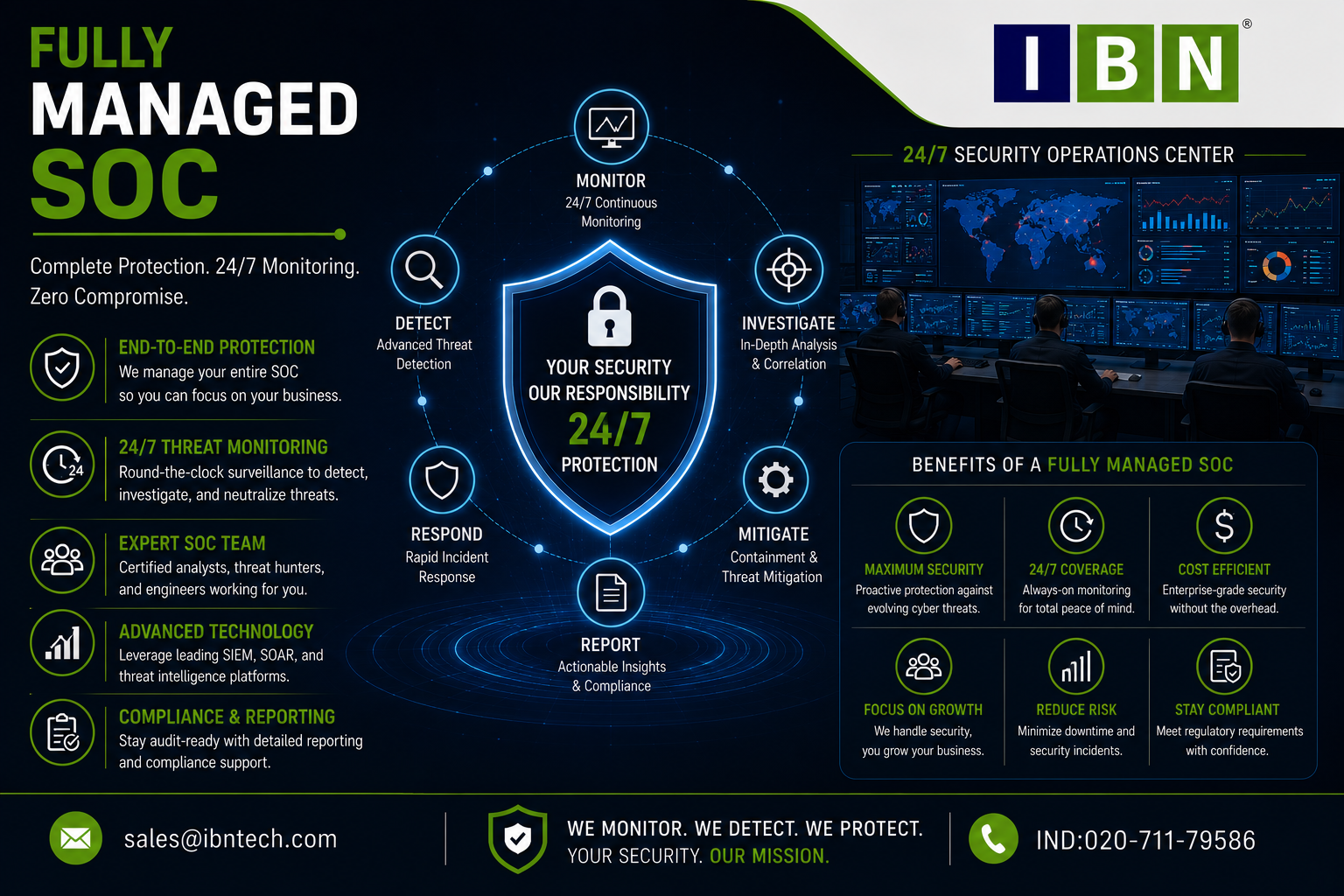
Healthcare organizations depend on connected systems to deliver timely patient care, manage medical records and coordinate hospital operations. A fully managed SOC provides outsourced security monitoring and investigation support, helping hospitals identify suspicious activity across their technology environments. Its effectiveness depends on clinical system visibility, clear escalation responsibilities and coordination with hospital IT teams.
Why healthcare organizations need a different approach to security monitoring
A hospital's technology environment is closely connected to patient care. Electronic health records, laboratory information systems, radiology platforms, pharmacy applications, appointment portals and connected medical equipment support daily clinical activities. A security incident affecting these systems can create operational disruption alongside information security concerns.
Healthcare organizations also manage sensitive information, including patient identities, medical histories, diagnostic reports and insurance details. Unauthorized access to these records can affect patient privacy and institutional trust. Security monitoring must therefore consider the sensitivity of information and the operational importance of each system.
A soc as a service companies arrangement may provide external monitoring resources, but healthcare organizations should evaluate whether the proposed operating model understands clinical dependencies. A monitoring team that treats every system as an ordinary office application may overlook the consequences of disrupting a diagnostic platform or restricting access to a clinical application.
Indian hospitals also operate across different technology environments. Large hospital groups may have centralized IT infrastructure, multiple locations and cloud-based applications, while smaller hospitals may depend on a limited internal IT team and external software vendors. Security requirements vary accordingly.
How does a fully managed SOC fit into hospital operations?
A fully managed SOC provides an external security operations function that monitors agreed technology environments, investigates suspicious events and escalates relevant findings to designated organizational contacts. The service generally relies on security logs and telemetry collected from connected systems.
The process begins with identifying which hospital systems require monitoring. IT teams and the provider establish the relevant log sources, access arrangements and monitoring priorities. After that, the monitoring team reviews security events, investigates suspicious activity and communicates findings according to agreed procedures.
For hospitals, system prioritization deserves particular attention. A patient registration portal, an administrative workstation and a critical clinical application do not carry identical operational importance. Monitoring priorities should reflect their business and patient-care dependencies.
Which hospital systems should be included in monitoring?
Monitoring scope should cover the systems that present meaningful security or operational risks. Hospitals should consider clinical applications, identity systems, endpoints, network infrastructure, cloud environments and administrative platforms when defining coverage.
The selection should not be based only on which systems are easiest to integrate. An older laboratory application might be difficult to connect, yet its role in diagnostic workflows could make visibility essential. The provider should document integration limitations and identify alternative monitoring arrangements where direct log collection is unavailable.
An illustrative example is a hospital where unusual access activity appears on a workstation used by laboratory personnel. The security team needs to understand whether the activity relates to an authorized maintenance task, an employee account issue or suspicious access. Knowing the workstation's role and its relationship with laboratory systems helps establish the appropriate priority.
What should hospitals evaluate before outsourcing security operations?
Hospitals should assess operational suitability before comparing service proposals. A provider may offer extensive monitoring capabilities, but the arrangement will remain incomplete if important clinical applications are excluded or internal escalation contacts are unavailable.
The fully managed SOC evaluation should examine the provider's ability to work with the hospital's existing infrastructure and IT processes. Hospital management should understand which systems generate usable logs, how security events are investigated and how findings are communicated to technical and administrative decision-makers.
A useful evaluation also considers the hospital's vendor ecosystem. Medical software providers, cloud vendors, diagnostic service partners and outsourced IT support teams may each control different parts of the environment. The security monitoring arrangement must clarify who can investigate, authorize changes and resolve issues across these boundaries.
How can hospitals evaluate soc as a service companies?
Hospitals comparing soc as a service companies should look beyond monitoring dashboards and service descriptions. The provider should explain how clinical application alerts are investigated, how sensitive records are handled and how security incidents are escalated without unnecessary disruption to patient services.
The hospital should request a walkthrough based on a realistic situation, such as suspicious access to an electronic health record system. The provider should identify the available evidence, explain the investigation process and demonstrate how the hospital's authorized team would receive the findings.
Ask for clarity on analyst coverage, log retention arrangements, reporting, escalation contacts and responsibility for integration maintenance. The hospital should also understand whether the proposed service includes incident containment or whether the provider only recommends actions for hospital personnel to approve.
How should patient care influence security incident response?
Security decisions in healthcare cannot be separated from clinical operations. An aggressive response to suspicious activity might reduce exposure but could also interrupt access to a system required by doctors, nurses or diagnostic personnel.
Hospitals should therefore establish an incident coordination process involving IT, information security, clinical operations and relevant application owners. The response plan should identify who can authorize account restrictions, system isolation and emergency workarounds.
Consider an illustrative situation in which a hospital detects suspicious activity involving a workstation connected to a radiology workflow. The security team may recommend isolating the affected device. Before implementation, the hospital's authorized personnel must consider whether alternative access is available and how patient examinations will continue.
The monitoring provider should communicate the security concern and its supporting evidence clearly. Hospital management should retain authority over decisions that could affect clinical availability.
A practical response arrangement should also distinguish between routine alerts and incidents requiring immediate attention. A failed login attempt does not necessarily justify interrupting a clinical service. Repeated suspicious activity involving privileged access to patient records may require a more urgent investigation.
What compliance and data protection considerations apply to Indian hospitals?
Healthcare organizations should evaluate security monitoring alongside their information governance responsibilities. Patient information is sensitive, and hospitals must consider applicable data protection requirements, contractual confidentiality obligations and relevant sector-specific expectations.
The Digital Personal Data Protection Act and its associated Rules establish India's personal data protection framework, with implementation being introduced in phases. Hospitals should verify which obligations apply to their operations and the relevant commencement provisions rather than assuming every requirement is already effective.
Security monitoring arrangements should support appropriate access controls, incident documentation and the protection of personal data. Hospitals should also examine whether monitoring information contains patient identifiers or other sensitive details and restrict access accordingly.
CERT-In directions are another consideration for organizations within their scope. Hospitals should understand the applicable incident reporting, log retention and coordination requirements and ensure that external monitoring arrangements support their internal compliance procedures.
A provider can assist with relevant security information and investigation records. However, responsibility for determining legal obligations and fulfilling institutional reporting duties remains with the hospital.
How can hospitals compare internal and outsourced monitoring models?
The right operating model depends on internal technical capacity, infrastructure complexity and the hospital's tolerance for operational disruption. A hospital with an established security team may need external monitoring support, while an organization with limited internal resources may require a broader outsourced arrangement.
|
Evaluation area |
Internal monitoring |
Outsourced monitoring |
Shared operating model |
|
Security analysts |
Hospital employees |
External specialists |
Internal and external teams |
|
Clinical system knowledge |
Developed internally |
Requires orientation |
Jointly maintained |
|
Alert investigation |
Internal responsibility |
Provider-led within scope |
Shared responsibilities |
|
Clinical escalation |
Internal coordination |
Hospital contacts required |
Agreed escalation process |
|
Infrastructure changes |
Hospital-controlled |
Subject to authorization |
Coordinated approval |
|
Reporting |
Internal reporting process |
Agreed service reports |
Combined reporting |
Internal monitoring offers direct organizational control but requires appropriate personnel and ongoing operational capacity. Outsourcing can provide specialist monitoring support, although the hospital must ensure that its clinical environment is properly represented in the provider's investigation process.
A shared model can be useful when hospital IT personnel understand clinical workflows but need additional security monitoring resources. The external team can investigate events while hospital personnel manage clinical priorities, application access and business decisions.
The hospital should avoid choosing a model based solely on the amount of technology included. Actual visibility, investigation quality and coordination matter more than a long list of supported capabilities.
What should the hospital agree with the provider before service begins?
Before implementation, the hospital should establish a documented operating arrangement covering system coverage, access permissions, escalation responsibilities, reporting and service limitations. Both parties should understand what happens when an important log source becomes unavailable or a clinical application undergoes maintenance.
The provider should also explain how it handles false positives, unresolved alerts and changes in the hospital's infrastructure. An application upgrade, new diagnostic device or additional hospital location can change the security monitoring requirements.
Hospitals evaluating fully managed SOC arrangements should ask how operational knowledge will be transferred when internal IT personnel or external application vendors change. Without documented ownership, important investigation context can disappear when responsibilities move between teams.
How can healthcare teams maintain visibility without disrupting treatment?
Healthcare teams should define monitoring priorities according to clinical importance and data sensitivity. Security personnel need access to relevant event information, but investigative activity must follow approved access controls and clinical operating procedures.
For example, a hospital adding a new patient management application should coordinate its implementation with IT, application owners and the monitoring provider. The parties should confirm whether relevant security events are available, who reviews them and how unusual activity will reach the responsible team.
The provider should also be informed about planned maintenance and significant infrastructure changes. That context helps reduce unnecessary escalations and makes investigations more meaningful.
Frequently asked questions
Can smaller Indian hospitals use a fully managed SOC?
Yes. Smaller hospitals can consider outsourced security monitoring when internal staffing or specialist resources are limited. The service scope should match their actual applications, infrastructure and operational risks.
Will outsourced security monitoring give a provider access to patient records?
Not necessarily. Monitoring can use security events and system logs without granting unrestricted access to clinical records. Hospitals should define and restrict provider permissions according to legitimate operational requirements.
Who makes the final decision during a hospital cybersecurity incident?
The hospital retains authority over decisions affecting clinical operations, patient services and institutional responsibilities. The external monitoring team supports investigation and escalation according to the agreed operating arrangement.
IBN Technologies offers cybersecurity services that healthcare organizations can consider when assessing their wider security monitoring and protection requirements.
Contact Us
IBN Technologies
Phone: +91 20 6768 0404
Email: [email protected]

 English
 Arabic
 French
 Spanish
 Portuguese
 Deutsch
 Dutch
 Italiano
 Russian
 Romaian
 Portuguese (Brazil)
 Greek