


Lab-Grown Diamond Innovations Reshape the Future of Sustainable Luxury and Modern Jewelry
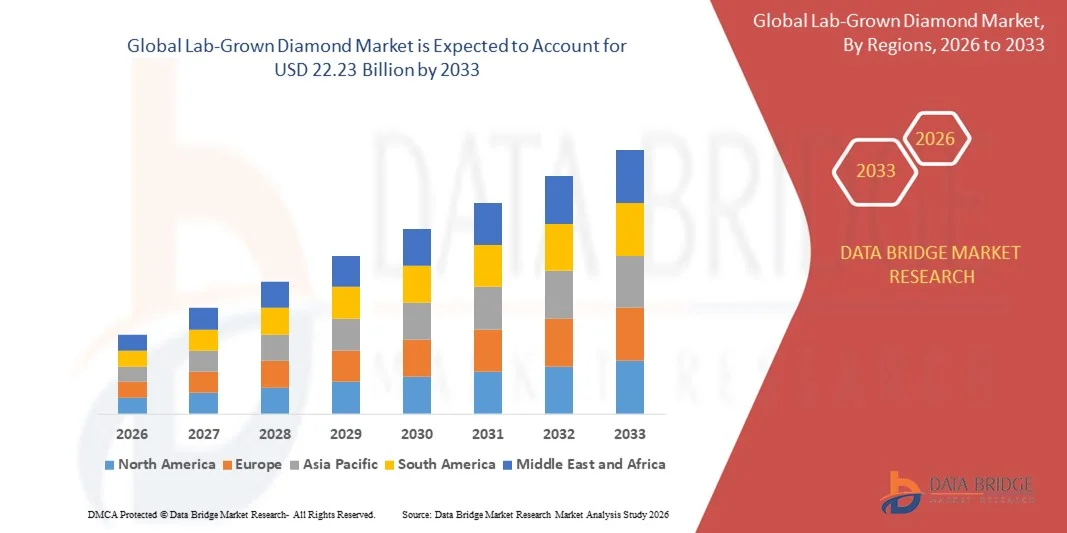
According to the latest report published by Data Bridge Market Research, the Lab-Grown Diamond Market
As per Data Bridge Market Research Analysis the global Lab-Grown Diamond Market size was valued at USD 12.84 billion in 2025 and is expected to reach USD 22.23 billion by 2033, at a CAGR of 7.10% during the forecast period.
For an effectual business growth, companies must adopt market research report such as Lab-Grown Diamond Marketwhich has become quite vital in this rapidly changing marketplace. The most up to date market insights and analysis performed in this report brings marketplace clearly into focus. This market research study analyzes the market status, growth rate, future trends, market drivers, opportunities and challenges, risks and entry barriers, sales channels, and distributors in the Lab-Grown Diamond Market This market report highlights key market dynamics, current market scenario and future prospects of the sector. Lab-Grown Diamond Market report studies consumption of market, top players involved, sales, price, revenue and market share with volume and value for each region..
Stay informed with our latest keyword market research covering strategies, innovations, and forecasts. Download full report: https://www.databridgemarketresearch.com/reports/global-lab-grown-diamond-market
Lab-Grown Diamond Market Segmentation and Market Companies
Segments
- Type:
- White Diamond
- Yellow Diamond
- Pink Diamond
- Blue Diamond
- Technology:
- High Pressure High Temperature (HPHT)
- Chemical Vapor Deposition (CVD)
- Application:
- Gem Making
- R&D
- High Pressure Research
The global lab-grown diamond market is segmented based on type, technology, application, and geography. In terms of type, the market is categorized into white diamond, yellow diamond, pink diamond, and blue diamond. White diamonds are the most common and widely produced in the lab-grown diamond market, whereas the popularity of colored lab-grown diamonds like yellow, pink, and blue is on the rise due to their unique aesthetics and lower environmental impact compared to mined colored diamonds. From a technology perspective, the market is segmented into High Pressure High Temperature (HPHT) and Chemical Vapor Deposition (CVD). HPHT is the traditional method used for creating lab-grown diamonds, while CVD is gaining traction due to its scalability and potential for producing high-quality diamonds at a lower cost. Regarding applications, lab-grown diamonds are used in gem making, research and development (R&D), and high-pressure research, showcasing the versatility and growing demand for these synthetic diamonds across various industries.
Market Players
- De Beers Group
- Diamond Foundry
- ALTR Created Diamonds
- Chatham Created Gems
- New Diamond Technology LLC
- Pure Grown Diamonds
- Scio Diamond Technology Corporation
- Takara Diamond
- Element Six
- Washington Diamonds Corporation
Leading market players in the global lab-grown diamond market include De Beers Group, a prominent player in the diamond industry that has also ventured into the lab-grown diamond sector to cater to changing consumer preferences for sustainable and ethically sourced diamonds. Diamond Foundry is another key player known for its vertically integrated approach to producing lab-grown diamonds and its focus on transparency and traceability. ALTR Created Diamonds and Chatham Created Gems are recognized for their high-quality lab-grown diamond offerings in various colors and cuts, catering to the rising demand for unique and customized diamonds. New Diamond Technology LLC and Pure Grown Diamonds are notable for their innovative approaches to diamond production using advanced technologies like CVD, positioning themselves as leaders in the synthetic diamond market. Other significant players in the market include Scio Diamond Technology Corporation, Takara Diamond, Element Six, and Washington Diamonds Corporation, each contributing to the growth and evolution of the lab-grown diamond industry with their distinct strengths and offerings.
The global lab-grown diamond market is witnessing a significant shift in consumer preferences towards sustainable and ethically sourced diamonds, driving the demand for synthetic diamonds across various industries. As environmental concerns and ethical considerations become more prominent in the jewelry and gem industry, lab-grown diamonds offer a more sustainable and socially responsible alternative to mined diamonds. This trend is expected to continue shaping the market dynamics, with consumers increasingly valuing transparency, traceability, and eco-friendliness in their diamond purchases. Market players are responding to these changing trends by investing in advanced technologies, efficient production processes, and innovative marketing strategies to capitalize on the growing demand for lab-grown diamonds.
One emerging trend in the lab-grown diamond market is the expansion of product offerings to cater to specific consumer preferences and niche markets. Companies are diversifying their diamond collections with a focus on colored lab-grown diamonds, customized cuts, and unique designs to attract a wider range of customers looking for distinctive and personalized jewelry pieces. This trend is driven by the increasing acceptance and appreciation of lab-grown diamonds as not just an alternative to mined diamonds but as a desirable choice in their own right, especially among younger consumers who prioritize sustainability and innovation in their purchasing decisions.
Furthermore, technological advancements in diamond production methods, such as the development of more efficient and scalable CVD processes, are also driving the growth and adoption of lab-grown diamonds in the market. These technological innovations are not only improving the quality and consistency of synthetic diamonds but also lowering production costs, making lab-grown diamonds more affordable and accessible to a broader audience. As a result, the market is witnessing an expansion in both supply and demand for lab-grown diamonds, with more players entering the market and more consumers opting for synthetic diamonds over their natural counterparts.
In terms of market competition, the presence of established players like De Beers Group and emerging companies like Diamond Foundry and ALTR Created Diamonds is creating a dynamic and competitive landscape in the lab-grown diamond market. These companies are not only competing on product quality, pricing, and branding but also on innovation, sustainability practices, and customer engagement to differentiate themselves and capture a larger market share. Collaboration and partnerships within the industry, as well as alliances with jewelry retailers and designers, are also becoming crucial for market players to strengthen their market position, expand their distribution channels, and enhance their brand visibility in an increasingly crowded and competitive market environment.
Overall, the global lab-grown diamond market is poised for continued growth and evolution driven by changing consumer preferences, technological advancements, and market innovations. As the market matures and becomes more mainstream, companies will need to focus on continuous innovation, sustainable practices, and consumer education to stay competitive and capitalize on the expanding opportunities in the lab-grown diamond industry.The global lab-grown diamond market is experiencing a significant transformation driven by shifting consumer preferences towards sustainable and ethically sourced diamonds. This trend is fueling the demand for synthetic diamonds across various industries as consumers increasingly value transparency, traceability, and eco-friendliness in their diamond purchases. Market players are adapting to these changing dynamics by investing in advanced technologies, efficient production processes, and innovative marketing strategies to leverage the growing interest in lab-grown diamonds. The expansion of product offerings to cater to specific consumer preferences and niche markets is emerging as a prominent trend in the market, with companies focusing on colored lab-grown diamonds, customized cuts, and unique designs to appeal to a broader customer base.
Technological advancements in diamond production methods, particularly the development of more efficient and scalable CVD processes, are playing a crucial role in driving the growth and adoption of lab-grown diamonds. These advancements not only enhance the quality and consistency of synthetic diamonds but also reduce production costs, making lab-grown diamonds more affordable and accessible to a wider audience. Consequently, the market is witnessing an upsurge in both supply and demand for lab-grown diamonds as more players enter the market and consumers increasingly opt for synthetic diamonds as preferred choices over natural ones.
The competitive landscape in the lab-grown diamond market is evolving, with established players like De Beers Group facing competition from emerging companies such as Diamond Foundry and ALTR Created Diamonds. These market participants are not only competing on product quality, pricing, and branding but also on innovation, sustainability practices, and customer engagement to differentiate themselves and capture a larger market share. Collaboration and partnerships within the industry, along with alliances with jewelry retailers and designers, are becoming essential for market players to enhance their market presence, expand distribution channels, and reinforce their brand visibility in a fiercely competitive market environment.
Overall, the global lab-grown diamond market is poised for continued growth and evolution as it matures into a mainstream alternative to mined diamonds. Companies will need to prioritize continuous innovation, sustainable practices, and consumer education to remain competitive and capitalize on the expanding opportunities in the lab-grown diamond industry. As consumer awareness around the environmental and ethical advantages of lab-grown diamonds continues to rise, market players must adapt to meet the evolving demands and preferences of a more conscientious consumer base.
Frequently Asked Questions About This Report
How is the Lab-Grown Diamond Market adapting to the Direct-to-Consumer trend?
How do Defensive strategies impact overall market valuation?
How does Customer Satisfaction correlate with Lab-Grown Diamond Market share?
How do IP (Intellectual Property) rights protect Lab-Grown Diamond Market innovations?
What is the influence of ISO standards on Lab-Grown Diamond Market quality?
What is the impact of Right to Repair laws on the Lab-Grown Diamond Market?
How are companies in the Lab-Grown Diamond Market using Computer-Aided Design (CAD)?
How is consumer behavior shifting in the Lab-Grown Diamond Market post-2025?
How much is the Services segment projected to be worth in the green sector?
What are the key success factors for a Lab-Grown Diamond Market participant?
Browse More Reports:
Global Methane Emissions Monitoring in Oil and Gas Market
Global Digital Biomarker Platforms Market
Global Protective Mailers Market
Global Sprain Treatment Market
Global Cubital Tunnel Syndrome Market
Global Milk Replacers Market
Global Patient Recliner Market
Global In-dash Navigation System Market
Global Feed Enzymes for Livestock Market
Global Veterinary Endoscopy Market
Global Acrodysostosis Treatment Market
Global Airway Management Consumables Market
Global Airway Management Device Market
Global and U.S. Algae Based Aquafeed Market
Global Animal-Based Collagen Supplements Market
"

 English
 Arabic
 French
 Spanish
 Portuguese
 Deutsch
 Turkish
 Dutch
 Italiano
 Russian
 Romaian
 Portuguese (Brazil)