


Medical Facts: Is a Fracture the Same as a Broken Bone?
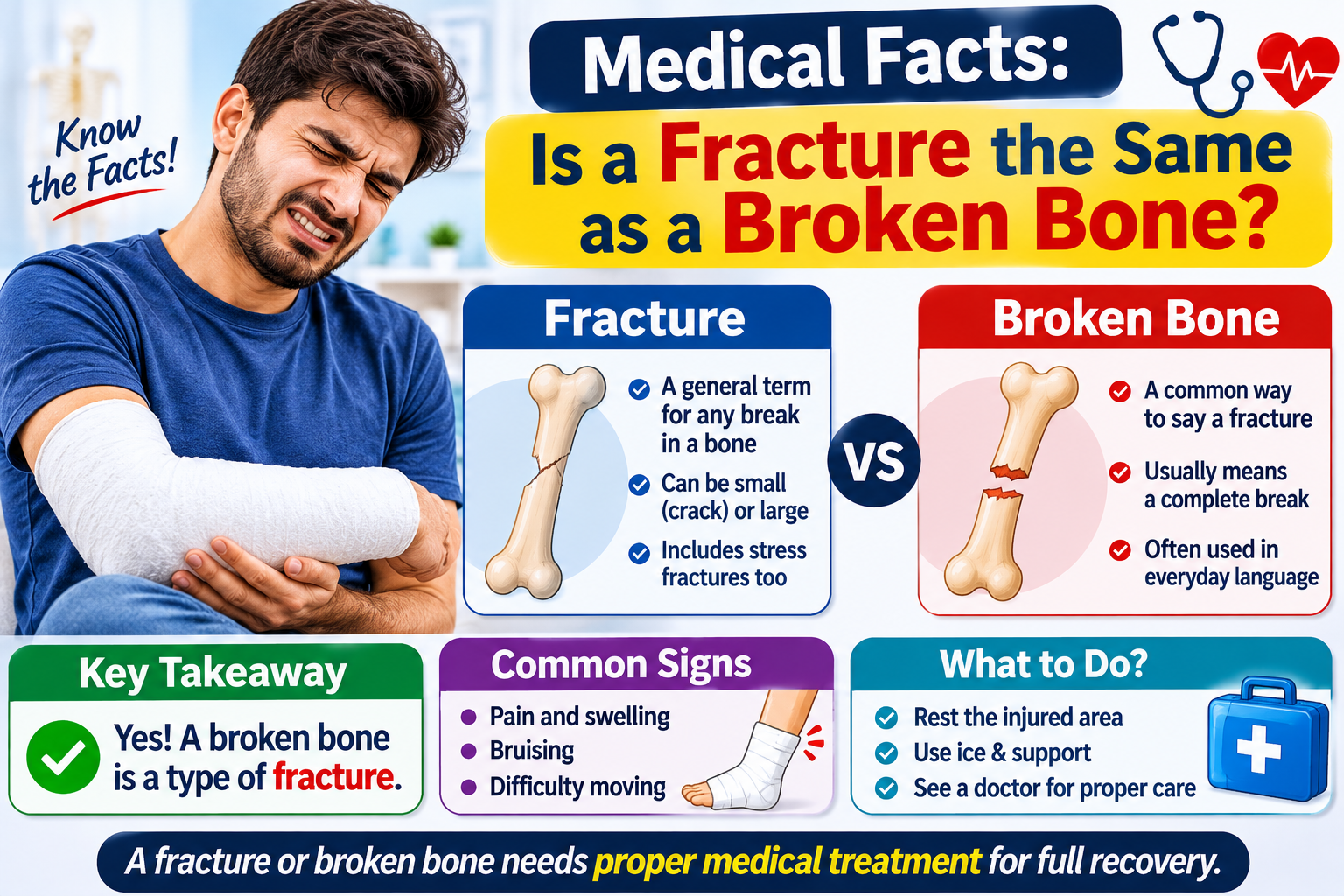
Asking is a fracture the same as broken bone is one of the most common points of confusion after a fall or sports injury. In medical terminology, a fracture and a broken bone mean the exact same thing—both describe any crack, chip, snap, or complete break in the continuity of a bone.
Key Facts About Bone Fractures and Breaks
-
Identical medical definition: Doctors use "fracture" as the formal clinical term for every type of broken bone, whether it is a microscopic hairline crack or a bone shattered into multiple pieces.
-
No severity difference in the words: A fracture is not "milder" than a break; instead, severity depends on the specific fracture pattern, location, and whether surrounding tissues are damaged.
-
Common fracture types: Orthopedists classify breaks into specific categories—including hairline (stress) fractures, greenstick fractures in children, displaced fractures where bone ends shift out of alignment, and comminuted fractures involving three or more fragments.
-
Closed vs. open fractures: A closed (simple) fracture stays completely beneath intact skin, whereas an open (compound) fracture pierces through the skin and carries a high risk of serious bone infection.
Practical Actions After a Suspected Bone Injury
-
Immobilize the injured area immediately: Keep the limb or joint still using a padded splint, sling, or rolled-up towel to prevent broken bone ends from shifting further.
-
Apply a cold pack wrapped in cloth: Place ice wrapped in a towel over the swollen area for 15 to 20 minutes at a time to help control pain and swelling.
-
Elevate the limb gently: If moving the injury does not cause sharp pain, prop the injured arm or leg slightly above heart level to reduce fluid buildup.
-
Get prompt X-ray imaging: Visit an emergency room or urgent care center for diagnostic X-rays so a physician can confirm whether the bone is cracked, misaligned, or needs setting.
Habits and Mistakes to Avoid
-
"Walking it off" or testing strength: Never put full weight on a suspected leg, ankle, or foot fracture, and avoid forcefully flexing an injured wrist or arm.
-
Trying to straighten a crooked limb: Never push, pull, or attempt to realign a visibly deformed bone or joint yourself, as this can sever blood vessels or nerves.
-
Applying heat right away: Avoid heating pads or hot baths during the first 48 hours, which increase blood flow and worsen acute swelling.
-
Eating or drinking before evaluation: If a severe break appears visibly deformed, avoid food or liquids until a doctor evaluates whether surgery is needed.
Warning Signs Requiring Immediate Emergency Care
-
Bone piercing through the skin: Any open wound over a suspected break or visible bone fragments requires immediate emergency surgery and intravenous antibiotics.
-
Visible deformity or unnatural angle: A limb that looks bent, shortened, or twisted out of place needs urgent stabilization and medical reduction.
-
Numbness, tingling, or cold skin: Pale, bluish, or cold fingers or toes—or loss of sensation below the injury—indicates compromised blood flow or nerve compression.
-
Suspected head, neck, spine, or hip fracture: Severe pain in the pelvis, hip, back, or neck after a fall or car accident requires immediate 911 response without moving the person.
Recognizing that every fracture is a broken bone ensures injuries receive proper X-ray imaging and timely stabilization rather than being brushed off as a simple sprain. If an injury causes visible deformity, open skin, numbness, or severe pain, seek immediate emergency medical evaluation from trusted providers like ER of Fort Worth.

 Arabic
 French
 Spanish
 Portuguese
 Deutsch
 Turkish
 Dutch
 Italiano
 Russian
 Romaian
 Portuguese (Brazil)
 Greek