


What Should You Know Before Starting a Practical Nursing Career?
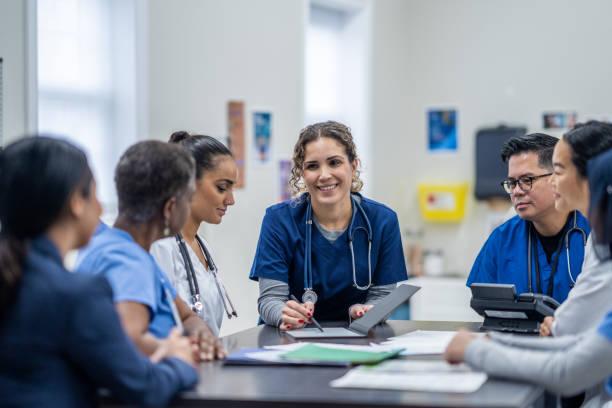
Deciding to pursue a career in nursing sounds pretty appealing. After all, who wouldn't want to take a job that actually makes a difference in someone's life? There is a lot to know before you dive in, though. Practical nursing isn't just about taking blood pressure, handing out medication, and helping people settle into a good position. There is responsibility, there is patience, there is physical work, and there is a tremendous amount of knowledge you'll need to have in your toolkit. If you're a student trying to decide between some of the options for LPN program in Florida, this is a good start. A licensed practical nurse (LPN) will work alongside the patient, the registered nurse, and the doctor to provide them with a hand in the daily provision of medical care. Some days are awesome, and some days are exhausting. That's just the way it goes. You've got to be able to stay calm when life throws a wrench in the works, take direction, and work well with people during some of the hardest moments of their lives.
Understanding What a Licensed Practical Nurse Does Daily
Before you sign up for a practical nursing course, know what you'll really be doing on a daily basis. LPN duties and responsibilities can vary based on the specific health care facility, the state regulations, and the individual needs of patients. Some of the more standard responsibilities include taking the vital signs of the patient, helping to change dressings, supporting the personal care needs of the patient, collecting health information, and recording the patient's condition. Nurses may be able to perform duties such as giving certain types of medication or other procedures based on state and facility guidelines. Your typical day may alternate between helping an elderly patient move around safely and efficiently and having to quickly respond when your patient is having a negative change in their condition. Attention to detail is also key in this role because even minor errors can be costly. You will need to communicate well because patients and other individuals that you work with may have questions and concerns or just want to talk to someone who is available. Practical nurses become a daily part of the support system for those they work with.
Choosing the Right Practical Nursing Education Program
The first thing is your education, so don't pick a school merely because it offers quick entry or flexible class schedules. Good practical nurse programs will prepare students to succeed in their clinical practices too. Check that the program is approved by the Florida Board of Nursing and check the current status before enrolling. This matters because completing an approved nursing education program is one pathway to fulfilling Florida state requirements for the practical nurse licensure exam. Consider curriculum and admission requirements, clinical hours, instructor qualifications, and additional student support available. Some schools have prerequisite courses to be completed before enrollment, require a test for entrance, and criminal background and health screenings prior to accepting students. Find out about graduation rates and NCLEX-PN prep too. Don't be afraid to ask. You're paying tuition and investing time, so know what you will get. An affordable program at first glance might have many extras, like fees for the uniform, drugs, and other supplies or tests, to complete clinical hours.
Know the Time, Cost, and Study Commitment
Practical nursing programs can be shorter in duration than many roadmaps to becoming a registered nurse, but that doesn't mean there's not still a lot of work ahead to find success. Program length varies from school to school as well as between part-time and full-time models. As a general rule, many practical nursing programs can be completed in one year or more of study. The typical course of study includes anatomy, physiology, pharmacology, medical terminology, fundamentals of nursing, patient safety, and more. This is followed by a period of real-world clinical practice, where the information in the classroom suddenly makes perfect sense. The workload can be heavy. You will likely have assignments to complete after working hours in class or in clinicals. Holding down a regular 40-hour-a-week job while working toward a diploma is feasible for some individuals with enough strategic planning. Financial planning can help too; for example, education tuition is only one part of the grand scheme. Other costs to consider are transportation, meals while in clinicals, uniforms, background screening and testing fees, among others. Make sure to crunch the numbers before you sign on the dotted line.
Developing the Skills That Practical Nurses Need
Yes, you need to learn about medicine and understand what you're doing; however, having the knowledge for good practical nurses isn't enough. You need to think about your bedside manner. You need patience, understanding, awareness, and good decision-making skills, especially in times of crisis. Think about it. You're not always going to get patients that are going to be considerate and cooperative, or even say what the problem is. Some patients may be afraid, confused, or just downright annoyed. You have to be able to deal with this professionally and not take every patient who comes along as a personal attack. Time management skills are also important. When you're working in the medical field, there are all kinds of jobs on your plate at one time, and it's easy to forget one. Students should also be able to ask questions when something has not been explained clearly, or when they are unsure of something; there's nothing wrong with walking around pretending you know what you're talking about when the health and safety of a patient could be at stake. The good practical nurses learn to accept the critiquing and know their limitations. These skills can be mastered during training, but should be developed throughout the rest of your working life.
Getting Ready for Clinicals and the NCLEX-PN
Clinical Experience is a critical component of every student's practical nursing education. It's an opportunity to demonstrate your knowledge in a real-world setting while working with patients under clinical supervision. Your first encounter with a patient may be something as simple as a mobility assessment, or something as complex as watching a change in a patient's condition. That's not uncommon. It's all about learning how a health care team operates and what nursing skills are performed as part of a safe standard of care. Take clinical time seriously, conform to facility guidelines, and listen carefully to your clinical instructor. Following graduation from an approved program of practical nursing education, graduates are required to meet the licensing criteria in Florida, including passing the National Council Licensure Examination for Practical Nurses (NCLEX-PN). The exam evaluates whether or not the candidate possesses the knowledge and judgment to practice as a beginning-level practical nurse. Don't wait until after graduation to begin studying; study the material on a daily basis, review practice questions, and learn the rationale behind the answers. Being able to memorize facts is great, but being able to utilize your knowledge base in real situations is priceless.
Exploring Employment Opportunities and Career Expectations
When you are ready to take on a practical nurse role, there are several settings where you can find a job. Hospitals, nursing homes, rehab clinics, doctor's offices, or home health agencies are common working environments for an LPN. Each environment has a unique pace of work along with different expectations. You may find that a job at a nursing home involves long-term care planning with residents, as well as a focus on their health concerns. A position at a clinic may be more hands-on, assisting the doctors with certain procedures and exams. A home health job can be more involved in your life, but involves basic care plans and health management. The pay may be the same, a little more, or less based on location, experience, and employer. You will also need to consider the type of schedule, the kind of physical demand involved, and whether or not you are OK with some night and weekend hours. Some nurses love the challenge and variety; others find it very difficult to get used to. Think about what you can handle and look online at local job openings to get an idea.
Planning for Long-Term Growth in the Nursing Profession
Your license may be your first step in the healthcare industry, but many LPNs have other plans. Some use the practical nursing experience to build upon, eventually working toward a registered nursing license. This requires achieving a certain level of education, passing a test, and holding a current license in order to meet the minimum qualifications. But whether you are LPN-to-RN or just want to continue developing your practical skills, there's no reason to settle into a comfort zone, either. You should consider how to keep your knowledge up-to-date and what other experience you will need to be a professional nurse for the long haul. This can include continued work-related and advanced classes, use of technology and medical equipment, and patient care and hospital protocol. Don't ignore the realities of working in the clinical environment, and don't assume that your year of schooling is enough. Even long-time nurses have valuable insight for those new to the profession, so talk to them about their career aspirations, too.
Conclusion: An Informed Beginning in Practical Nursing
Starting a career in practical nursing is a noble aspiration, but it also requires more thought than merely finding a school and filling out an application. You need to understand what it entails in terms of job duties, education requirements, costs, licensing, and the patient care experience on a daily basis. It's simple to say that we work best when we are prepared, but you should research approved programs, find out about the clinicals and how they are structured, and weigh the schedule of a program with your family or other responsibilities. If you are using the internet to search for "good nursing colleges near me in Florida," be sure to look at more than the location and what it costs. Find out about approval and accreditation, student services, NCLEX-PN preparation, and access to clinicals. Communicate with the admissions department and pose questions directly before you commit. And most of all, consider the reason behind your decision. If the real reason you want to be a practical nurse is to help people, expand your skill set, and be a part of the healthcare team, you probably have what it takes. It may not always be easy, and some days will challenge you, but with the right training and attitudes, you can have a career that is both fulfilling and rewarding.

 English
 Arabic
 French
 Spanish
 Portuguese
 Deutsch
 Turkish
 Dutch
 Italiano
 Russian
 Portuguese (Brazil)
 Greek