


How Can Email Marketing Services Help Businesses Build Better Customer Relationships?
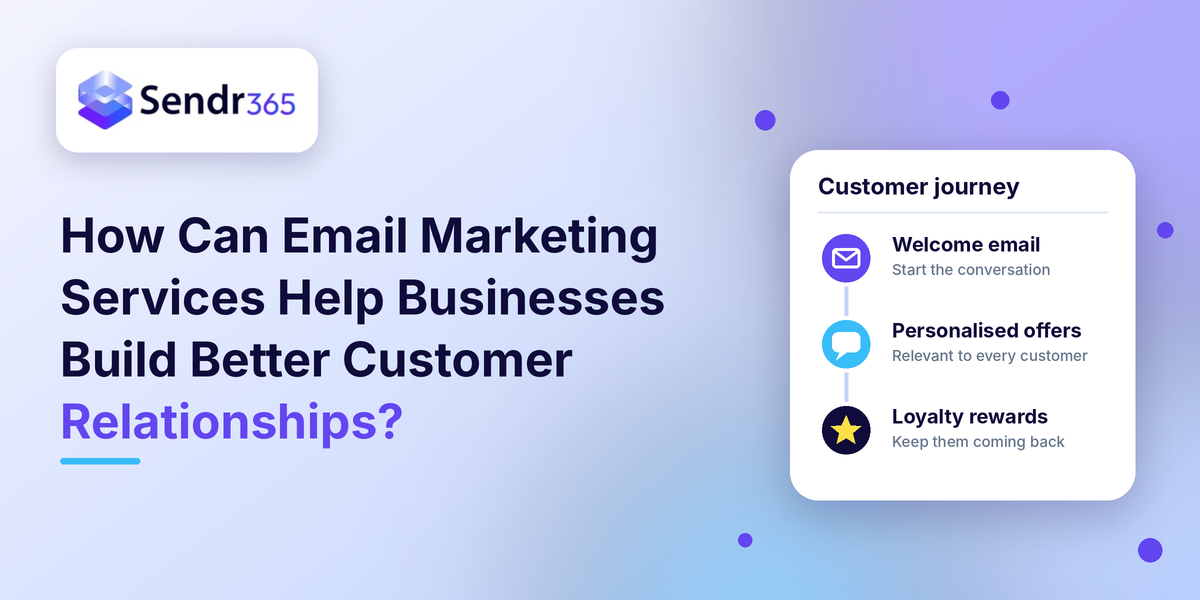
Building strong customer relationships takes more than offering good products or services. Businesses also need to communicate regularly, share useful information, respond to customer needs, and create positive experiences at every stage of the customer journey. Email is one of the practical ways to maintain this communication.
With the right Email Marketing Services, businesses can organize their communication, send relevant campaigns, share important updates, and understand how customers interact with their messages. Instead of sending the same information to everyone, companies can use contact management, audience segmentation, campaign scheduling, and performance tracking to make their communication more meaningful. Email also plays an important role in everyday business operations. Customers receive account verification messages, password reset instructions, order confirmations, and other transactional updates. Managing marketing campaigns and application-based emails effectively can help businesses create a more consistent communication experience.
In this article, we will explore how Email Marketing Services can help businesses improve customer communication and build stronger long-term relationships.
1. Maintain Regular Communication With Customers
Consistent communication helps customers stay connected with a business. When companies only contact their audience during a sale or promotional event, customers may have fewer reasons to remember or engage with the brand. Email campaigns provide a practical way to share regular updates. Businesses can send newsletters, product announcements, company news, useful information, and special offers to subscribers who have agreed to receive their communication.
For example, an online store can send a monthly newsletter featuring new products, shopping tips, and upcoming offers. A software company can share product updates, feature announcements, and educational content with its subscribers. The important point is to provide information that customers find useful rather than sending messages simply to increase email frequency.
Email Marketing Services make it easier to organize these campaigns, select the right contact lists, and schedule messages according to a communication plan. Regular and relevant updates can help businesses remain familiar to their audience.
2. Send More Relevant Emails Through Audience Segmentation
Not every customer has the same interests, requirements, or purchasing behaviour. Sending identical emails to an entire contact database may result in messages that are not relevant to many recipients. Audience segmentation helps businesses organize contacts into smaller groups based on selected information, preferences, or behaviour.
For example, an e-commerce business may create separate groups for new subscribers, existing customers, and customers interested in particular product categories. It can then prepare different campaigns for each group. A SaaS company may organize its contacts according to subscription interests or the type of information they have requested. This approach helps businesses make their communication more relevant. Instead of sending every announcement to every subscriber, they can focus on the audience most likely to find the message useful. Email Marketing Services with contact management and segmentation features can simplify this process and help marketing teams organize their campaigns more effectively.
3. Personalize Messages to Make Communication More Meaningful
Personalization can make an email feel more relevant to the person receiving it. A message that addresses a recipient by name or refers to information connected to their interests may create a more personal communication experience than a completely generic message. Businesses can use available contact information to personalize campaign content. For example, a newsletter can include a subscriber's name, while a product announcement can be prepared for a group interested in a particular category. Transactional messages can also include relevant information. An order confirmation may contain the customer's name, order reference, and purchase details. An account verification email can include instructions connected to the user's registration.
However, personalization should be accurate and respectful. Businesses should use information that customers have provided appropriately and avoid adding unnecessary personal details. The goal is to make communication useful, clear, and relevant rather than simply inserting a customer's name into every message.
4. Share Important Updates Through Transactional Emails
Customer relationships are influenced by everyday interactions, not just promotional campaigns. When someone creates an account, places an order, or requests a password reset, they expect clear information about what happens next. Transactional emails help businesses provide these updates automatically.
Common examples include:
-
Account registration and verification emails
-
Password reset instructions
-
Order confirmation messages
-
Payment and billing notifications
-
Application and service updates
These emails are generally triggered by a specific user action or application event. A website or application can connect to a transactional email API and request a message when the relevant event occurs.
For example, when a customer completes an online purchase, the store can trigger an order confirmation email. This gives the customer a written record of the transaction and helps reduce uncertainty. Businesses should make these messages clear, timely, and relevant to the action that triggered them. Marketing content should not distract from the important information a transactional message needs to communicate.
5. Schedule Campaigns for Consistent Customer Engagement
Sending campaigns without a clear schedule can make communication difficult to manage. Businesses may send too many messages within a short period and then remain inactive for weeks. Campaign scheduling helps marketing teams plan their communication. They can prepare newsletters, announcements, and promotional campaigns and arrange them around business activities.
For example, a company may schedule a monthly newsletter, a product announcement before a launch, or an event reminder closer to the event date. A planned schedule also makes it easier for teams to coordinate their marketing activities. They can review upcoming campaigns, prepare content, and avoid unnecessary repetition. When choosing Email Marketing Services, businesses should check whether campaign scheduling is available and whether the platform provides the controls needed to manage their sending schedule.
6. Use Email Analytics to Understand Customer Engagement
Sending an email is only one part of customer communication. Businesses also need to understand how recipients interact with their messages. Email analytics can help marketing teams review campaign performance and identify areas that may need improvement. Depending on the platform and tracking configuration, useful metrics may include:
Delivery information: Helps teams review the sending and delivery status of campaign messages.
Open activity: Indicates whether recipients opened an email. Open tracking may not be fully accurate because of privacy features and automatic image loading.
Click activity: Shows which tracked links recipients clicked and can help businesses understand which content attracted attention.
Bounce information: Helps identify messages that could not be delivered to an address.
Unsubscribe activity: Helps businesses monitor when recipients choose to stop receiving marketing communication.
For example, if a campaign receives fewer clicks than expected, the marketing team can review its message, links, audience selection, and call to action. Analytics should be used to improve communication rather than treating every metric as a direct measure of customer satisfaction.
7. Build Trust Through Proper Email Authentication
Trust is an important part of every customer relationship. Businesses should make sure their email communication uses an authorized sending domain and follows appropriate authentication practices. Domain authentication helps receiving email providers verify the identity and authorization of a sending domain.
Three important authentication methods are:
SPF (Sender Policy Framework): Identifies which sending servers are authorized to send emails on behalf of a domain.
DKIM (DomainKeys Identified Mail): Uses a digital signature to help receiving servers verify the authenticity and integrity of an email.
DMARC (Domain-based Message Authentication, Reporting, and Conformance): Builds on SPF and DKIM by allowing domain owners to specify how receiving servers should handle messages that fail authentication checks.
Businesses should review their email platform's domain verification instructions and configure the required DNS records correctly. Proper authentication supports a trustworthy sending identity, although it does not guarantee that every message will reach the recipient's inbox.
8. Choose an Email Platform That Supports Your Business Needs
As a business grows, its email communication requirements may become more complex. It may need to send larger campaigns, manage more contacts, integrate transactional emails with its application, and review performance from one place.
Choosing the right email platform can make these activities easier to organize.
Before selecting Email Marketing Services, businesses should evaluate campaign creation, contact and list management, audience segmentation, scheduling, transactional email API support, analytics, domain authentication, security, and pricing. Developers should also review API documentation and authentication methods before connecting an email platform to a website or application. Marketing teams, meanwhile, should consider whether the campaign tools are easy to use and provide the reporting they need. The right choice should match the company's current requirements while providing enough flexibility to support future communication needs.
How Sendr365 Helps Businesses Manage Email Communication
Sendr365 provides email campaign management and transactional email capabilities for businesses, startups, SaaS platforms, and developers.
Its campaign features help businesses create and schedule marketing communications, organize contacts and lists, and manage campaigns for selected audiences. These capabilities can support newsletters, business announcements, and promotional updates.
For application-based communication, Sendr365 provides a REST API that developers can integrate into websites and applications. This can be used to trigger transactional messages such as account verification emails, password reset instructions, order confirmations, and other system-generated notifications.
Sendr365 also provides sending-domain verification guidance, including SPF, DKIM, and DMARC configuration. Its metrics dashboard helps users review available email activity and campaign performance. By bringing campaign management and API-based transactional email capabilities into one platform, Sendr365 gives businesses tools to organize different types of email communication.
Conclusion
Strong customer relationships are built through consistent, useful, and relevant communication. Email gives businesses a practical way to share updates, provide important information, and stay connected with their audiences. The right Email Marketing Services can support these activities through campaign management, audience segmentation, personalization, scheduling, transactional email APIs, analytics, and domain authentication. Businesses should focus on sending messages that serve a clear purpose and provide value to recipients. By choosing suitable tools and paying attention to customer communication needs, companies can create better email experiences and build stronger relationships over time.
Frequently Asked Questions
1. How do Email Marketing Services help businesses build customer relationships?
Email Marketing Services help businesses communicate regularly through newsletters, announcements, promotional campaigns, and relevant updates. Contact management and audience segmentation can also help businesses send more useful messages to different groups of customers.
2. Why is audience segmentation important in email marketing?
Audience segmentation allows businesses to organize contacts according to relevant characteristics, preferences, or behaviour. It helps companies prepare more targeted campaigns instead of sending the same message to every subscriber.
3. What is the role of transactional emails in customer communication?
Transactional emails provide important information after a user takes a specific action. Examples include account verification, password resets, order confirmations, and payment notifications. They help customers understand what has happened and what they need to do next.
4. How can businesses measure email campaign performance?
Businesses can review available metrics such as delivery status, open activity, link clicks, bounces, and unsubscribes. These insights can help marketing teams understand campaign performance and identify opportunities to improve future messages.
5. What features should businesses look for in Email Marketing Services?
Businesses should consider campaign management, contact and list management, audience segmentation, scheduling, transactional email API support, analytics, domain authentication, security, and pricing before selecting an email platform.
6. Can small businesses use email marketing to maintain customer engagement?
Yes. Small businesses can use newsletters, product updates, announcements, and useful information to stay connected with subscribers. A planned sending schedule and relevant content can make communication more consistent.

 English
 Arabic
 French
 Spanish
 Portuguese
 Deutsch
 Turkish
 Dutch
 Italiano
 Russian
 Romaian
 Greek