


Homework Help for Exam Season: Turn Daily Tasks Into Revision
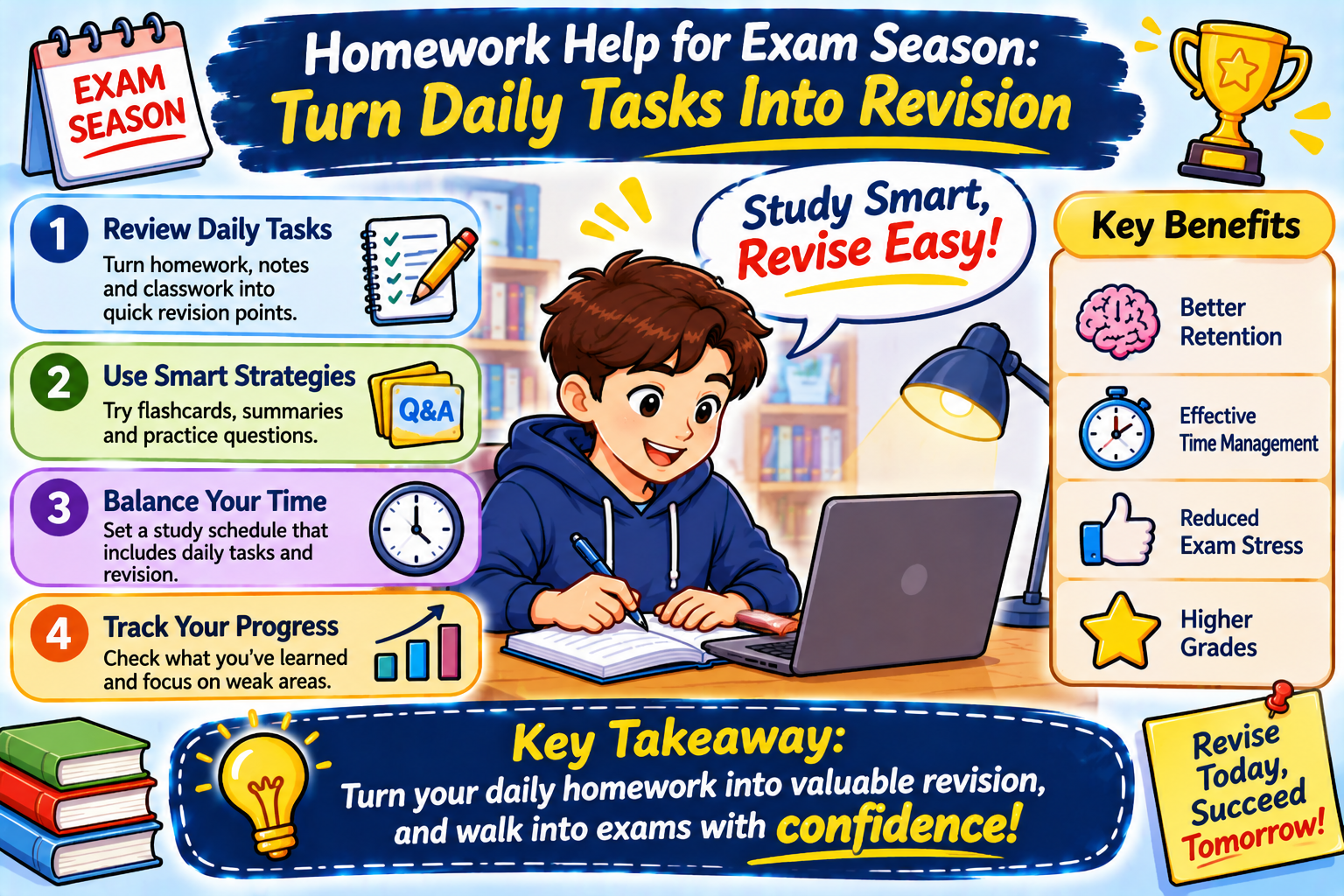
Exam season does not have to mean starting from scratch. The homework you complete each week is already a rich source of revision material, if you keep it organised and review it with purpose. Students who connect daily tasks to exam preparation tend to feel calmer and remember more. This guide shows how to convert everyday work into revision notes, how to plan the weeks before exams, and how to use homework help as part of a steady routine rather than a last-minute rescue.
Treat Every Task as Practice
Every worksheet, essay, and problem set is a rehearsal for the exam. You have already met the ideas, tried the methods, and received feedback on what went wrong. The mistake is to finish a task, file it away, and never look at it again. Instead, treat each completed piece as raw material. A short review within a week, and again a month later, turns one-off effort into lasting memory.
Turn Homework Into Revision Material
Simple habits turn scattered work into a study kit:
- Keep every marked task in a folder sorted by topic
- Rewrite your corrections in a different colour so weak spots stand out
- Turn each question into a flashcard with the answer on the back
- Summarise each topic on one page, using diagrams where possible
- List the five most common mistakes you made and how to avoid them
- Mark topics red, amber, or green, and revisit the red ones first
Build a Realistic Revision Plan
Start about six weeks before the exam and work backwards. List every subject and topic, then allocate time according to difficulty and mark weighting. Be generous with weak areas and light with strengths. Include rest days, because tired minds retain little. If your plan feels too heavy, shrink it rather than abandon it. Targeted homework help from a teacher or tutor can also help you check that your plan covers the right content.
Practise Under Exam Conditions
Knowing the material and producing it on demand are different skills:
- Complete past papers in the same time limit you will have in the exam
- Sit at a table without notes, phone, or music
- Mark your paper using the official guide, and note where marks were lost
- Rewrite weak answers from memory a few days later
- Practise planning long answers in five minutes before writing
- Review the examiner reports to see common errors in your subject
Keep Stress Under Control
Calm students perform better, so protect your health during revision:
- Sleep seven to nine hours, especially in the three nights before an exam
- Eat regular meals and drink water, since hunger and thirst reduce focus
- Take a short walk or stretch between study blocks
- Talk to someone if worry grows, such as a parent, friend, or teacher
- Prepare equipment and travel plans the night before so the morning is calm
On the Day
Start by reading all the instructions slowly. Divide your time by the marks available, and write the finish time for each section on your paper. Begin with questions you know well to build momentum, and leave gaps for harder ones rather than freezing. Keep a few minutes at the end for checking. If panic rises, put your pen down, breathe slowly for thirty seconds, and return to the question in front of you.
Conclusion
Great exam results come from steady work, not panic. Use your homework as revision material, plan backwards from the exam date, practise under real conditions, and look after your health. When you need extra clarity, ask early for guidance. Good homework help in exam season focuses on method and understanding, not shortcuts. Keep your routine steady, and your homework help will feed directly into confident, well-prepared exam performances.

 English
 French
 Spanish
 Portuguese
 Deutsch
 Turkish
 Dutch
 Italiano
 Russian
 Romaian
 Portuguese (Brazil)
 Greek