


AI Brand Visibility Tool: What to Look for Before You Buy
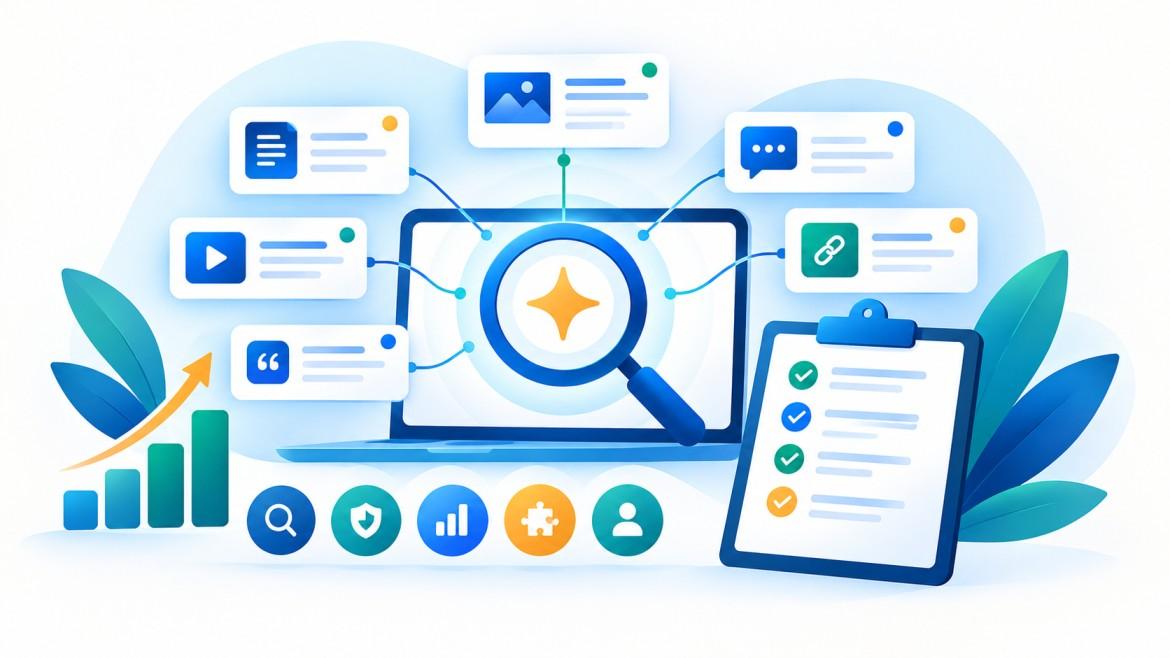
A prospect asks an AI engine to recommend a project management app for a remote team. The answer names three brands in two short paragraphs. If yours is missing, that prospect never visits your site, never sees your pricing, and never shows up as a lost deal in your analytics.
That invisible loss is why an AI brand visibility tool has become a serious line item for marketing teams. The idea is simple: measure whether AI engines mention your brand, how they describe it, and which competitors they mention instead. The execution varies a lot from one product to the next.
This article explains what a good AI visibility tool should do, how to test one fairly, and which questions to ask before you commit.
Why Traditional Reports Miss the Problem
Rank trackers and analytics platforms were built for lists of links. They tell you where a page sits and how many people clicked. They can’t tell you what an AI engine said about your category yesterday afternoon.
AI answers are assembled, not ranked. An engine pulls from many sources, writes one response, and decides which brands deserve a mention. The same question can return different brands when it is phrased differently, and different engines often disagree with each other.
Picture a company with strong organic traffic and a healthy position-one ranking for its core keyword. Its dashboard looks great. Yet when buyers ask an AI engine for recommendations in that category, competitors get named and the company does not. Neither report is wrong. They measure different things.
That is the case for dedicated measurement. You need to see presence, context, and competitors inside the answer, not only your position beneath it.
What an AI Brand Visibility Tool Should Measure
A useful AI brand visibility tool covers three areas.
Brand and Competitor Presence
Start with the basics: are you mentioned, and by which engines? Then add competitors, because AI answers are comparative by nature. Seeing that you appear in 30% of answers means little until you know a rival appears in most of them.
Context matters as much as count. Being named as the recommended option is very different from being listed as one of several alternatives, and a good tool separates the two.
The Questions Being Watched
Every visibility report is only as good as its question list. If the tool tracks queries nobody actually asks, the numbers are tidy and meaningless. Ask the vendor how questions are selected and whether they reflect real customer behavior.
Specific, Testable Recommendations
Reports that stop at “here is your score” leave the hard part to you. Look for recommendations specific enough to act on, such as which question a page should answer more directly, and a way to check the change helps before it goes live.
Choosing an AI Visibility Tool Without Guessing
Plenty of tools describe themselves as the leading software for AI visibility and generative engine optimization. The label tells you very little. What separates them is how they handle feedback.
Generative engine optimization (GEO) means shaping content so AI engines can understand, trust, and cite it. The difficulty is that results are noisy. Answers shift on their own, so after you edit a page it is hard to know whether your change worked or the engine simply answered differently that day.
That is why pre-publish testing matters. Imagine two drafts of a comparison page. One opens with a direct answer and a plain definition. The other starts with three paragraphs of background. Without testing, the winner is whoever argues best in the meeting. With simulation, you compare the drafts against modeled answers and see which holds up, along with how confident the model is.
For more background on the topic, see these practical guides on AI search and GEO.
A Nine-Point Checklist for Comparing Tools
Run any shortlist, including your current tool, through this list:
- It covers more than one AI search engine.
- It tracks competitors, not only your brand.
- It explains how it chooses which questions to monitor.
- It shows context (recommended, compared, or listed), not just a mention count.
- It lets you test a draft before publishing.
- It states how confident its simulations or predictions are.
- It proposes specific edits and checks them before recommending them.
- It offers a free plan or audit, so you can test it on your own brand first.
- It suits your team, whether in-house or an agency managing several clients.
A tool that misses more than two or three of these is worth skipping.
One Example: Know Before You Execute
Bodhium Labs is one example of an AI brand visibility tool built around those priorities. Its guiding idea is to know before you execute.
Its Analyzer measures how a brand and its competitors appear across AI search engines, using a dataset of 14 billion user questions to choose which queries to watch. Its Simulator models how generative engines answer customer questions, so teams can test a draft and compare options before publishing, with each simulation carrying a confidence level. Its Optimizer proposes edits, runs them through the Simulator, and keeps only the edits that raise the simulated visibility score.
Measured against the checklist, that addresses question selection, competitor tracking, pre-publish testing, confidence levels, and edit validation. As with any product, test it on your own brand rather than trusting a feature list.
FAQ
What is an AI brand visibility tool?
An AI brand visibility tool tracks whether and how a brand appears in answers from AI search engines. Strong versions also show competitor presence and help teams decide which content changes are worth making.
How is an AI visibility tool different from a rank tracker?
A rank tracker reports where a page sits in a list of search results. An AI visibility tool reports whether a brand is mentioned inside a generated answer, in what context, and next to which competitors.
How do I choose the best AI visibility tool?
Check which engines and questions it covers, whether it tracks competitors, and whether it lets you test changes before publishing. Then try a free plan or audit on your own brand before committing.
Conclusion
Buyers increasingly start with an AI answer instead of a results page, and a brand that is missing from that answer pays a price no ranking report will show. The right tool makes the gap visible, points to specific fixes, and tests them before you invest time.
To see where your brand stands today, Bodhium Labs offers a free Starter plan (25 prompts across two AI engines) and a free audit of current AI search visibility. If you want to talk through fit for your team or agency, you can reach out here.

 English
 Arabic
 French
 Spanish
 Deutsch
 Turkish
 Dutch
 Italiano
 Russian
 Romaian
 Portuguese (Brazil)
 Greek